From watchdogs to lapdogs: How corporate media bent to Trump 2.0
By Michael Jones
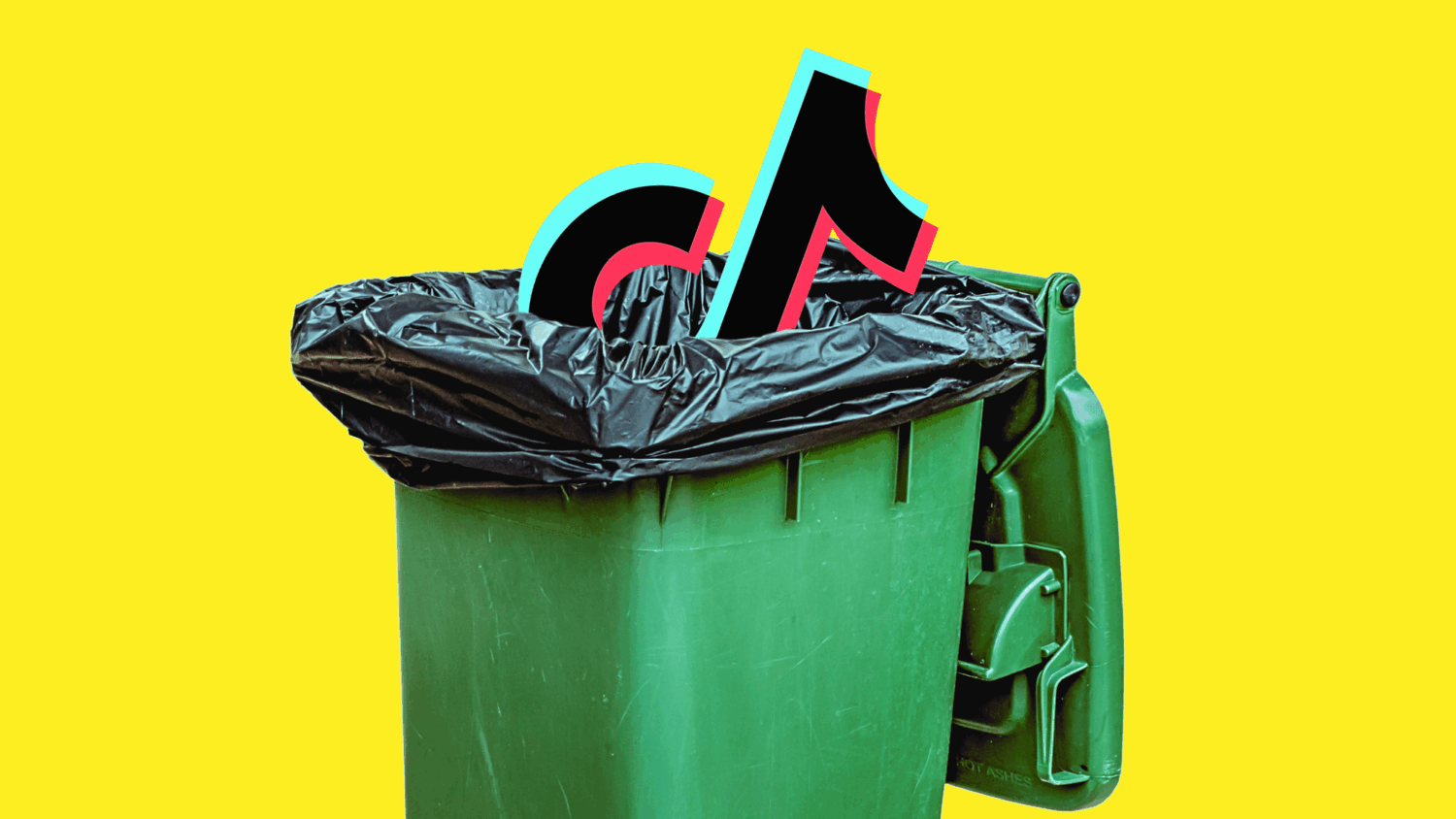
President Donald Trump could sign an executive order as early as this week to approve a proposed deal to keep TikTok available in the U.S. a year and a half after Congress passed a law requiring the app’s China-based owner to divest from it within nine months of the legislation’s passage.
The deal will come as welcome news to the millions of American users who enjoy TikTok for entertainment, education, entrepreneurship, or a combination of all three.
But under the terms of the deal, the popular social app would be largely controlled by Oracle, Silver Lake, and Andreessen Horowitz—a trio of companies owned by Trump-aligned billionaires. Critics say the potential sale is the latest and perhaps most consequential in a growing pattern of private-sector actors aligning with the Trump administration’s attacks on the free press, pursuit of retribution against political enemies and enrichment of the president and his allies.
“Right-wing billionaires are buying up so much of our media, and they want to buy up even more of it. That is very dangerous,” Rep. Greg Casar (D-Texas) said in a brief interview last week. “We need independent media so journalists aren’t silenced by one right-wing billionaire owner who is friends with Donald Trump or who relies on making sure that his merger can get approved by Donald Trump.”
Casar, who chairs the Congressional Progressive Caucus, added that the agriculture sector is an example of the downside of market concentration.
“When you have overconsolidation, as we have in our food industry, you see prices go up,” he said. “When you have overconsolidation in the media, you see free speech go down, and we can’t let that happen.”
We don’t have to look far back for proof of all that could go wrong with the TikTok deal.
It was just under three years ago when Elon Musk purchased Twitter for $44 billion before rebranding it to X, stripping legacy blue checks, boosting the reach of paid subscribers and prioritizing conservative influencers who pushed pro-Trump narratives on immigration, crime, “woke” culture and portraying Democrats as corrupt.
Musk gutted trust and safety teams, which led to a surge in disinformation, hate speech and right-wing content. He reinstated Trump, banned journalists critical of him and shifted moderation to so-called free-speech absolutism. The reach of mainstream outlets seen as anti-Trump was limited too.
The Tesla CEO wasn’t an idle spectator. He amplified MAGA talking points through algorithm tweaks, hosted live audio conversations with Trump and used the platform to frame the debate around 2024 campaign issues. Despite a later rift with Trump over policy disagreements, the infrastructure and audience shift remains pro-MAGA.
White House Press Secretary Karoline Leavitt confirmed Oracle would retrain a version of TikTok’s prized algorithm for U.S. consumption. But it’s unclear how the California-based company will account for the fact that algorithms based on biased human data can amplify and replicate harmful racial and gender stereotypes. And since recommendation systems boost content with high engagement, it’s often racist and sexist tropes that get amplified.
As I was writing this column, ABC announced that the Jimmy Kimmel show would return this evening after the network suspended all broadcasts and Nexstar Group pulled it from all ABC-affiliated stations following a threat of regulatory action from Federal Communications Commission Chairman Brendan Carr for controversial comments about the Charlie Kirk assassination.
Critics of the suspension framed it as an example of government pressure exacting corporate compliance since Carr’s threat was tied to Disney’s pending interests, including broadcast licenses and potential mergers.
Beyond Disney/ABC, a new wave of corporate media mergers under Trump’s second term has left fewer independent voices and more cautious editorial lines. Companies like Paramount/CBS and Warner Bros. Discovery have pursued consolidation strategies that make bottom-line calculations inseparable from the consideration of political risk. In practice, this has meant pulling back from critical coverage, sidelining talent perceived as too critical of the president, and calibrating programming to avoid regulatory scrutiny or license challenges. The result is a media environment where business interests outweigh editorial independence—and where self-censorship often fills the space that accountability journalism once occupied.
The irony is hard to miss. Many of the executives now bending over backward to appease Trump spent his first term casting themselves as bulwarks against his attacks on truth and democratic institutions. Social media leaders pledged to rein in disinformation, while legacy media chiefs positioned their outlets as counterweights to presidential excess. But once Trump returned to power, those lofty commitments gave way to a more pragmatic calculation: preserving market share, licenses and regulatory favor.
Meanwhile, the levers of government have not been idle. The Pentagon’s recent press restrictions, which require reporters to pledge not to publish certain unapproved material, even if it is unclassified, mark a troubling inversion. Instead of defending a free press, the government is attempting to exert unprecedented official control over reporting. When an institution as central to national security as the Department of Defense starts dictating what constitutes authorized reporting, the chilling effect is immediate, and the American people are worse off for it.
Aside from scattered criticism from Sens. Ted Cruz (R-Texas), Rand Paul (R-Ky.), and Mitch McConnell (R-Ky.), most Republicans were either silent on the Kimmel suspension or contorting themselves into a bad-faith argument about so-called “consequence culture.” Even if they dispute the administration’s tactics, they agree with the claim that corporate media has been weaponized against Trump, the MAGA right and the broader conservative movement—and view Trump as evening the score and owning the libs. (With the midterms a little over a year away, it’s also worth noting that these same Republicans are wholly uninterested in incurring Trump’s wrath in the form of a primary opponent, Truth Social tirade or pile-on from the online far right.)
A grassroots movement erupted after Kimmel’s suspension, with thousands of Americans canceling Disney+ and Hulu subscriptions in protest of what they saw as corporate capitulation. Democrats now hope that same energy carries into the voting booth next November, giving them at least one chamber of Congress to serve as a legislative check on what they describe as rampant lawlessness and corruption inside the Trump administration.
That push for accountability is also what underpins the newly introduced No Political Enemies (NOPE) Act, a bicameral Democratic bill aimed at shielding nonprofits, faith groups, schools, media outlets and other institutions from politically motivated prosecution. Its authors frame it as both a response to fresh threats from Trump’s inner circle and a broader effort to codify protections for dissent at a moment when the administration seems eager to test the limits of power.
“The truth is that Donald Trump is trying to destroy our democracy. He is trying to silence free speech. He is acting in a way that is scarily similar to many would-be despots all across this world, all across history, who have tried to transition a country from democracy to autocracy,” Sen. Chris Murphy (D-Conn.), the lead Senate sponsor of the NOPE Act, told reporters last week. “And so we have no obligation to sugarcoat the gravity of this moment. The only way we save this nation is if the people of this country rise up in peaceful protest, if they mobilize all across America. These companies won’t really think twice about their money grab until they know that the American people are firmly on the side of protecting free speech.”
Michael Jones is an independent Capitol Hill correspondent and contributor for COURIER. He is the author of Once Upon a Hill, a newsletter about Congressional politics.