In the shadow: How the Supreme Court’s emergency docket is empowering Trump’s agenda
By Michael Jones
When the fiscal year ends on Wednesday at midnight, $4 billion in previously approved congressional funding will expire without ever reaching its recipients after the Trump administration intentionally submitted a proposal to Congress to withhold the money without enough time for lawmakers to disapprove of the cuts.
The administration is allowed to proceed with the maneuver, dubbed a “pocket rescission,” after the Supreme Court last Friday paused a lower-court ruling that ordered Trump officials to obligate the funds by September 30, per an injunction previously upheld by the second-highest court in the land.
Although the majority stressed that the unsigned order is preliminary and not a final ruling on the merits, the case represents the first major test of the Impoundment Control Act’s scope at the Supreme Court. Democrats worry the decision sets the stage for the Trump administration to use pocket rescissions at the end of future fiscal years and could embolden broader executive control over appropriated money, weakening congressional spending power. It raises fundamental issues around the separation of powers, specifically Congress’s power of the purse versus the president’s authority to impound appropriated dollars.
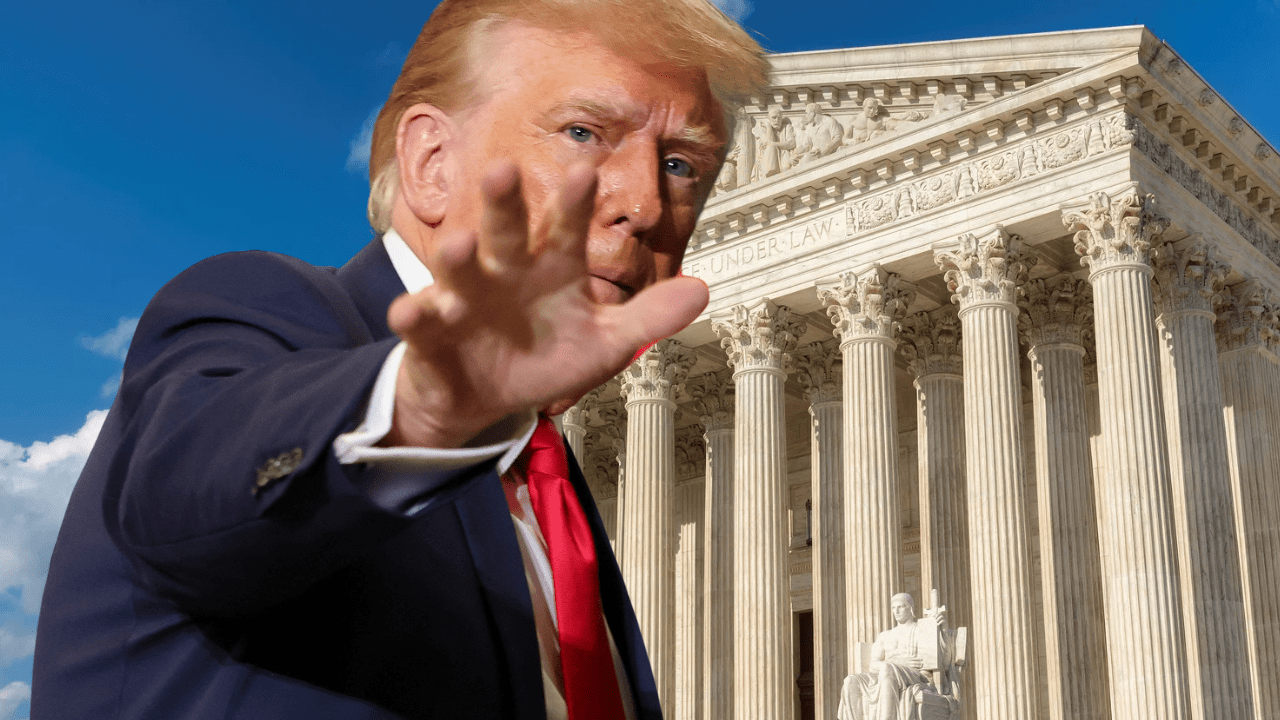
The case also represents another example of the Supreme Court’s reliance on the “shadow docket,” a set of emergency orders and summary decisions outside the court’s fully briefed and argued cases.
Ironically, I started reporting this column earlier this month following another controversial shadow docket decision that lifted a lower-court order for the Trump administration to stop immigration arrests without probable cause and a temporary restraining order against the Department of Homeland Security while the case continues through the federal court.
“I find it shameful that a corrupt group of Supreme Court justices, hiding behind this veil of anonymity, would sanction racial profiling on American citizens, and that’s what this ruling today was all about,” House Minority Leader Hakeem Jeffries (D-N.Y.), who served on the House Judiciary Committee before ascending to senior party leadership, told me at the time. “And that’s a stain on the legacy of every single one of those conservative right-wing Supreme Court justices here in the United States of America.”
Rep. Hank Johnson (D-Ga.), the top Democrat on the House Judiciary Subcommittee on Courts, told me that the Supreme Court is overrelying on the emergency mechanism.
“It’s the culmination of a parade of horrors coming out of the United States Supreme Court over the last eight months,” he said. “But really, prior to that, just rulings that are chipping away in a major way at our democracy.”
He also agreed with Jeffries that the decision eviscerated the Fourth Amendment protections against illegal arrest, search and seizure.
“Just ripping that away from all nonwhite people in this country is astounding and breathtaking in its egregiousness.”
Sen. Sheldon Whitehouse (D-R.I.), ranking member of the Senate Judiciary Subcommittee on Federal Courts, said that obvious among the problems with the shadow docket is that frustrated judges are finding that they don’t know what the Supreme Court intended when the justices won’t say what they meant.
“And that has now become a big enough deal that I think the justices have tried to go out on kind of an apology tour,” Whitehouse said in reference to efforts to soften or contextualize the Court’s use of the shadow docket. “You saw Brett Kavanaugh trying to explain what they’re doing because they’re hearing from frustrated federal judges, ‘What on earth are you doing?’”
To be clear, it’s not only members of Congress who have expressed concern.
Justice Elena Kagan also criticized the court’s usage of orders without a full briefing or appellate ruling.
“Per usual on our emergency docket, we have had to consider this application on a short fuse—less than three weeks. We have done so with scant briefing, no oral argument and no opportunity to deliberate in conference,” Kagan wrote in a dissenting opinion, joined by the other liberal justices, Sonia Sotomayor and Ketanji Brown Jackson. “Because of how this case came to us, we likewise do not have the benefit of a pertinent court of appeals decision, much less a set of decisions expressing different views. In a few weeks’ time—when we turn to our regular docket—we will decide cases of far less import with far more process and reflection.”
The shadow docket used to be limited to technical or time-sensitive orders. But in recent years, it has become the vehicle for consequential rulings, especially emergency stay requests from the Justice Department.
Critics say this practice enables executive branch overreach while sidestepping normal judicial deliberation, raising concerns about bias, transparency and accountability.
The Court has leaned on the shadow docket under Chief Justice John Roberts more than any of his predecessors, often in disputes that touch core questions of presidential power. Immigration enforcement, voting rights, abortion access and now federal spending fights have all been at least temporarily decided through unsigned, unexplained emergency orders. The result is a body of rulings that shape law and policy in real time without the transparency or deliberation that usually accompanies Supreme Court decisions.
Still, the Roberts Court hasn’t uniformly expanded executive power. There are cases where the Court has enforced limits (albeit sometimes narrowly), and the justices occasionally uphold well-rooted congressional or statutory constraints.
The Court is still cautious in many contexts, even as it expands executive authority. It sometimes preserves doctrinal guardrails or declines to push too far beyond prior precedent. Some of Roberts’ own writings signal institutional restraint, though critics question whether that restraint is holding.
Congress does have levers it can pull, though they are politically fraught and constitutionally tested.
Some are structural since Congress sets the size of the Court, its budget and much of its jurisdiction. Lawmakers could limit what types of cases the Court may hear on emergency application—for instance, restricting appellate jurisdiction over stays of lower-court injunctions. Congress could also require certain categories of cases—immigration raids and election disputes, for example—to be heard on the Court’s regular merits docket instead of through emergency relief. These measures would likely provoke intense separation-of-powers litigation, as the Court historically resists encroachments on its core functions.
Procedural reforms could include legislation directing the Court to provide greater transparency in emergency orders, from requiring written explanations to recorded votes to disclosure of reasoning when granting or denying stays. In past Congresses, bills have been introduced to mandate signed opinions and public justifications on the shadow docket. Congress could also set statutory timelines that require arguments within a set number of days after granting an emergency stay. This would keep the emergency order temporary and move the case toward a fuller hearing, although public and political backlash, institutional norms and repeated litigation ultimately still act as checks.
The end of the fiscal year arrives as Congress is searching for a path forward to keep the government open. Democrats have demanded guardrails in any budget deal to prevent the executive branch from clawing back previously approved spending that conflicts with the president’s priorities, an ask Trump-aligned Republicans are likely to ignore, but one Democrats have told me is worth fighting for since the rescissions often impact social programs, progressive policy priorities, and discourage bipartisanship.
“This is their approach to governing,” Jeffries told reporters in late July. “Rescissions is just a continuation of [the One Big Beautiful Bill Act], and it’s problematic for a variety of reasons. But the most important reason is that Republicans are actively trying to continue to hurt the American people—and House Democrats and Senate Democrats will continue to stand up for the American people.”
Michael Jones is an independent Capitol Hill correspondent and contributor for COURIER. He is the author of Once Upon a Hill, a newsletter about Congressional politics.