Breaking down the SAVE Act fight in the Senate
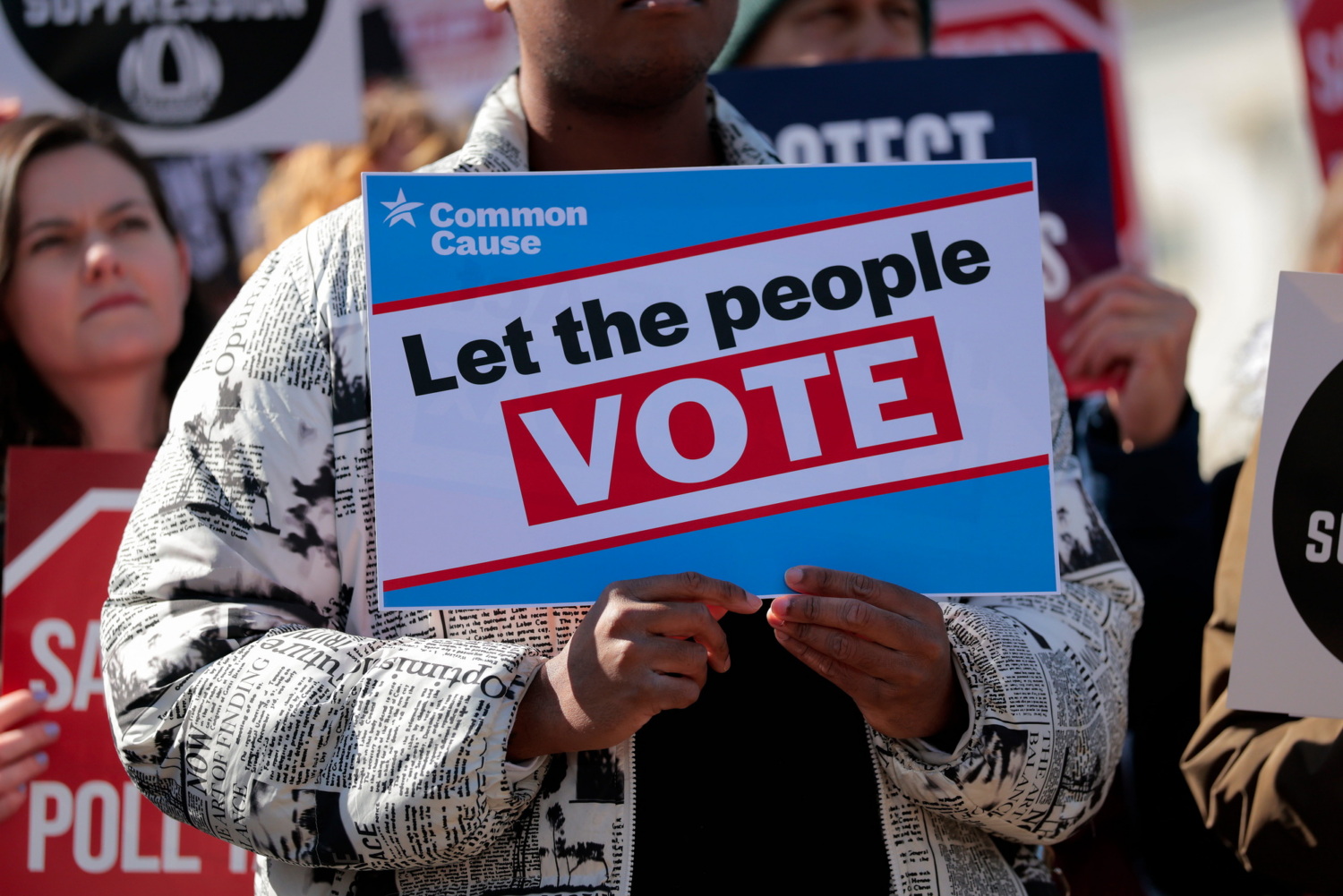
Photo by Nathan Posner/Anadolu via Getty Images
By Michael Jones
Senators put off their usual mad dash to Reagan National on Thursday afternoon, but not to dodge the long TSA lines caused by the ongoing Department of Homeland Security shutdown. Instead, Senate Majority Leader John Thune (R-S.D.) is keeping the chamber in session through the weekend as Republicans press ahead with the SAVE America Act.
The bill—and the fight over how to pass or block it—has taken over the Capitol and much of the online conversation. So this week, I want to step back and answer some of the most pressing questions I’ve been getting to help you make sense of what’s actually happening on the Senate floor and what it means.
What is the SAVE Act?
The SAVE America Act —an expanded and more politically charged version of the original SAVE Act (Safeguard American Voter Eligibility Act)—is the latest iteration of a long-running Republican effort to tighten federal voter eligibility rules.
The original SAVE Act, first passed by the House in 2025, was narrowly focused on requiring documentary proof of U.S. citizenship to register to vote in federal elections. The current version keeps that core requirement, but broadens both the scope and the political stakes, folding in stricter ID rules, enforcement mechanisms, and, increasingly, unrelated conservative policy priorities.
At its core, the bill seeks to federalize voter eligibility standards well beyond current law. It would impose a national voter ID requirement for casting ballots and effectively disrupt or eliminate online and mail voter registration, thereby pushing voters toward in-person verification. It would also mandate state-federal data sharing (including with DHS) to identify and remove noncitizens from voter rolls, while encouraging more aggressive voter roll purges. And it would create legal liability for election officials who register ineligible voters.
As the bill moved toward the Senate, President Trump and allies demanded it become a vehicle for broader culture-war and election policy goals, including restricting mail voting to limited circumstances(such as an illness or military service, banning gender-affirming care for minors, and barring transgender women and girls from competing in women’s sports.
These additions are not central to the bill’s original voting framework but reflect Trump’s effort to turn it into a broader ideological marker heading into the midterms.
Why do Republicans want it to become law?
The simple answer is that President Trump wants it to become law.
Republicans—especially Trump—see the SAVE America Act as both a policy objective and a political instrument.
At the most basic level, they argue the bill is about election integrity: requiring proof of citizenship, tightening registration systems and standardizing rules across states to ensure that only eligible voters participate in federal elections. That’s the public-facing rationale, and it resonates strongly with conservative voters who have long questioned the security of the electoral system.
But the political calculation is just as central.
Trump and his allies see the bill as a potential advantage for future elections, including preventing Republican losses in the 2026 midterms. In their view, stricter rules could boost Republican voter confidence and reduce participation among groups that tend to lean Democratic.
Trump has also called the legislation one of the most important bills Congress will consider this session—a signal to lawmakers that it is a top priority tied directly to his broader political agenda.
At the same time, support for the bill isn’t just coming from party leaders. There’s significant pressure coming from outside Congress via a highly engaged online conservative base—particularly on platforms aligned with Trump—that has been intensely focused on the bill and the broader issue of voter eligibility. That ecosystem has helped create a feedback loop: grassroots demand fuels political urgency, which in turn drives leadership to prioritize the legislation.
Why are Democrats hellbent on blocking it?
Democrats’ opposition to the SAVE America Act is so fierce because they view it not as an election security bill, but as a structural threat to voting access, election administration and the balance of power heading into the 2026 midterms.
At the core of their argument is a simple claim that the bill is solving a problem that doesn’t exist. Democratic lawmakers and aligned legal experts say noncitizen voting is already illegal and exceedingly rare, making the legislation a “solution in search of a problem” designed to justify new restrictions rather than address actual fraud.
From there, their concerns widen to voter access. Democrats argue the bill would disenfranchise millions by making it harder to register and vote. The requirement to provide documentary proof of citizenship—such as a passport or birth certificate—could be difficult for many Americans to meet quickly. Name-matching rules could disproportionately affect married women and provisions targeting mail and online registration would cut off the most common ways voters get on the rolls. Senate Democrats and outside experts have warned the bill could lead to widespread purges or prevent eligible voters from registering in the first place.
House Democratic leaders have been blunt about those concerns.
House Minority Leader Hakeem Jeffries (D-N.Y.) dismissed the bill as a “phony issue” earlier this week, noting that states already enforce citizenship requirements and have the flexibility to design their own election systems.
House Democratic Caucus Chair Pete Aguilar (D-Calif.) went further, framing it as a vehicle for increased voter roll purges, calling it the “Save Republicans Act.”
And House Democratic Caucus Vice Chair Ted Lieu (D-Calif.) argues that the proposal is logistically unworkable, warning that many commonly used forms of identification would not qualify, effectively locking out eligible voters.
Beyond access, Democrats also object to what they see as federal overreach. The Constitution largely leaves election administration to states, but the SAVE America Act would impose unprecedented national standards and require states to share sensitive voter data with federal agencies like the DHS.
And the political context is just as important.
Democrats argue that the bill is an attempt to reshape the electorate in ways that benefit their opposition,saying that the push reflects a belief that Republicans are better positioned politically if fewer people vote. Senate Minority Leader Chuck Schumer (D-N.Y.) said on a recent press call that President Trump believes passing the bill would “guarantee the midterms.”
Finally, there are concerns about how the bill would affect the mechanics of elections themselves. Provisions that expose officials to civil and criminal liability for mistakes could deter people from serving as election workers and further strain an already fragile system.
What’s all this talk about a talking filibuster?
The fight over the SAVE America Act has also revived a familiar debate in Washington: whether the Senate’s filibuster rules could be changed or if Republicans might try to work around it with a so-called “talking filibuster.”
Let’s start with the basics. The Senate is defined by its 60-vote threshold, not a simple majority. Unlike the House, where the majority can move legislation with relative ease, to move most bills forward, senators must agree to end debate—known inside the Beltway as “invoking cloture.” Without 60 votes, legislation can stall indefinitely (and routinely does), giving the minority party significant power.
The talking filibuster is often misunderstood, though.
In theory, it would require senators to physically hold the floor and keep debating to block a bill, rather than simply signaling opposition under current rules. The idea, pushed at various times by both parties (including when Democrats last held the majority in 2021), is that forcing senators to actually speak would make obstruction more costly and visible—and potentially allow a determined majority to outlast the minority.
In practice, though, it’s not a workaround that changes the math.
Even with a talking filibuster, the Senate would still require 60 votes to end debate unless the rules themselves are formally changed.
That’s why it’s unlikely to be a viable path for Republicans on the SAVE America Act. They do not have the votes to eliminate or weaken the filibuster, and absent that, they would still need Democratic support to reach 60—support that clearly isn’t there.
There’s also a political constraint. While some conservatives have flirted with procedural hardball, many Senate Republicans have historically defended the filibuster as a core institutional guardrail. Changing it (even indirectly) would carry risks for a conference that may want that same protection when Democrats regain power.
The broader dynamic is familiar. Both parties criticize the filibuster when it blocks their priorities and defend—or at least tolerate—it when it protects them.
Democrats spent years debating whether to carve out exceptions to pass voting rights and other legislation when they held unified control. Now, in the minority, they are relying on the 60-vote threshold to stop a bill they strongly oppose. Republicans, for their part, have defended the filibuster as a check on Democratic majorities in the past, even as some now explore ways to get around it under pressure from former President Trump and the party’s base.
What should I be watching for next?
If the SAVE America Act fails—as expected—the first question is what President Trump does next.
He has elevated the bill as a defining priority, even suggesting it could shape the midterms. If it collapses, does he keep hammering election rules to energize his base, or pivot back to affordability, inflation and cost-of-living pressures, where the broader electorate is more focused?
Then there’s the legislative path forward.
Republicans could try a narrower approach, introducing “skinny” legislation focused solely on voter ID. There is at least rhetorical bipartisan openness to ID requirements, including among some Democrats, which could make for a more politically complicated vote. But that strategy would run headfirst into pressure from Trump and hardline conservatives, who have pushed for a sweeping bill rather than an incremental one.
Even if this vehicle stalls, the broader push is unlikely to stop. Democrats and voting rights advocates are already warning that similar efforts could continue through executive actions, litigation or state-level policy changes, particularly in Republican-led states. There’s also the possibility that pieces of the bill resurface in less obvious ways. Republicans could attempt to attach provisions to must-pass legislation, where the leverage dynamics are different and the pressure on Democrats increases.
And politically speaking, a failed vote may still serve a purpose. Republicans can argue Democrats blocked election integrity measures; Democrats can say they stopped voter suppression. In Washington, losing on the floor doesn’t necessarily mean losing the argument—it often just sets up the next one.
Michael Jones is an independent Capitol Hill correspondent and contributor for COURIER. He is the author of Once Upon a Hill, a newsletter about Congressional politics.