The missing standard for missing members
By Michael Jones
Rep. Delia Ramirez (D-Ill.) announced last week that she would take a several-week medical leave during the August recess to recover from what she described as a “time-sensitive and medically required surgical procedure.”
The Illinois Democrat did not identify the procedure or disclose a diagnosis. Instead, she shared what she believed constituents needed to know about her upcoming absence: that she expected to be away for several weeks and that her offices would remain open to help people navigate federal agencies, deliver resources to local communities and continue advancing her legislative priorities.
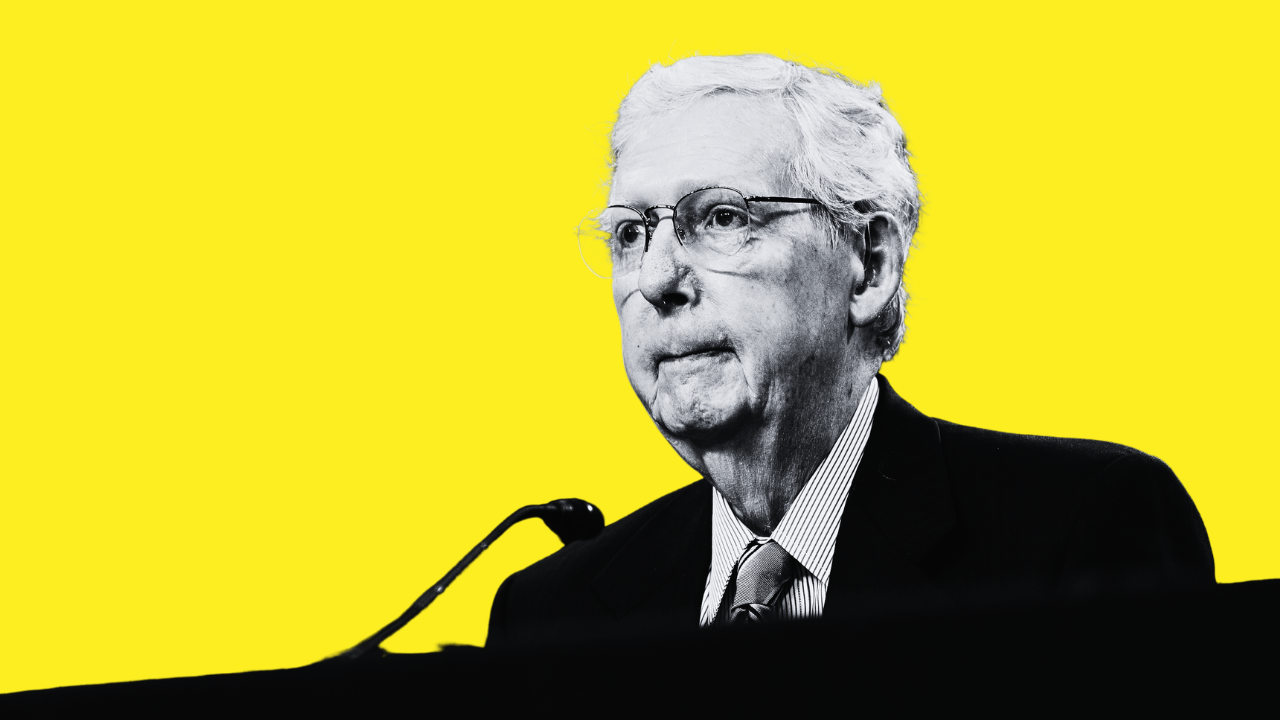
Her announcement stood out not because of what she revealed about her health but because it highlighted something Congress has never established: a consistent expectation for how members communicate prolonged absences to the people they represent. That question has taken on renewed urgency as Senate Republicans continue to provide little clarity about Sen. Mitch McConnell’s prolonged absence from the Capitol.
The Kentucky Republican has missed 46 consecutive votes since he was hospitalized on June 14. With the Senate leaving Washington for its August recess this weekend, the earliest he could return would be after Labor Day—at least 14 weeks after his hospitalization.
McConnell’s absence raises a broader question that extends well beyond one senator or one party: What information should constituents reasonably expect when the person they elected will be away from the Capitol for an extended period?
The answer is not obvious. Members of Congress are public officials, but they are also people entitled to medical privacy. Congress has no formal standard for how members communicate extended health-related absences, leaving each office to decide how much—or how little—to disclose.
Sen. Andy Kim, the New Jersey Democrat who served in the House when his state lost Reps. Donald Payne Jr. and Bill Pascrell, who both died in office after extended health problems, sees the issue through a familiar workplace lens.
“I absolutely want to respect people in terms of their health needs,” Kim told me last week. “I say don’t treat members of Congress any differently than you would treat staff and other workers that are out there. Hold us to the same level.”
Kim said an official who needs an extended medical leave should provide some explanation once the absence stretches beyond what he considers a reasonable amount of time.
“We’re no different than anybody else,” he said.
There are obvious limits to the comparison. Members of Congress are not traditional employees, and there is no supervisor who approves their leave or determines when they return to work. Voters are largely left to wait until a member returns, resigns or faces reelection.
Even so, Kim argues lawmakers should approach prolonged absences with the same sense of accountability they expect in other workplaces.
“The American people are our boss,” he said. “If I were to have some extended prolonged leave from my job, I would feel a responsibility to tell my bosses back in New Jersey, like, here’s how long I think I will be out for, and here is how I assure you that my office is still running.”
That final point speaks to something constituents often ask when a member disappears from public view.
A member’s responsibilities extend well beyond voting on the House or Senate floor. Their offices help constituents receive delayed Social Security checks, replace passports, navigate veterans’ benefits and resolve problems with immigration cases and federal agencies. Member absences do not necessarily mean those services stop, but constituents may reasonably wonder what continues while the elected official is away.
Ramirez addressed that question directly. Along with announcing her leave, she assured constituents her offices would remain open and outlined the work her staff would continue handling during her recovery.
The public interest also extends beyond constituent services. Senators cannot vote remotely and in a closely divided chamber, a prolonged absence can affect nominations, amendments and major legislation. House members represent smaller constituencies, but an extended absence can still leave a district without its elected voice on the floor.
These are questions of representation as much as they are questions about a member’s health.
Those questions often fall to congressional reporters to answer, but stories about prolonged absences don’t come easily.
Determining why a member has stopped appearing at votes or events rarely begins with a press release. It often requires weeks of checking vote records, knocking doors, tracking public appearances, contacting colleagues and staff, and verifying information that offices are reluctant to discuss publicly. Accountability reporting of this kind is painstaking work, particularly at a time when many newsrooms have fewer reporters covering Congress than they once did.
Ramirez’s announcement offers one model for how a member can communicate an extended absence without revealing deeply personal medical information. McConnell’s prolonged absence, meanwhile, has renewed questions about what constituents should expect when an elected official is away for weeks or months.
Congress has never fully settled where the line between privacy and public accountability should be. But as lawmakers continue to face serious health challenges while serving, it is a conversation the institution—and the people it represents—is increasingly being asked to have.
Michael Jones is an independent Capitol Hill correspondent and contributor for COURIER. He is the author of Once Upon a Hill, a newsletter about Congressional politics.