How Courier Local’s Coverage Led the Way on Data Centers
Written by Keya Vakil, with additional data analysis by Michael Foley
Everywhere you look, people are talking about data centers.
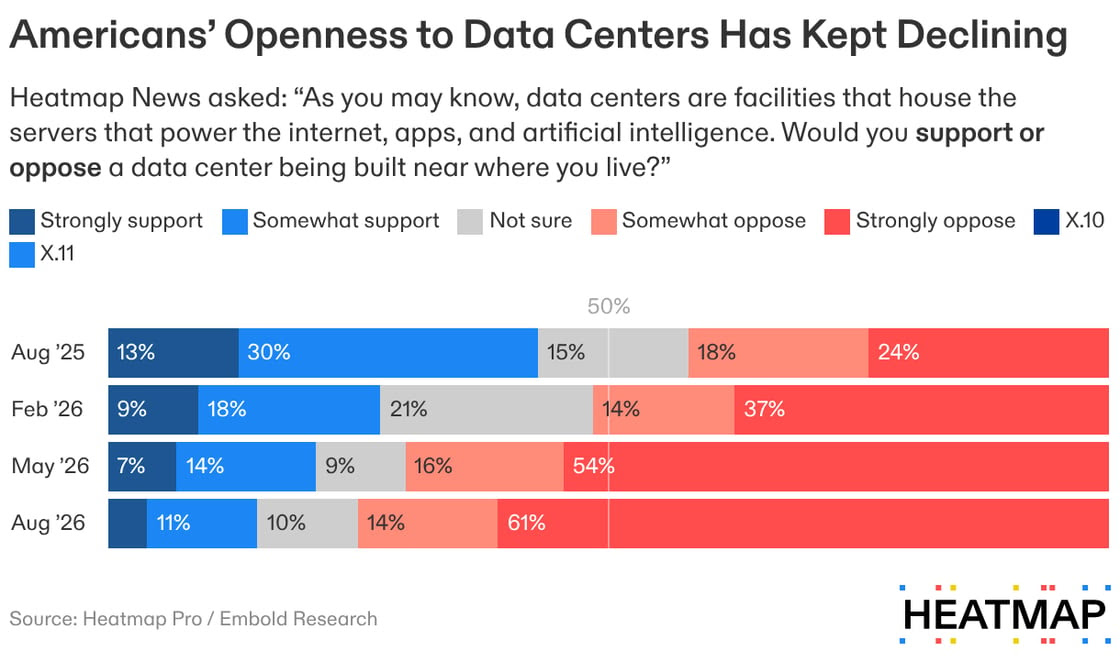
“How Data Centers Broke American Politics,” read a WIRED headline from early August.
“The Great Bipartisan Data Center Smackdown Has Begun,” read another from the Wall Street Journal.
There is now virtually unanimous consensus among political insiders that championing data centers is a toxic stance that can cost a candidate a race.
Republicans are so alarmed that the issue could cause Sen. Jon Husted of Ohio to lose his seat that they’re practically begging top AI companies to spend money to come to his rescue. Meanwhile in Michigan, Republican Senate nominee Mike Rogers endorsed a one-year moratorium on new data centers in the state just months after previously supporting them and downplaying their impacts.
In Pennsylvania, Gov. Josh Shapiro, who previously championed data centers, has also reversed course, issuing strict new regulations on them. And then there’s Texas, where three-term Gov. Greg Abbott’s previous support for data centers has now become one of his biggest vulnerabilities, giving his Democratic opponent a potent line of attack against him.
Everywhere you look, data centers are now reshaping campaigns and threatening to turn elections upside down—so much so that pro-AI super PACs are now dumping money into the midterms to try and change the narrative around data centers.
But before data centers became a national political story, they were a local one.
A year ago, few would have predicted just how quickly the backlash would become an issue that could impact elections all across the country. But at Courier Local, we were already aggressively covering the data center fights unfolding in communities. We certainly were not alone in recognizing that something was brewing, and our friends at More Perfect Union in particular deserve recognition for their coverage.
But our local newsrooms were among the earliest to consistently cover how communities were responding to proposed data centers. Since October 2025, we have published over 1,700 stories, videos, and graphics on this debate network-wide, with coverage continuing in real time.
What we saw then is what everyone sees now: people of all political stripes oppose data centers. Typically, online comments on our stories, videos, and graphic posts feature a spectrum of responses: enthusiastic agreement, nasty disagreement, outrage, trolling, racist or sexist remarks, and so forth.
But on our earliest data center reporting, we noticed a trend: virtually unanimous agreement in opposing them.
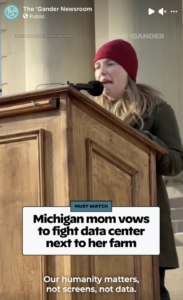

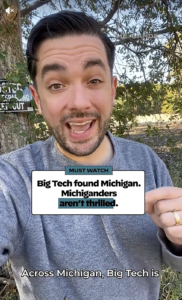
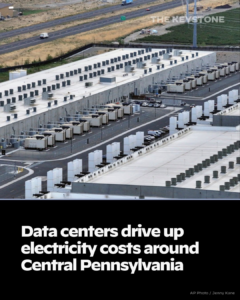
This wasn’t just rural communities opposing development that changes the landscape, as we see quite often. It wasn’t just suburban and urban NIMBYs speaking out about threats to the character of their neighborhoods. It wasn’t just environmentalists worried about pollution. It was everyone, everywhere, all at once united in opposition to data centers.
There has not been a single other issue we’ve seen this kind of response with; in our ultra-polarized political climate, very little unites left and right. When we saw our data center coverage really broke through across the ideological spectrum, it told us we’d hit on something. It told us that our audience cares about this topic and wants more coverage of it.
The data backed up our anecdotal observations that people were deeply engaged on the topic.
In the 4th quarter of 2025, we published 151 pieces of content about data centers across Courier’s 10 local newsrooms on Facebook, Instagram, and TikTok. Those posts garnered 7.1 million impressions, 571,740 engagements, and 68,622 shares. They received more than three times the average number of impressions as a typical piece of our content, and saw an engagement rate 56% higher than the typical piece of content we published in that timeframe.
My theory at the time, as written in an internal memo dated January 14, 2026, was as follows:
Data centers have become an invasive physical manifestation of deeply existential worries that Americans across party lines hold: they represent the dominance of Big Tech over all sectors of our society, they’re in-your-face imposing visual symbols of the growing role of AI (and the threat it poses to jobs and communal life), they represent out-of-touch government jamming local communities and overriding popular opinion, they represent threats to local environments and water supplies, and they’ve become an emblem of the rampant rising costs that have made life impossible for so many in the past five years.
Our coverage on data centers resonates so deeply because they represent real threats to multiple strands of people’s lives and identities — their individual livelihoods and finances, their physical communities, their local and regional economies, their environments, their sense of agency and freedom in their own life, and perhaps most importantly, their sense of having any control over their future. And it represents the ultimate story of our politics of the past 15 years — powerful elites and companies benefiting from a rigged, corrupt system that doesn’t listen to or serve American communities.
Data centers and AI are a massive political issue that has the ability to reshape our economy, our political coalitions, and remake the electorate. Right now, a handful of members of both parties recognize the potential here. Party leadership, however, continues to take a cozy, hands-off approach to it.
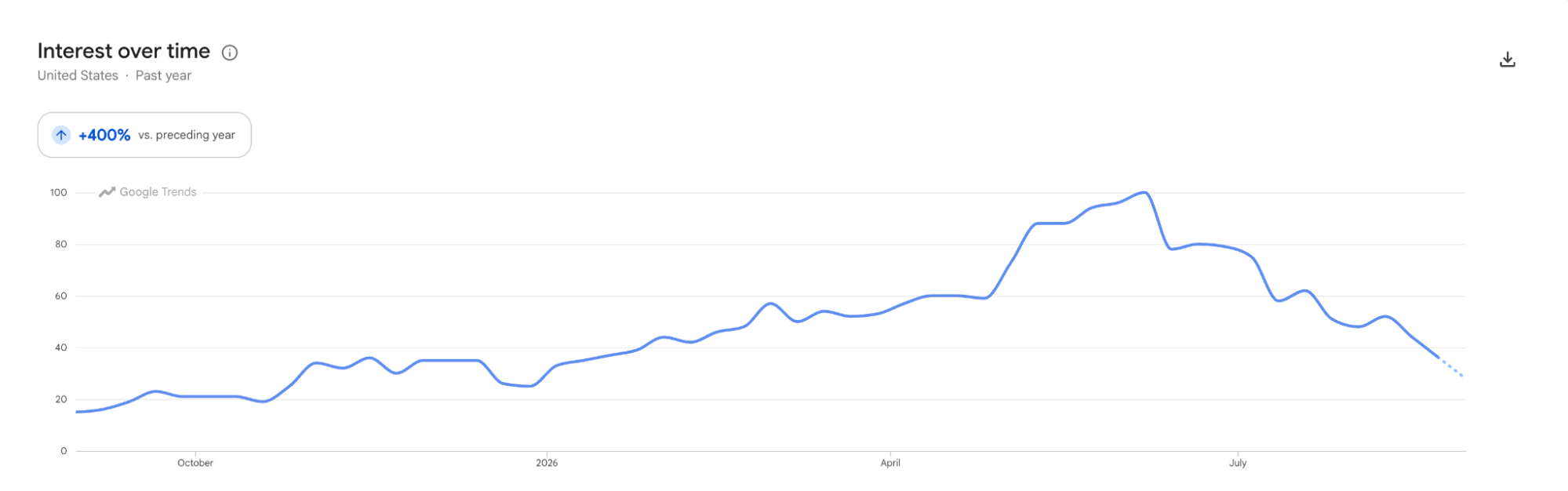
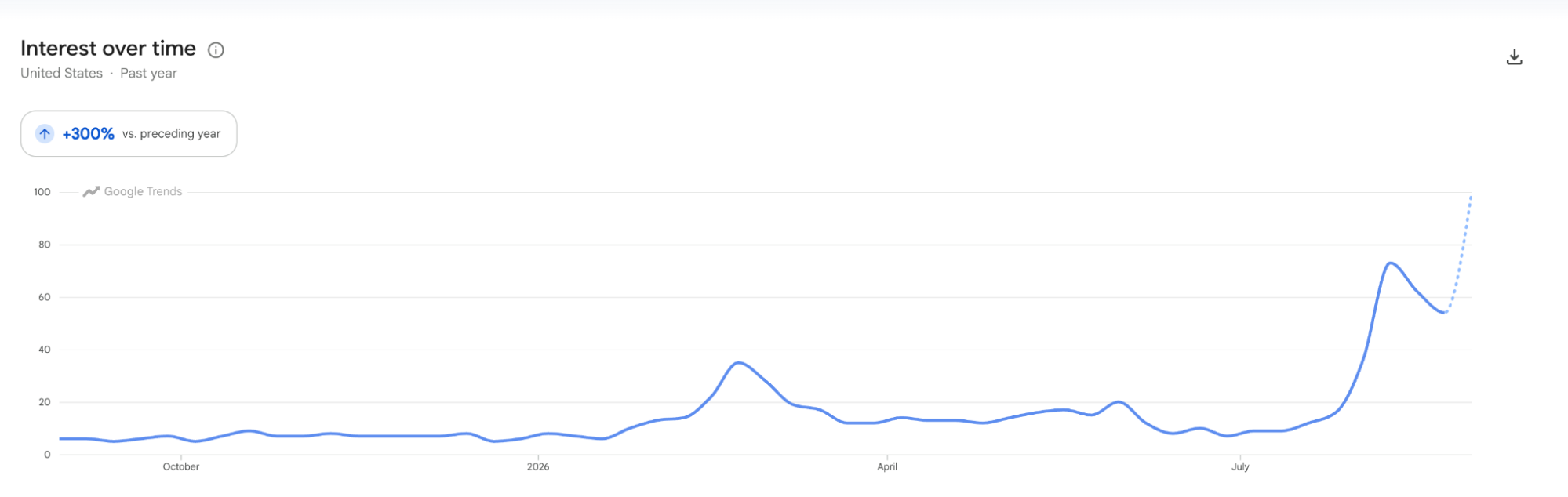
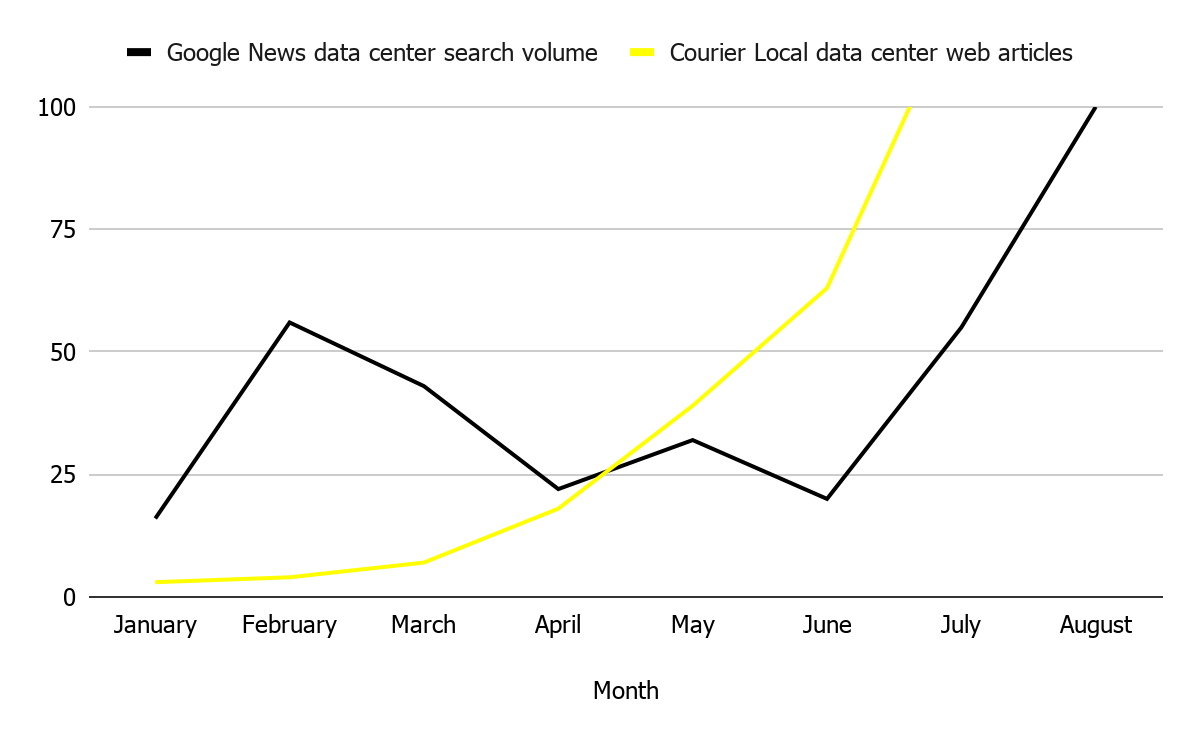
Nearly eight months later, I’d argue that theory holds up—and the issue isn’t going away. Interest in data centers has exploded this year.
Google search trends for data centers:
Google news trends for data centers:
Since it matters to our audience, we’ve continued our reporting on data centers in 2026. We’ve amplified everyday people’s perspectives in originally reported stories, produced compelling explainer videos, clipped local government meetings where residents and lawmakers discuss data centers, created skimmable graphics, written data center-focused newsletters, and provided audiences the information and resources they need to get involved in data center fights in their communities, should they want to. And as the midterm elections draw near, we’ve covered the massive amounts of spending coming from pro-AI forces scrambling to stem the backlash to data centers.
What does this look like in terms of raw numbers?
As of Aug. 31, we’ve published at least 1,313 pieces of content about data centers across the social media channels for Courier Local’s 10 original newsrooms and our 9 new expansion ones, which launched between May and August of this year.
Those posts have surpassed 45.4 million impressions and been engaged with more than 4 million times. They’ve also boasted by far our highest engagement rate on any topic we’ve covered this year on social media.
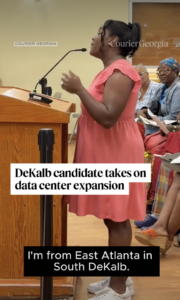


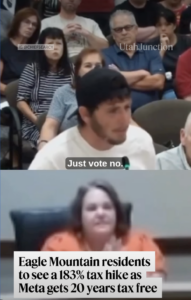
In total, data center content represents 4.4% of our total content output across social media, but accounts for 7.9% of our impressions and 7.1% of our engagements, once again showing that data center reporting broadly resonates and overperforms.
While we’ve covered data centers all year long, looking at the data, you see a very clear uptick starting in May.
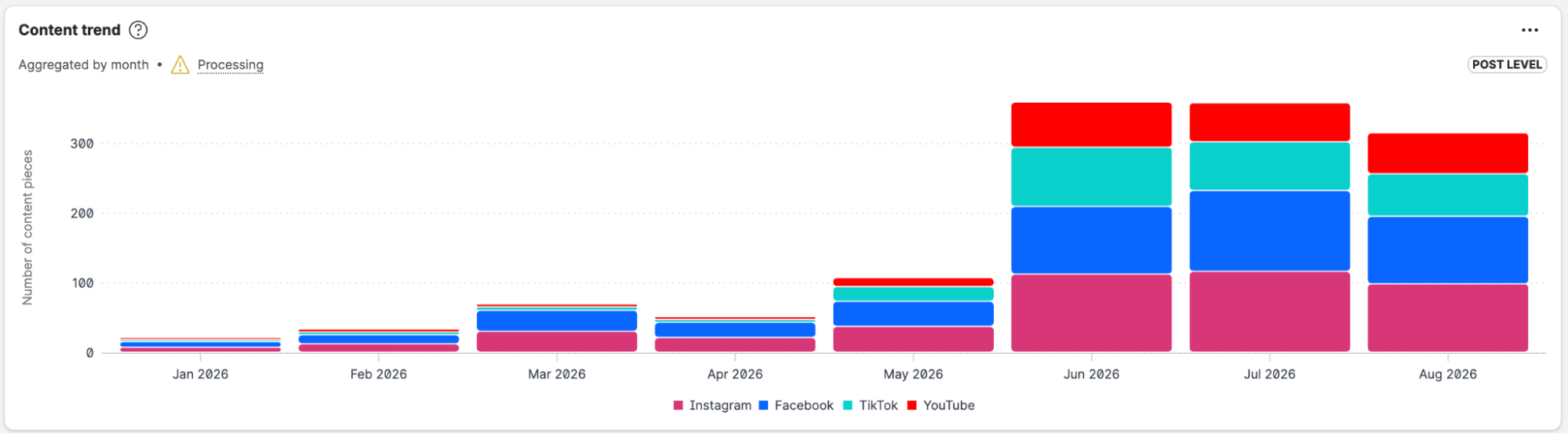
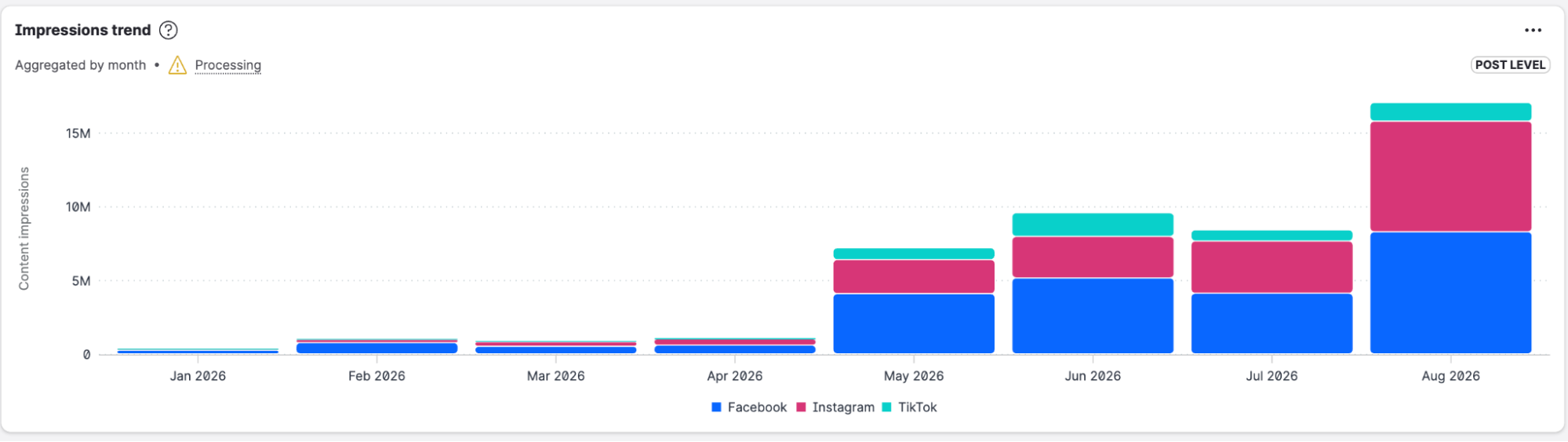
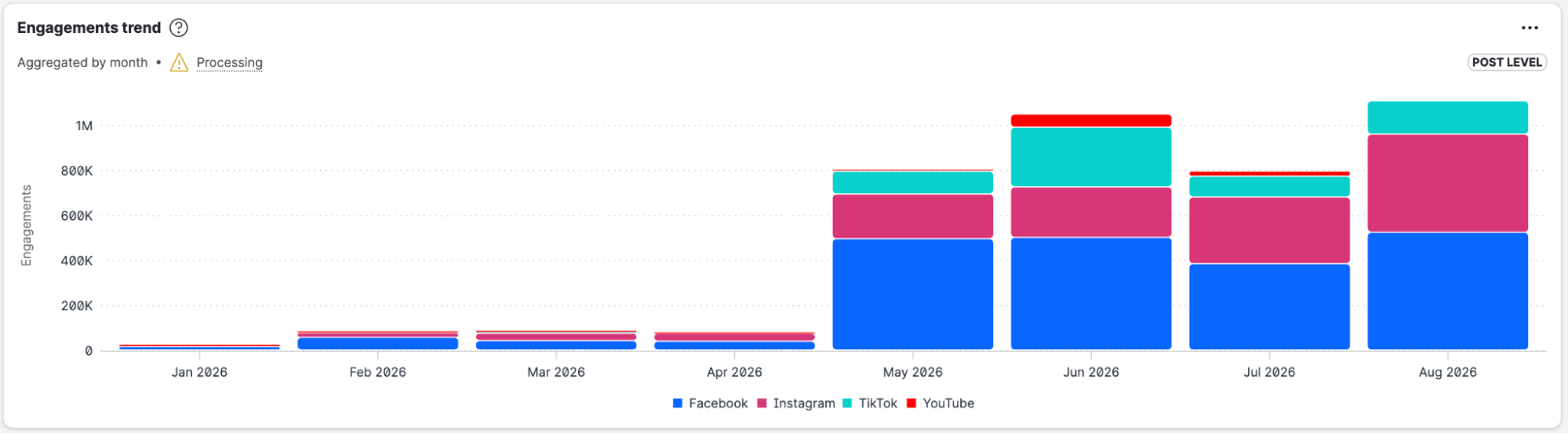
This is due to three factors:
- Our aforementioned expansion. From May to August, Courier roughly doubled its local footprint, and we’re now covering data center fights in 19 states instead of 10.
- As we saw data centers continue to become an even bigger deal, we increased our coverage. Again, this is simply listening to your audience.
- An overhaul of our social media strategy led to a higher volume of social content across the board, including but not exclusive to data center content.
While Courier is a social-first news network, we also continue to report and write articles. Across our 19 local newsroom websites, we’ve published 469 stories about data centers in 2026, most of which have also come since May. This includes original reporting and republished content from newsrooms that allow for it.
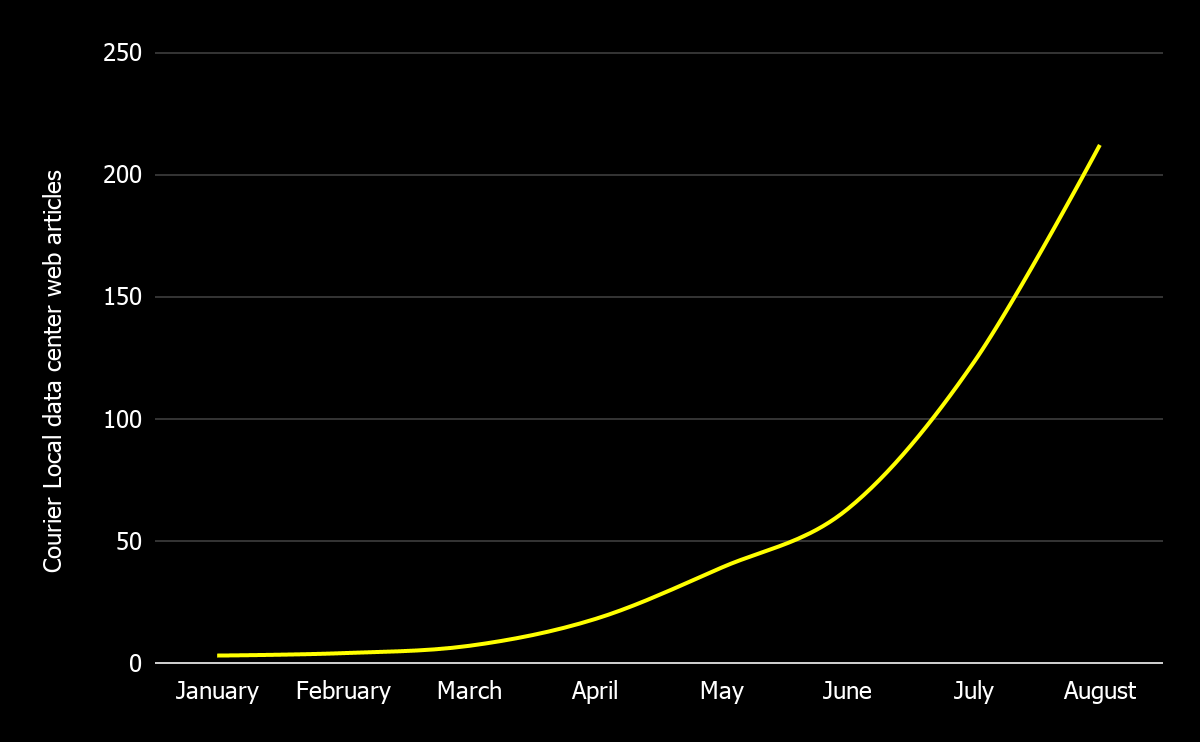
Interestingly, you’ll notice that our uptick in coverage began before the topic really exploded to the fore among the wider media ecosystem in July.
Impact
Beyond the topline metrics on Web and Social (and the tens of thousands of new followers we’ve gained through our coverage), our reporting has made us a go-to source for data center news in our states, with more than 50,000 Google searches that included the term “data center,” leading to our newsrooms, including:
- 21,000 to The Copper Courier in Arizona
- 8,970 to Gander Newsroom in Michigan
- 7,030 to The Keystone in Pennsylvania
In Michigan, our data center directory, which we update weekly, has become a resource for state residents interested in knowing the latest on data center fights in their communities, and has been cited by other local and national media as well.
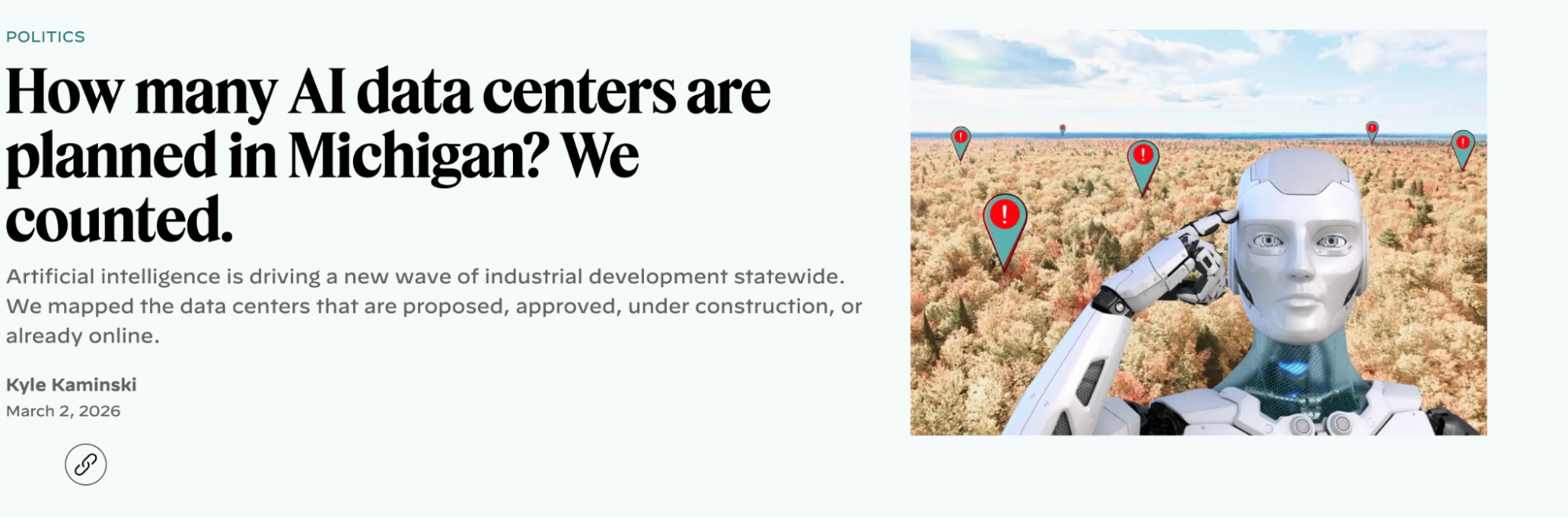
Our reporting on ways residents can get involved in these fights has also resonated and made an impact. For instance, these two posts drove 634 audience members to click through to local petitions.
Along the way, we’ve continued to engage with our audiences to ensure this is a two-way conversation.
When our newsletter editor at The Keystone, our Pennsylvania newsroom, asked his audience how they felt about AI in June, one subscriber replied: “I’m very concerned about the rapid growth of AI. Setting aside the tremendous problems with water, noise, and light pollution for people living near these massive data centers being built to support AI development, I would say that my biggest concern with AI is how people are being tricked into relying on it.”
That was one response of over 300 that came to our newsroom inbox.
Our coverage has also been noticed—and misinterpreted—by the right-wing Capital Research Center, which claimed we were “waging a coordinated offensive against the construction of AI data centers,” going on “all-out blitz against data centers,” and tying “the data center issue to elections and partisan politics.”
The author claims our coverage of data centers was inorganic and implies it was part of an astroturfed campaign to make data centers unpopular.
“Courier’s data center coverage appears to be as artificial as the artificial intelligence coming out of the data centers,” he writes.
It’s a credit to our incredible team of on-the-ground reporters, social media producers, newsletter editors, and state organizing coordinators that our coverage has been so widely consumed and impactful that some people think it’s part of some vast anti-data center plot.
It’s easier to turn to conspiratorial thinking and blast data center opposition as “Data Center Derangement Syndrome” than to evince an ounce of curiosity about why data centers have become so hated.
It’s easier to convince yourself that the tens of thousands of people who’ve protested and spoken up at local municipal meetings are either brainwashed or all part of some grand conspiracy than to ask: Might there be something deeper at play about why people hate data centers? Might it benefit me to listen and ask questions? Could I be the one who’s wrong?
Or you could simply say it’s the masses who are wrong. That’s proven to be a great strategy so far.
The truth is, our coverage was driven by Courier’s primary ethos: audience-focused journalism that aims to boost civic engagement and get people more involved in their communities. We take great pains to not just report on the issues, but to analyze what our audience is responding to—not just numerically, but philosophically—and ask why, and use those answers to inform future reporting.
We did what good political journalists do: We talked to people and more importantly, we listened to them.
That we’ve made an impact on the issue is a credit to our team—but it’s also just the result of good local political journalism, which should always be in conversation with local communities and responsive to them.
P.S. If you’re wondering what the next issue like data centers is, well, it’s already happening…


Do you have a data center in your community?
Tell us what’s happening where you live and how data centers are affecting your community.
It only takes a minute.