An Official Report Called a Close Epstein Associate a Neuroscientist. He Was Anything But.
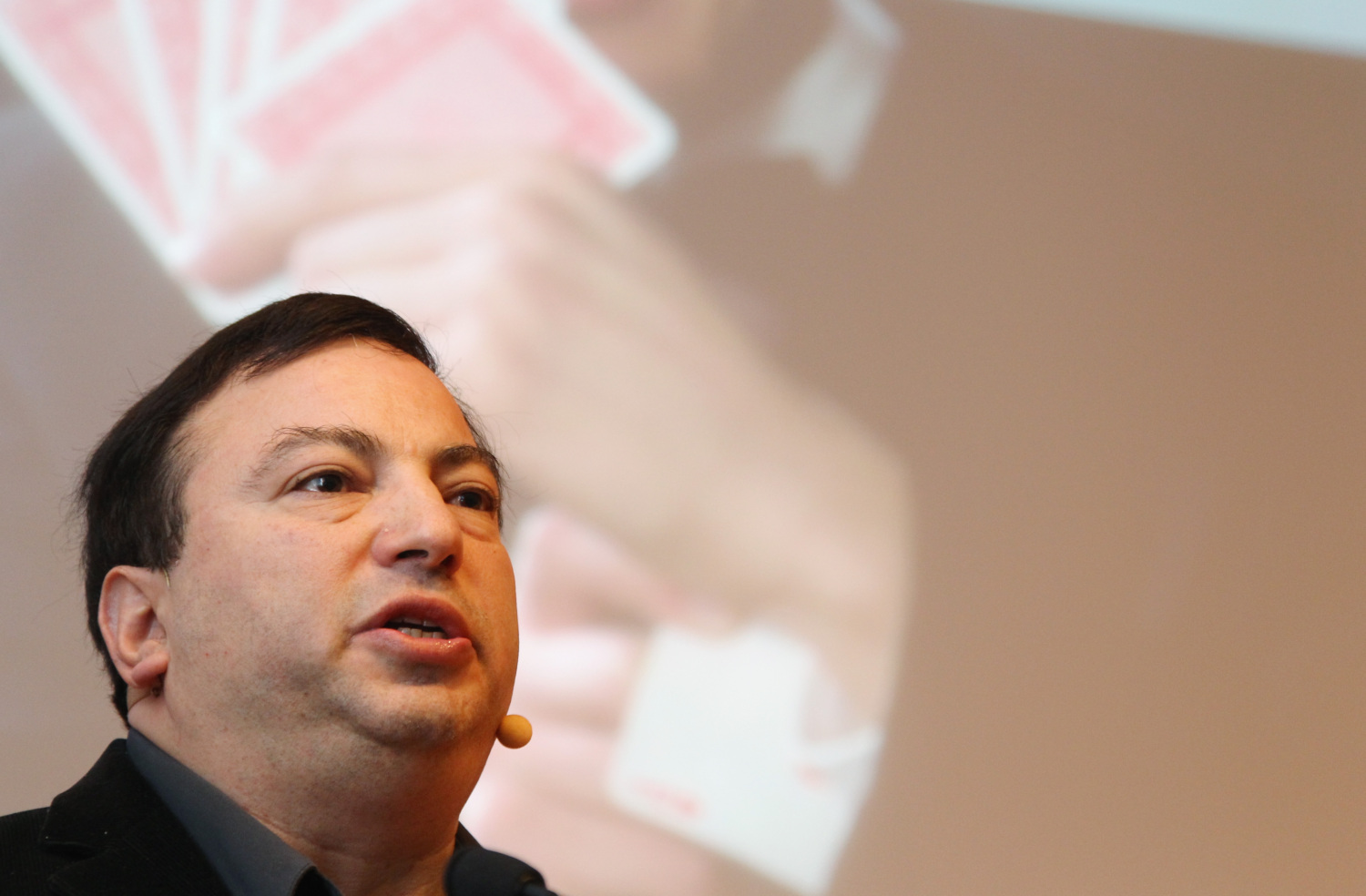
PHOTO BY JOHANNES SIMON VIA GETTY IMAGES
By Jackie Appel, Investigative Reporter
A special commission tasked by the New Mexico Legislature to investigate Jeffrey Epstein’s conduct in the state will soon release its final findings, but its interim report has already raised questions surrounding what the committee’s final findings will entail.
One point of interest called out in this interstitial report was Epstein’s significant web of connections and financial contributions to a renowned think tank called the Santa Fe Institute, or SFI. According to video interview footage and transcripts of interviews with associates, Epstein was introduced to the institute through Ghislane Maxwell, and quickly became fascinated by its focus on studying complex systems. Epstein was fascinated by what discoveries he believed lay beyond the frontiers of science, and seemed to believe that SFI could make those discoveries.
The Santa Fe Institute has fully complied with the commission’s subpoena for documents, which could provide crucial insights into how Epstein sought to make use of some of the best and brightest minds the world had to offer. The commission has also highlighted several characters that seem integral to the story of SFI and Epstein’s relationship.
One of these characters is a man named Al Seckel, who the Truth Commission report incorrectly describes as a neuroscientist. The commission also neglected to call out Seckel’s familial ties to Epstein’s criminal network: Seckel was the long-time partner of Isabel Maxwell, sister of Ghislane Maxwell — the only individual in Epstein’s organization to be successfully tried and convicted for sex trafficking.
COURIER reached out to the Truth Commission for clarity on its findings, but none of the legislators or legal staff responded to requests for comment.
Despite its attention-grabbing nature, the report’s inaccurate designation of Seckel as a neuroscientist is likely less a sign of any failure on the part of the commission and more a sign of Seckel’s success in a lifelong effort to deceive the world regarding his credentials. Born in 1958, he went to Cornell University, but he never actually graduated from the institution. Nonetheless, Seckel surrounded himself with high-profile scientists for decades — to the dismay of many, according to an exposé Tablet Magazine published shortly after his death — and seemed to have convinced many of them and most of the rest of the world that he was a prominent scientist himself.
In Tablet’s exposé, writer Mark Oppenheimer notes that the TED organization, for which Seckel gave a talk, had him listed on their website as a “cognitive neuroscientist.” Though he spent a significant amount of time investigating optical illusions, authored several books on the subject, and spent some time in the rare book trade,a neuroscientist he was not.
In the early 2000s, Seckel became involved with Ghislaine Maxwell’s sister, Isabel, which seems to have been his original connection to Epstein — a familial link that was also notable absent from the interim report. By this point, Seckel had connections to many respected members of academia, including Murray Gell-Mann, a theoretical physicist at the Santa Fe Institute. Epstein and Seckel were collectively able to leverage these ties to the scientific community to organize what was known as the Mindshift Conference, which was hosted on Epstein’s private island in the Virgin Islands in 2011.
While Epstein’s personal feelings about the man are unclear, he clearly found Seckel useful enough to keep around, and In the early 2010s he famously leaned on Seckel for substantial image rebranding. Under Seckel’s guidance, “Jeffrey Epstein, Prominent Philanthropist” began to emerge from the ether, with Seckel and associates maintaining several sites in Epstein’s name, and even editing his Wikipedia page to remove mentions of his sex crimes.
Seckel eventually died in 2015, a few years before Epstein. His body was found partially decomposed at the bottom of a cliff.
Seckel was an odd, shady character who seemed to have been quite involved in Epstein’s dealings with the scientific community — including, to some extent, his dealings with the Santa Fe Institute in New Mexico. That said, his ties to the institute in particular seem to have been more tangential-science-community than direct-involvement-with-influence (perhaps with the exception of some level of personal relationship with Murray Gell-Mann), and as such, Seckel does not appear extensively in the Truth Commission’s interim report.
The interim report, however, is just that: a placeholder, intended to provide the public with an update on an investigation that will not be complete for another few months. And with a long list of relevant Epstein characters to dedicate research time to, the deceased Al Seckel, a man who was never accused of sex crimes and did not live in New Mexico, is likely a low priority for a legislative commission focused on state crimes, with the goal of bringing justice to the victims of Epstein’s international sex trafficking operation.
That said, with so many eagerly watching the commission to see what they find, these kinds of mistakes could potentially signal to the public that there could be other details missing. Portraying a con artist as a legitimate scientist — even in passing — could make some wonder if those in charge of compiling this report were as meticulous in their investigation as the subject matter deserves.
More will be seen when the commission releases their final report in December.

COURIER’s newly-launched Epstein investigation project
For too long, the Epstein Class has dealt in wealth, power, and politics to avoid accountability and deny victims & survivors their due justice. The public deserves the truth, but the Trump Administration is failing its legal obligation to deliver it.
That’s why we’re expanding our coverage to follow the money and investigate the power players in and outside the government. With a new database by Thorian AI, we have unprecedented access and ability to navigate more than 1.2M files and we’re sharing access—and what we’re finding—with you.
Subscribe to The Cover-Up and get one concise, easy-to-read email a week that cuts through the noise with the headlines you need and the breakdowns you want.
By staying plugged in and leveraging our reporting to make your own calls-to-action louder, together, we can turn information into justice.