New Mexico Sues Epstein’s Lawyer and Accountant to Stop Them From Cashing In on His Estate
By Jackie Appel, Investigative Reporter
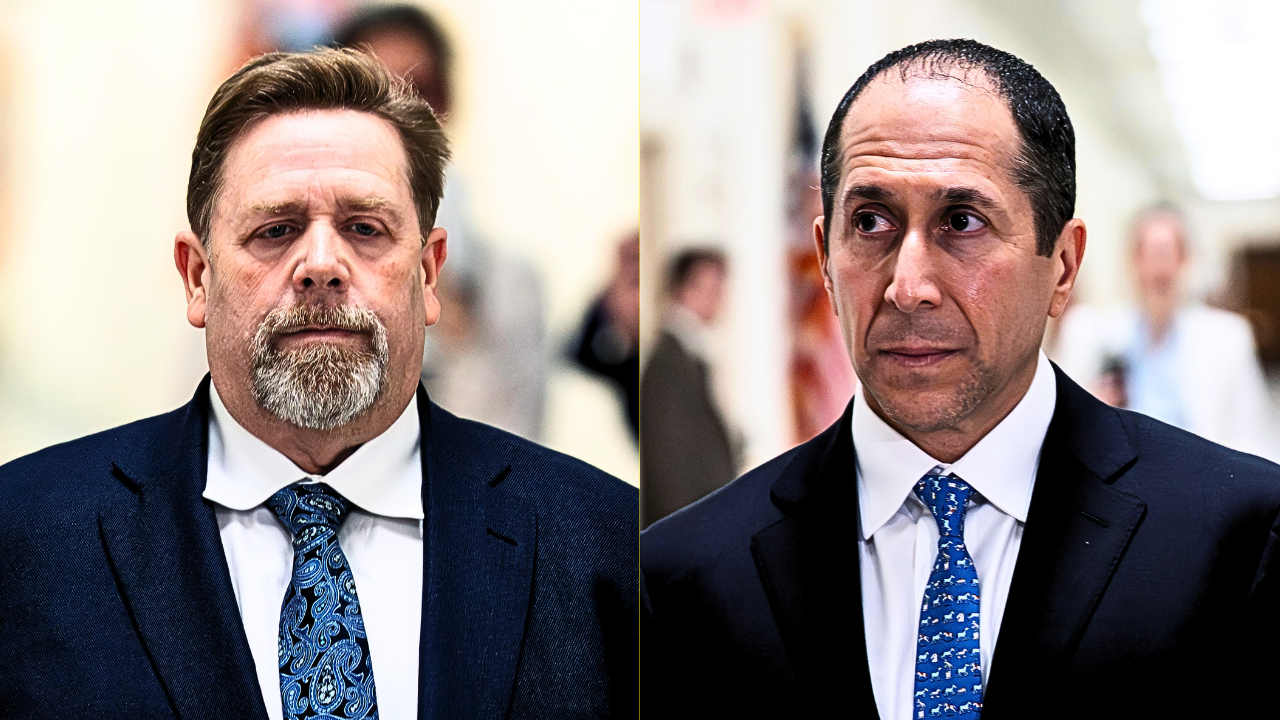
New Mexico Attorney General Raúl Torrez sued Jeffrey Epstein’s longtime attorney, Darren Indyke, and his accountant, Richard Kahn, on Wednesday, accusing the two men of helping finance and conceal Epstein’s sex trafficking operation, including abuse at his Zorro Ranch south of Santa Fe. The civil lawsuit, filed in the U.S. District Court in New Mexico, seeks to block Indyke and Kahn — who serve as co-executors of Epstein’s estate — from collecting payments from it while the case proceeds. It is the first law enforcement action against either man, according to Torrez’s office.
“Under the Trafficking Victims Protection Act and the New Mexico Racketeering Act, we have in short made a complaint that alleges that Mr. Indyke and Mr. Kahn, through patterns of conduct including participating in the organization of various corporate entities and structuring payments and concealing the operations of that enterprise facilitated the criminal conduct and the trafficking behavior of Jeffrey Epstein for a number of years,” Torrez said at a press conference. “And it is unconscionable in my mind that people who actively participated in the efforts of that trafficking enterprise should in any way benefit from what is left of his estate.”
Both men stand to gain from the estate, whose assets are held in an entity called the 1953 Trust. The estate is valued at more than $107 million, according to Torrez’s office. Under the trust’s terms, Indyke is eligible for a $50 million bequest and Kahn for $25 million, subject to the availability of funds. The complaint also alleges that between 2011 and 2019, Indyke received more than $16 million from Epstein and related entities, and Kahn received more than $10 million. Both men have testified before Congress that they did not know about Epstein’s abuse, The Associated Press reported.
Dan Weiner, an attorney for Indyke and Kahn, told the AP that the pair “emphatically reject” the allegations, and said New Mexico officials never sought to interview them before going to court. “Not a single woman has ever accused Mr. Indyke or Mr. Kahn of committing sexual abuse or witnessing sexual abuse,” Weiner said in an email.
Earlier this year, Indyke and Kahn, acting as executors, agreed to settle a class-action lawsuit brought by Epstein accusers for up to $35 million. They did not admit wrongdoing as part of the deal.
Two Epstein survivors, Julia Molchanova and Anouska De Georgiou, joined Torrez at the announcement. In a letter released alongside the lawsuit, a group of survivors also backed the state’s action. “Epstein’s trust names both men as primary beneficiaries, each standing to receive tens of millions of dollars. Now, as co-executors of his estate, they occupy a position of profound and deeply troubling conflict: helping determine what victims receive while standing to gain what is left over after the victims are paid for their damages.”
“That disparity is not a footnote,” the letter continues. “It captures the central moral failure of the estate: Darren Indyke and Richard Kahn, the two people who helped the most to sustain Epstein’s world of abuses and to gain far more from it than any one of the people he harmed. And, to be sure, it is Darren and Rich that made sure of it.”
The lawsuit follows another Torrez filed Aug. 5 against the U.S. Department of Justice, seeking unredacted Epstein investigative files that the state says could help identify victims, witnesses and additional criminal conduct in New Mexico. Specifically, Torrez sought files that name visitors, employees, and residents of Epstein’s Zorro Ranch, near the small community of Stanley, about 30 miles south of Santa Fe.
Epstein bought the ranch in 1993 and built a 26,700-square-foot mansion there, along with a private airstrip and helipad, the AP reported. The complaint describes the remote property as a place where Epstein and his associates recruited, transported, isolated and sexually abused girls and young women for more than two decades. The earliest documented abuse there dates to 1996. To investigate what happened at the ranch and who enabled it, the New Mexico House unanimously created the New Mexico Survivors’ Truth Commission, a bipartisan special committee, in February.
The commission’s interim report, the first of two it is required to issue this year, paints a disturbing picture of what went on at the ranch. It includes the confirmed accounts of five victims and acknowledges as many as 30 more whose accounts have not been confirmed. One survivor describes being flown to the ranch at the age of 15 and being molested by Epstein “for many hours.”
“What I remember most vividly was him explaining to me how beneficial the experience was for me and how much he was helping me to grow,” the account continues.
The report also lays out the commission’s lines of inquiry into Epstein’s conduct at the ranch, including his interest in eugenics and transhumanism, and into the people, organizations, power structures and loopholes that allowed his abuse to continue for decades. More is expected when the commission releases its final report, due Dec. 31.
Torrez cast the lawsuit as a way to steer what remains of Epstein’s fortune to the people he harmed. “Frankly,” he said, “if anyone is entitled to a recovery of Jeffrey Epstein’s estate, it’s the Epstein survivors who were targeted and trafficked here in New Mexico and beyond.”
The criminal investigation Torrez announced earlier this year remains ongoing, his office said.

COURIER’s newly-launched Epstein investigation project
For too long, the Epstein Class has dealt in wealth, power, and politics to avoid accountability and deny victims & survivors their due justice. The public deserves the truth, but the Trump Administration is failing its legal obligation to deliver it.
That’s why we’re expanding our coverage to follow the money and investigate the power players in and outside the government. With a new database by Thorian AI, we have unprecedented access and ability to navigate more than 1.2M files and we’re sharing access—and what we’re finding—with you.
Subscribe to The Cover-Up and get one concise, easy-to-read email a week that cuts through the noise with the headlines you need and the breakdowns you want.
By staying plugged in and leveraging our reporting to make your own calls-to-action louder, together, we can turn information into justice.