Araceli Cruz: Latino journalists reporting on their own communities are paying the price
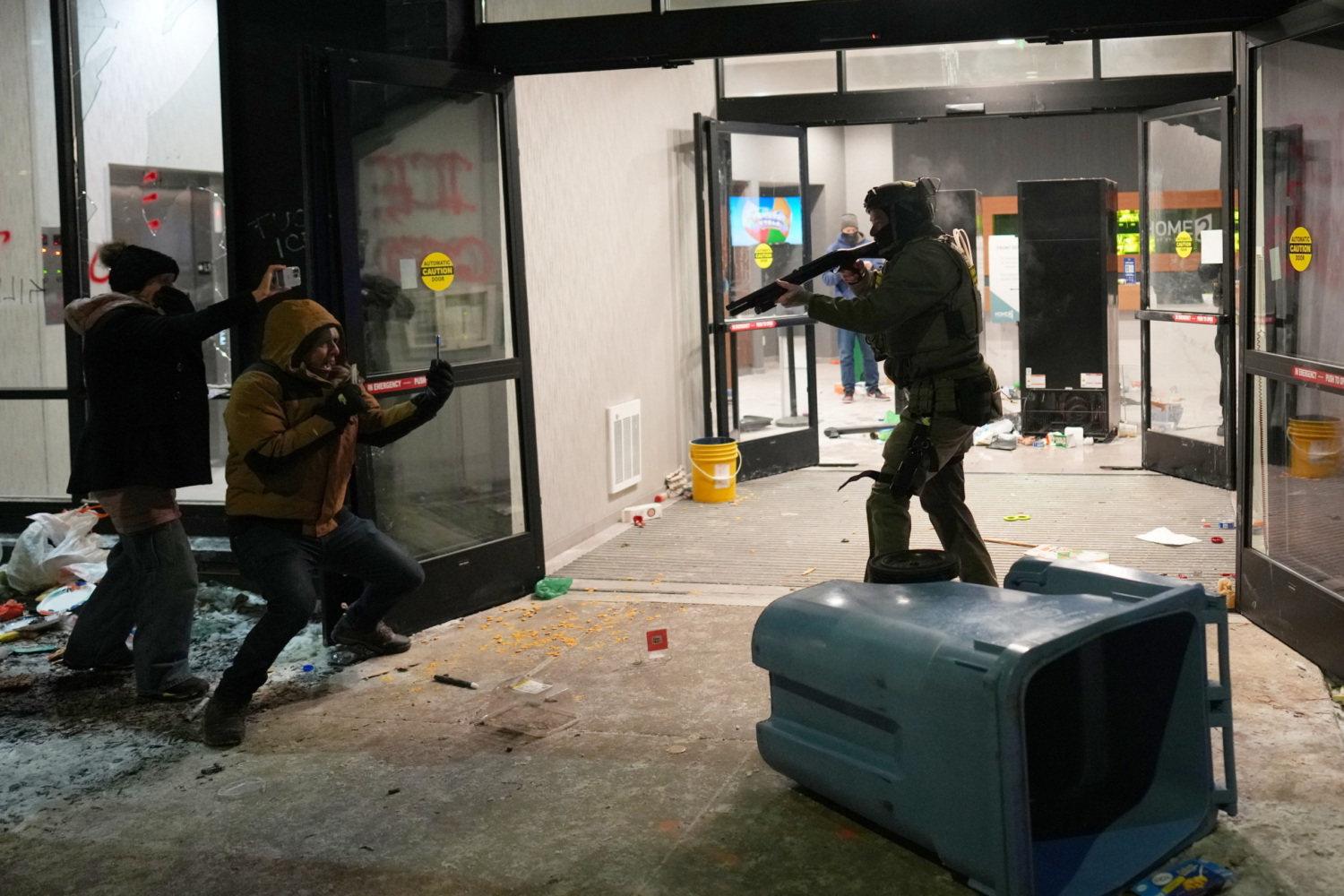
Pictured: Nick Valencia | Credit: Adam Gray/ ASSOCIATED PRESS
By Araceli Cruz
Just two days after federal agents shot and killed Alex Pretti in Minneapolis, independent journalist Nick Valencia — a phone in each hand, reporting live — found himself staring down the barrel of a shotgun.
An immigration agent pointed the weapon directly at him.
Valencia had flown in from California to cover vigils for the 37-year-old intensive care nurse and US Department of Veterans Affairs employee, who was fatally shot while trying to shield a woman during a volatile ICE raid.
Within hours of being held at gunpoint, Valencia was back online, reporting live.
Then the crackdown widened.
Two days later, his former CNN colleague Don Lemon was detained by the FBI and Homeland Security Investigations after covering a protest inside a Minnesota church. Independent journalist Georgia Fort was also apprehended.
As immigration enforcement escalates under Trump’s second term, journalists — particularly Black and Brown reporters covering their own communities — are facing intimidation, detention, and emotional exhaustion. Yet many say walking away isn’t an option, no matter how deep the distress gets.
In a moment when reporters themselves are becoming targets, I asked Valencia how he keeps going.
“The stakes are too big to quit,” he told me.
“This medium is powerful because we can be raw and honest. [The Trump administration] wants us scared, but we can’t cower. We have to let people know what’s happening to us.”
His experience forced me to confront a question I’ve been wrestling with for nearly a decade.
I never set out to cover stories like this.
Early in my career, I avoided hard news. I didn’t want to stand on the frontlines of war zones, political campaigns, or stories that hollowed me out emotionally. I had already carried enough of that weight in my own life. Instead, I chose joy — music, fashion, art, culture — narratives rooted in creativity and connection.
Then came August 25, 2015.
I watched as veteran journalist Jorge Ramos was told to “shut up and sit down” by then-presidential candidate Donald Trump. The moment was more than disrespectful. It felt like a warning — not just to the press, but to the Latino community Ramos represented.
After that, I couldn’t look away.
The hostility wasn’t abstract anymore. It was escalating — and personal.
My reporting shifted almost unconsciously. I had to cover what was happening not just to my community, but to America. I moved from cultural coverage into politics and immigration, documenting how federal policy collided with everyday Latino life.
During Trump’s first term, my work took me from KKK rallies in North Carolina to the removal of Confederate monuments in Virginia, and into living rooms where immigrant families whispered about raids and deportation.
So when Trump won again in 2024, I asked myself a question I hadn’t faced before:
Did I still have the endurance to keep chronicling this?
I wasn’t so sure.
For many young journalists, though, there is no hesitation.
Aisha Wallace-Palomares calls the current climate “insane.” Still, she sees her work as a reporter as both a responsibility and an opportunity. The recent UC Berkeley Graduate School of Journalism alum now covers immigration full-time for L.A. Taco, tracking ICE raids and protests across Los Angeles.
“I was in high school during the first Trump administration, and every day felt chaotic,” Wallace-Palomares said. “But this time feels different — even in ways we didn’t expect.”
The work is relentless. She monitors ICE sightings, verifies detentions, and counters misinformation in real time. “It’s nonstop,” she said.
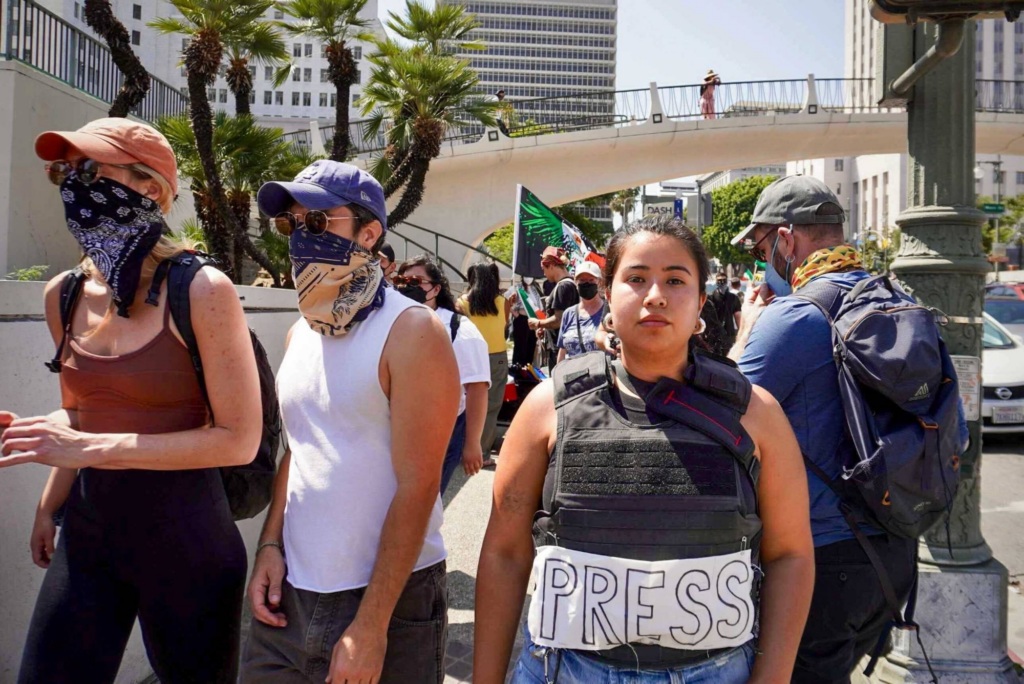 Pictured: Aisha Wallace-Palomares | Credit: Aisha Wallace-Palomares
She was alone.
“They were big guys. No clear identification,” Wallace-Palomares said.
After she began recording, they quickly dispersed and drove off.
“I was scared,” Wallace-Palomares admitted. “But I told myself — I’m a journalist. This is an important service to my community.”
The emotional toll of documenting raids, violence, and political hostility is real, and the psychological cost of this work doesn’t disappear the moment you stop recording.
Dr. Julia López, an assistant professor of medicine at Washington University in St. Louis, says the feeling of being overwhelmed with anger, sadness, and fear is common whether viewing the traumatic images and videos online or covering the madness in person.
“There’s importance in rest,” López said. “But there’s also importance in asking: Who do I want telling my story? Who do I want shaping how my culture is described? I want people who look like me — who’ve lived some version of my experience — to do that.”
That representation remains scarce.
According to a 2022 Pew Research Center survey, only 8% of US journalists identify as Hispanic or Latino.
At a time when immigration dominates the national conversation, the people most directly affected are still underrepresented in the rooms where those stories are told.
And yet — they keep showing up.
Valencia described speaking with the teachers of five-year-old Liam Conejo Ramos, the child who was used as bait by ICE agents and detained with his father. The emotional toll was unmistakable, he said.
For Valencia, the pain isn’t abstract. He’s experienced immigration enforcement firsthand. Family members, friends, and people in his own community have been detained and deported. That history makes this moment feel painfully familiar.
But what feels different now, he said, is that other communities are beginning to recognize what immigrant families have endured for years. The targeting, the fear, the instability — experiences once confined to certain neighborhoods — are becoming visible to a wider public.
Before our conversation, Valencia had been listening to Bad Bunny’s song “DtMF.” He told me he got emotional driving his daughter to school one day as he replayed the moment Bad Bunny paused after winning Album of the Year at the 2026 Grammys. His acceptance speech began simply: “ICE out.”
“I cried thinking about that moment, because [Bad Bunny] understood the weight of what we are feeling right now. And it’s a weight that other communities that have been persecuted have felt before, such as the black community.”
Valencia adds that being a journalist is the ultimate act of service. “I’m going to use that privilege that I have to speak up. And I think, you know, it’s the most American thing that I can do.”
I think about that as I open my laptop each morning. The young reporters standing alone in parking lots. The communities protecting one another from ICE raids. The families who see themselves reflected in our work.
I still don’t love covering heartbreak.
But I understand now that sometimes documenting the pain and injustice is how we protect each other.
So I keep going.
Not because it no longer affects me.
But because it does.