Congress is playing catch-up with Flock cameras
By Michael Jones
A police officer with access to an automated license-plate reader can use it to help find a missing child, recover a stolen car or identify a vehicle connected to a violent crime.
That same technology can also tell an officer where an ex-girlfriend’s car has been.
The difference between those searches is supposed to be rules, oversight and accountability. But as automated license-plate readers have spread across the country, those safeguards have not always kept pace.
At least 50 law enforcement officers have been charged with or accused of using automated license-plate reader systems for unauthorized purposes, according to a bipartisan letter Sens. Raphael Warnock (D-Ga.) and Katie Britt (R-Ala.) sent Attorney General Todd Blanche this week. At least 30 of those cases involved officers allegedly stalking current, former or prospective romantic partners.
In one case cited by the senators, a police chief allegedly searched for vehicles belonging to a former partner and her daughter about 600 times over 13 months.
Now Washington is confronting a question communities have already been forced to reckon with: What rules should govern technology capable of tracking where Americans go—and who is making sure the people with access to it follow them?
“This is a national issue,” Warnock told me Wednesday at the Capitol. “There’s some 140,000 officers all across the country who have access to this technology.”
Warnock and Britt are behind the Senate’s first bipartisan action focused specifically on automated license-plate readers, or ALPRs. They are asking the Justice Department to recommend safeguards for state and local police departments, including access controls, audits and supervisory review. They also want the DOJ to explain by Oct. 21 how much federal funding has supported the systems and what oversight accompanies that money.
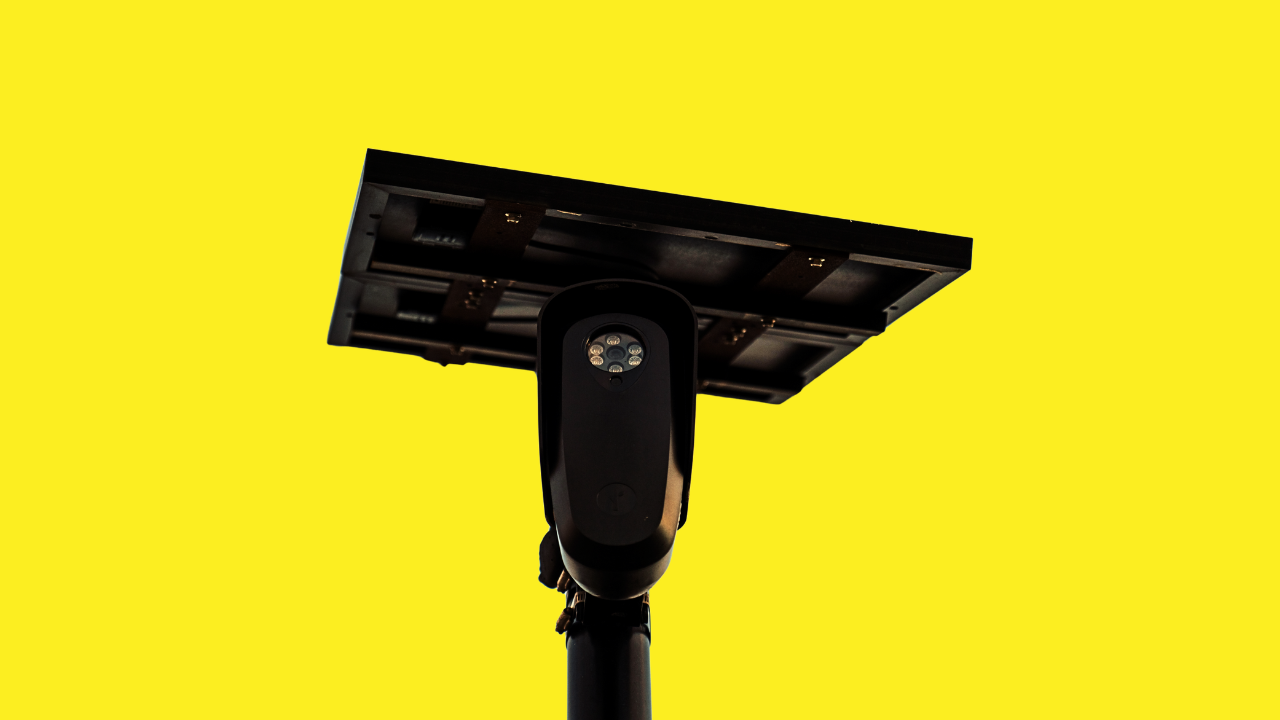
Their push comes as Congress is taking a broader look at Flock Safety, the Atlanta-based company that operates the country’s largest ALPR network. Flock has more than 120,000 cameras across 49 states and 140,000 monthly active users, according to the senators. The cameras record information including a vehicle’s license plate, make, model, color, location and time and turn it into searchable data.
On Wednesday, senators from both parties raised privacy and civil-liberties concerns at a Senate Judiciary subcommittee hearing titled “Always Watching: Flock’s Nationwide AI Surveillance Network.” Flock CEO Garrett Langley declined to testify.
The emerging debate is not simply about whether the cameras are good or bad. Both senators who spoke with me stressed that the technology can serve legitimate—and sometimes urgent—public-safety purposes.
Britt pointed to cases in Alabama in which the technology has helped police investigate murders and burglaries and recently locate a person with dementia.
“I support law enforcement, and I want to make sure that they have every tool in their toolbox to make sure that they can keep Alabamians and Americans safe,” Britt told me. But, she added, there have also been cases in which “rogue law enforcement officers have used them in a way that is counter to their intent.”
“We want to make sure that citizens are also protected from those misuses,” she said.
That distinction matters. The policy response does not have to be a choice between abandoning the technology and accepting unrestricted surveillance.
Warnock made the same point to reporters on Wednesday morning.
“The technology can’t be trusted to manage itself,” he said during a press call.
Flock itself has responded to the scrutiny by strengthening its safeguards. The company announced last month that it was reducing its recommended default retention period for license-plate data from 30 days to seven, requiring case codes for law-enforcement searches and making a system that flags abnormal search activity mandatory for law-enforcement customers. It is also introducing automatic lockouts when user activity meets criteria for abnormal behavior, pending an administrator’s review.
Those changes also illustrate a larger problem: some of the protections now being strengthened are arriving after the technology has already become deeply embedded in American policing.
That is where Warnock and Britt see a role for Washington.
Follow the federal money
The federal government helps state and local police buy technology. The Justice Department’s Edward Byrne Memorial Justice Assistance Grant program, for example, provides hundreds of millions of dollars for state and local criminal-justice priorities—including equipment, technology and information systems. And a separate $300 million DOJ initiative announced this summer specifically lists license-plate readers and artificial-intelligence systems among the technologies eligible for federal support.
What remains unclear is how much federal money has paid specifically for ALPR systems and what conditions came with those dollars.
Warnock and Britt are asking the DOJ to answer exactly that.
They want to know how much department funding has supported ALPR purchases, whether grant recipients receive training on data retention and access, whether DOJ knows of misconduct involving federally funded systems and whether agencies can face financial penalties or be required to take corrective action when abuse occurs.
Warnock told reporters that federal funding gives Washington an accountability tool.
“The entities that want federal funding need to be held accountable,” he said.
He also rejected the idea that states and cities alone can solve the problem through a patchwork of different policies.
Warnock wants audits of searches, stronger supervision and systems that can track how the technology is being used before abuse becomes persistent.
“For all we know, this is just the tip of the iceberg,” he said of the documented cases.
Britt framed their partnership as an attempt to keep the issue from becoming another partisan fight.
“I think it’s important for us to speak in a bipartisan manner, so that Americans know we are not trying to politicize the issue,” she told me. “I also understand making sure that we not only curtail [misuse of the technology], but we have to hold people accountable for it too.”
Want to know whether Flock is watching your streets?
You don’t have to wait for Washington to learn how license-plate readers are being used where you live.
Start with your city or county government and police department websites. Search for “Flock Safety,” “automated license plate reader,” “ALPR” and “license plate reader.” City council and county commission agendas, procurement databases and contract records can show whether a local government has purchased the cameras, how much it is spending and when a contract was approved.
Police departments may also publish policies governing who can search ALPR databases, how long they retain information, whether they audit searches and when they can share data with other agencies. State law can impose additional requirements.
And those details matter. Flock says its current standard retention period is seven days, but existing customers can maintain previously approved retention periods and different state and local requirements can apply. The company also says customers own and control the data their cameras collect.
The question facing policymakers has evolved from whether the technology will remain part of policing to whether the rules governing it can catch up with its capabilities.
Warnock put it more starkly.
“Big Brother is already here,” he said.
The challenge for Congress, the Justice Department and thousands of police departments around the country is deciding who gets to look up where Americans have been—and making sure somebody is watching the people doing the searching.
Michael Jones is an independent Capitol Hill correspondent and contributor for COURIER. He is the author of Once Upon a Hill, a newsletter about Congressional politics.