Democrats warn of reconciliation déjà vu
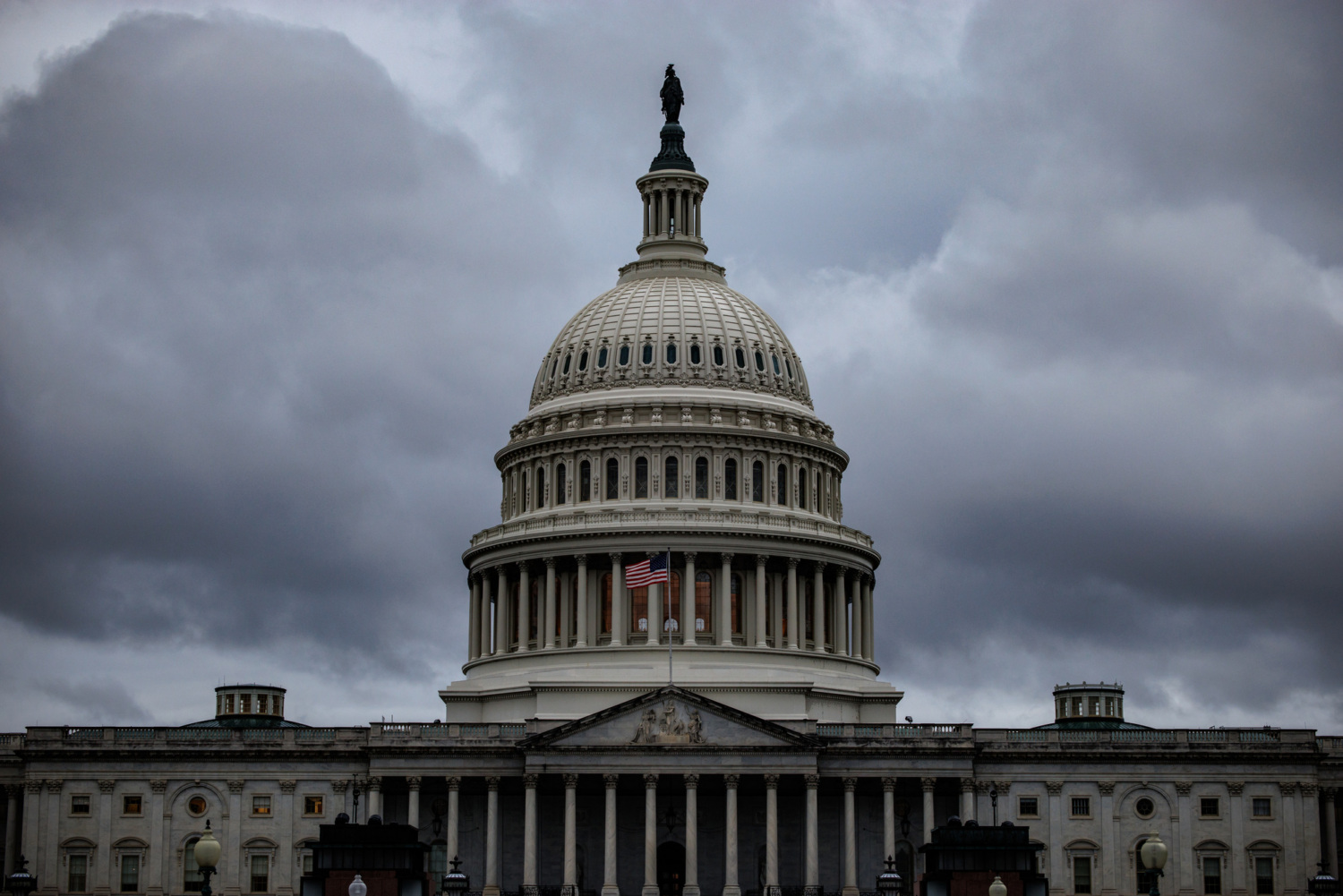
Photo by Samuel Corum/Getty Images
By Michael Jones
House and Senate Republicans will return from a two-week recess next week to get cracking on their spring legislative project: funding ICE and CBP for the duration of President Donald Trump’s second term.
The GOP is turning to budget reconciliation—the fast-track legislative process it used to pass the One Big Beautiful Bill Act last summer—to move forward after rejecting Democrats’ demands for ICE reforms in the wake of the January killings of Renée Good and Alex Pretti by federal agents in Minneapolis.
Without those reforms—including requirements for officers to wear body cameras and maintain visible identification, prohibitions on the use of masks, and mandates to obtain judicial warrants before entering homes for immigration enforcement—Democrats refused to fund ICE and CBP.
House Speaker Mike Johnson (R-La.) and Senate Majority Leader John Thune (R-S.D.) announced last week that Congress would fund the rest of the Department of Homeland Security—including TSA, FEMA, the Coast Guard, and the Cybersecurity and Infrastructure Security Agency—in a deal with Democrats, while Republicans move separately to bankroll the immigration enforcement agencies. (House Republicans oppose the deal, so DHS remains shut down in what continues to be the longest funding lapse in U.S. history.)
President Trump has set a June 1 deadline for the two leaders to send the bill to his desk.
But Democrats are warning that this is the opening move in another round of cuts to programs like Medicaid and SNAP, even if most Republicans aren’t saying it out loud yet.
“I’m going to venture to say that health care is going to be included and supplemental nutrition programs that Americans rely on, that those are likely,” House Democratic Caucus Chair Pete Aguilar (D-Calif.) told me last month. “I say that because that continues to be the well that Republicans go to when they’re looking for offsets.”
House Minority Leader Hakeem Jeffries (D-N.Y.) argued that the first reconciliation bill paired historic cuts to Medicaid and nutrition assistance—stripping coverage from millions and reducing food aid—with tax breaks for wealthy donors and a $75 billion fund he said could be used for aggressive immigration enforcement. He warned that a second bill would double down on that approach, expanding immigration crackdowns and potentially directing as much as $200 billion toward U.S. military action in the Middle East instead of lowering costs for Americans.
“It’s incredible to me that Republicans are considering trying to jam Part Two of the One Big Ugly Bill down the throats of the American people,” House Minority Leader Hakeem Jeffries told reporters before Congress left at the end of last month for a two-week recess, using his preferred name for the OBBBA.
Reconciliation isn’t inherently about cutting social programs. It was created in the Congressional Budget Act of 1974 as a tool to align existing law with the fiscal targets set in the annual budget resolution. In modern practice, it has become the primary vehicle for major party-line policy when one party controls Congress and the White House because it’s exempt from the Senate filibuster.
Both parties have taken advantage of reconciliation in the past decade: Republicans with the OBBBA and the 2017 Trump tax cuts and Democrats in 2021 and 2022, when they enacted the American Rescue Plan and the Inflation Reduction Act.
But House Republicans, in particular, often demand that reconciliation bills be either deficit-neutral or deficit-reducing. That’s where pressure to cut Medicaid, SNAP, or similar programs comes from—not the rules of reconciliation themselves.
The first step of the process is to pass a budget resolution, which sets topline fiscal goals and, crucially, includes reconciliation instructions directing specific committees to produce legislation that meets numerical targets (cut $X, spend $Y, reduce or increase the deficit by $Z).
If they write a new resolution that requires deficit reduction, they need to find savings somewhere. Programs like Medicaid and SNAP are large, mandatory spending streams that are frequent targets because cutting them yields big numbers.
Republican leaders want the measure to be as narrow as possible to increase the likelihood that they can meet Trump’s ambitious deadline. Still, some Republicans want to fund ICE and CBP beyond the end of Trump’s term, attach provisions from the SAVE America Act and appropriate up to $200 billion in additional funding for the war in Iran to the bill. The bigger the bill, the bigger the cuts usually are when the GOP is in charge.
To be clear, Republicans can pass another reconciliation bill without further slashing the social safety net. But doing so would likely require either accepting higher deficits or making politically harder choices elsewhere, both of which can fracture the conference and tank the bill before they ever have a chance to vote on it.
That doesn’t mean GOP leaders won’t try.
House Budget Committee Chair and Jodey Arrington (R-Texas) said Republicans see the next reconciliation bill as a chance to pair defense funding with what he described as “program integrity” reforms across major federal programs, arguing the first bill’s changes to Medicaid and SNAP should be a starting point, not the endpoint.
He suggested the push to fund military operations gives Republicans the political leverage to codify additional anti-fraud measures that might not pass otherwise, while insisting the effort must be deficit-conscious to satisfy fellow budget hawks in a narrowly divided House.
Arrington pointed to programs with high improper payment rates—such as the Earned Income Tax Credit—as well as potential changes to housing credits and Affordable Care Act subsidies as examples of areas where Republicans could pursue savings, arguing that reducing waste, fraud, and long-term costs across mandatory spending is necessary to address what he described as an unsustainable fiscal outlook.
No Democrats in either chamber voted for last year’s megabill, and Jeffries told reporters he expects that unanimous opposition to continue if Republicans coalesce around a second this spring.
“This country is far too expensive, the cost of living is far too high as a result of failed Republican policies, and now they’re doubling and tripling down on it,” Jeffries said. “I can say without reservation that the One Big Ugly Bill Part Two—spending billions of taxpayer dollars, perhaps to rip healthcare away some more from the American people, while funding this reckless war of choice and continuing to unleash ICE brutality on the American people—will not get a single Democratic vote.”
Michael Jones is an independent Capitol Hill correspondent and contributor for COURIER. He is the author of Once Upon a Hill, a newsletter about Congressional politics.