Inside the surveillance debate that scrambles American politics
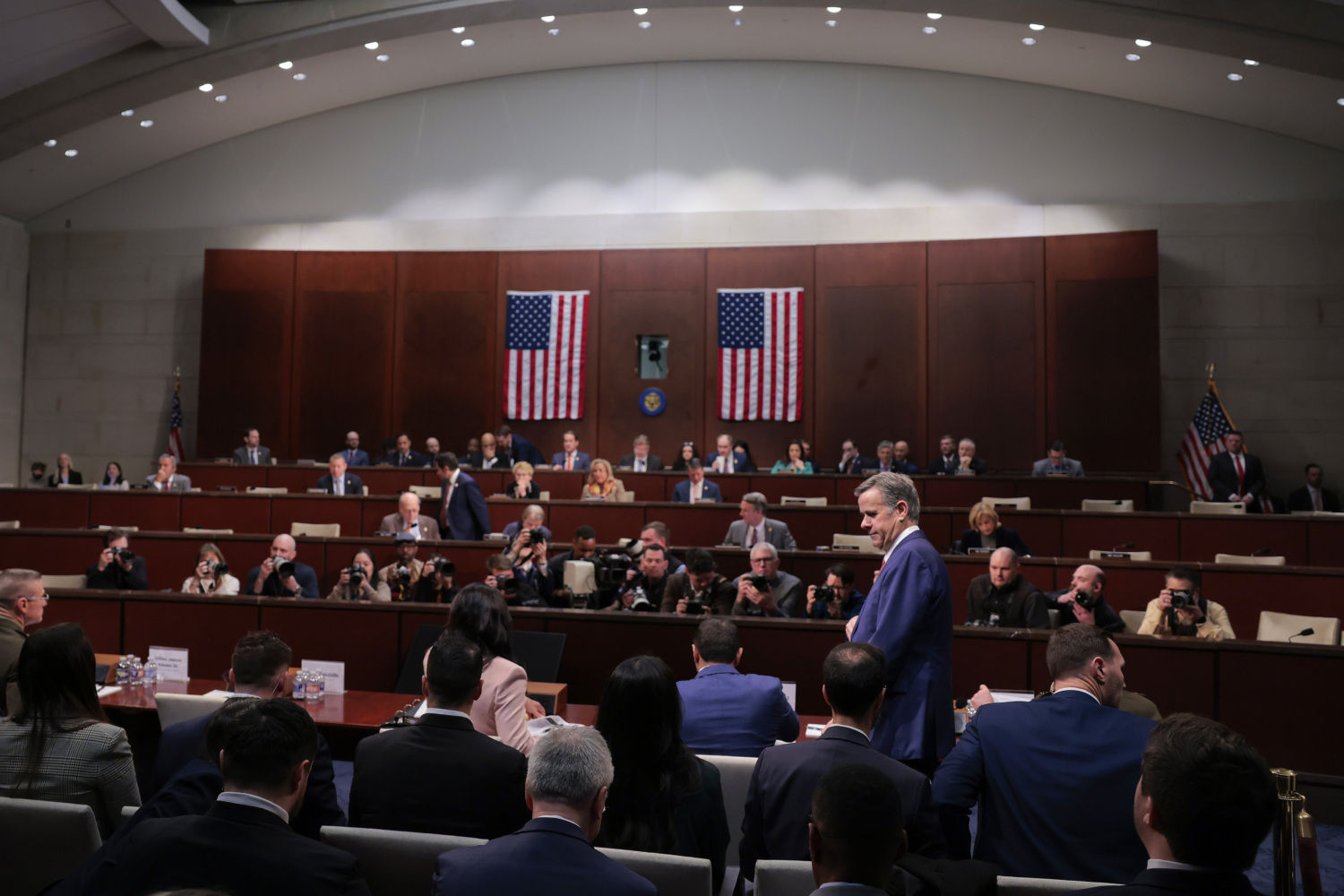
Photo by Heather Diehl/Getty Images
By Michael Jones
Americans live in a country where their private communications can be swept into government databases, while many of the officials seeking continued access to those databases operate behind layers of secrecy, classification and institutional mistrust.
That inversion helps explain why Congress returns from the Memorial Day recess with just one week to settle a proxy fight over privacy, executive power and what Americans are willing to tolerate in the name of national security during President Donald Trump’s second term.
Lawmakers face a deadline next Friday to extend the federal government’s foreign surveillance authority under Section 702 of the Foreign Intelligence Surveillance Act. The provision allows the government to collect communications from foreign targets overseas without a warrant, but it can also capture exchanges involving Americans.
The core tension pits privacy hawks across the ideological spectrum, who want warrant requirements before the government can search Americans’ communications swept up through foreign surveillance, against intelligence officials and congressional leaders who argue preserving the status quo is essential to counterterrorism and national security operations.
Few contemporary policy debates scramble the political landscape quite like Section 702.
Some progressive Democrats and MAGA-aligned Republicans share a deep distrust of the intelligence apparatus, albeit for very different reasons. At the same time, many lawmakers who routinely warn about authoritarianism and executive overreach under Trump are also being asked to renew one of the government’s broadest surveillance authorities.
“I have been skeptical that the majority of Republicans want to do anything to reform FISA, but I am optimistic that we have continued to delay it because the vast majority of people want a warrant requirement,” Rep. Pramila Jayapal (D-Wash.), a member of the House Judiciary Committee and former chair of the Congressional Progressive Caucus, told me. “And so hopefully what they understand is we’re not going to do another extension, and they have to actually give us a vote on a warrant requirement in order for FISA to ever pass.”
Rep. Jim Himes (D-Conn.), the top Democrat on the House Intelligence Committee, which shares jurisdiction over FISA with Judiciary, told me before the Memorial Day recess that allowing the government’s foreign surveillance authorities to expire is not an option. But with the House largely in a holding pattern, lawmakers are waiting to see whether the Senate can assemble the 60 votes needed to advance a long-term extension.
“FISA is hung up in the Senate right now,” Himes said. “So it’s a little hard to know what’s coming back to us. But yeah, no, you cannot let FISA expire.”
The urgency stems from the role Section 702 plays in the nation’s intelligence architecture.
Intelligence officials argue the authority helps the United States identify terrorist plots, track foreign adversaries, disrupt cyberattacks and monitor espionage threats from countries such as China, Russia and Iran. Because the program targets non-Americans located overseas, supporters argue it provides insights that would be difficult or impossible to obtain through traditional warrant-based surveillance.
The intelligence community has repeatedly described Section 702 as one of its most valuable collection tools. Supporters of a long-term extension warn that allowing the authority to lapse could create intelligence gaps at a moment of rising geopolitical tensions and increasingly sophisticated cyber operations and influence campaigns targeting Americans.
That argument has persuaded lawmakers in both parties for years. The question now is whether Congress can preserve those capabilities while satisfying growing demands for stronger protections.
Notably, even many of the lawmakers pushing hardest for reform do not want Section 702 to expire. Instead, they argue that the authority can be preserved while adding stronger safeguards for Americans whose communications are swept up in foreign surveillance.
For privacy hawks on both sides of the aisle, the fight over warrant requirements is about more than just surveillance policy. It is a test of whether Congress is willing to place guardrails on government power at a time when trust in public institutions remains near historic lows and concerns about executive overreach span the ideological spectrum.
Congress has spent much of the spring lurching from one Section 702 deadline to the next without resolving the underlying disagreement.
The first major breakdown came in April, when Speaker Mike Johnson (R-La.) attempted to move a five-year reauthorization package that included several reforms negotiated with conservatives. The effort collapsed after a dozen Republicans voted against the bill and 20 GOP lawmakers joined Democrats to defeat the rule needed to bring a separate 18-month extension to the floor.
House leaders ultimately resorted to a two-week extension of existing authorities to prevent the program from expiring while negotiations continued.
The failed April push exposed the depth of the divide. Members of the House Freedom Caucus and civil-liberties advocates argued the legislation did not go far enough to require warrants before searching Americans’ communications. Intelligence officials and many congressional leaders countered that additional restrictions could undermine a critical national security tool.
By the end of April, lawmakers still had not reached a compromise. The House approved a three-year extension, but the measure stalled in the Senate after Republicans attached an unrelated ban on a central bank digital currency. Facing another deadline, Congress instead approved a clean short-term extension through mid-June. The agreement came only after Sen. Ron Wyden (D-Ore.) secured a commitment from Senate Intelligence Committee leaders to pursue declassification of a key FISA court opinion that privacy advocates argue could shed additional light on how Americans’ communications are collected and searched.
Now, with that latest extension nearing expiration, Congress finds itself back where it started: facing another deadline, divided over warrants and privacy protections, and under pressure to find a compromise.
“Look, they either need to take the House bill on FISA or send us back something that looks a lot like it,” Himes told me.
As with most issues in this era of Congress, that’ll be easier said than done.
Michael Jones is an independent Capitol Hill correspondent and contributor for COURIER. He is the author of Once Upon a Hill, a newsletter about Congressional politics.