National Operatives Picked Maine’s Candidate. Maine Is Living With the Consequences.
By Denise Feriozzi
The Democratic party has spent decades searching for the ‘perfect’ candidate. This week reminded us, for the second time in a single cycle, that the search itself is part of the problem. When it comes to candidate recruitment, we are doing it wrong — and until we fundamentally change our approach, we’ll be doomed to repeat these same mistakes every two years.
Every two years, a handful of elite national operatives and consultants parachute into communities they don’t understand, hand them candidates they don’t know, and fly home before the consequences land. And this past week, the consequences landed hard: on a community, on women who deserved better, and on a party that should have known better too.
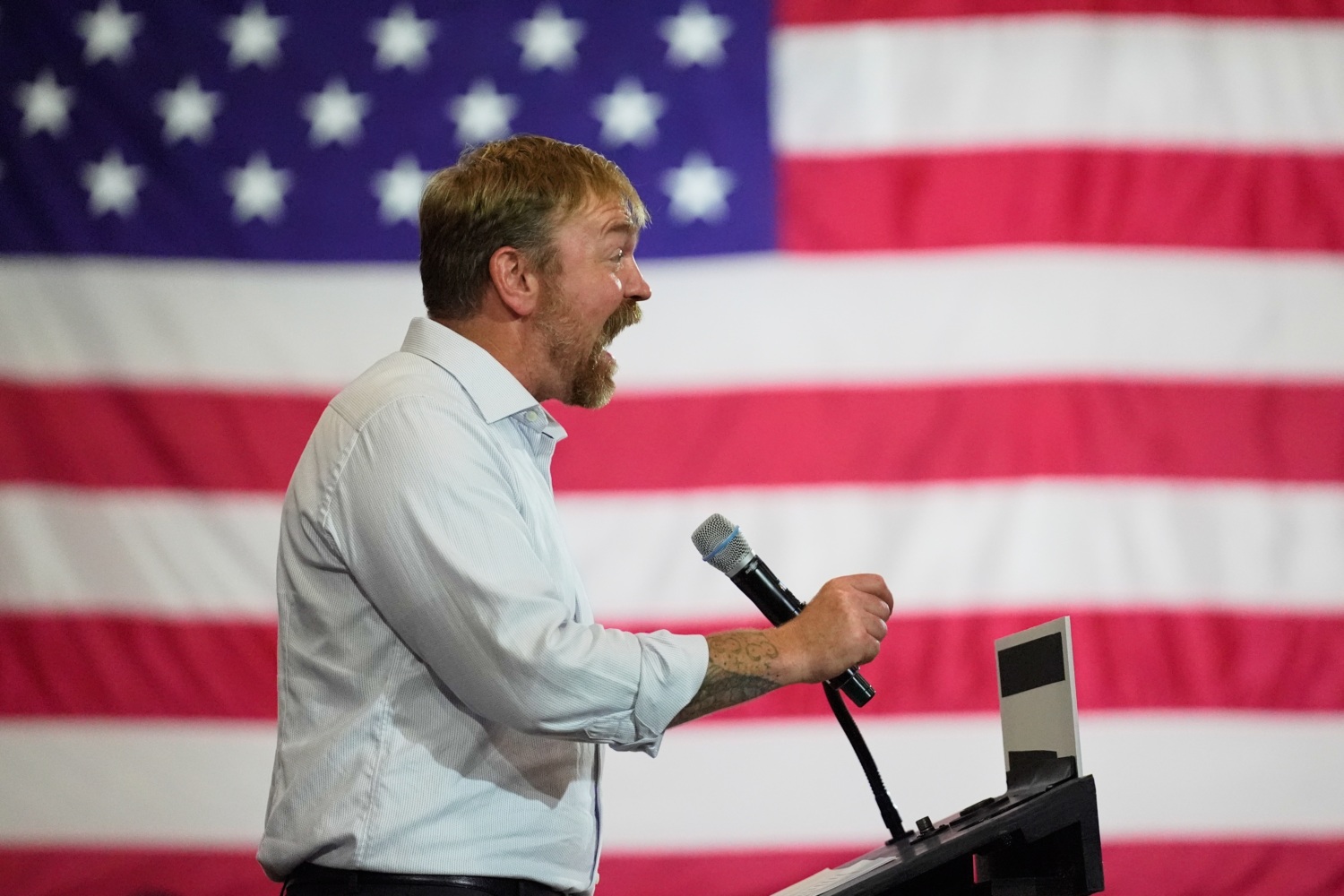
Exhibit A: Maine. A two-term governor who reportedly didn’t even want to run got muscled into a primary by the national Democratic party, only to be steamrolled by an unknown — and unvetted — candidate that national operatives championed as the authentic outsider voters were hungry for. That same candidate, facing multiple serious sexual assault allegations, officially withdrew from the race last night. In the span of a single cycle, the same people who couldn’t recruit the right candidate spent months trying to knock down the wrong one — and now find themselves with neither.
It’s the predictable result of two strategic failures, and proof that the national party — and the national consultants trying to “fix” the party — keep looking for the fix in the wrong place entirely. Everyone is assigning blame — to the national party, to consultants, to everyone who sidestepped red flags, many of which came from community members themselves. But blame is not a strategy, and introspection without structural change is just therapy. We don’t need another post-mortem; we need a fundamentally different approach to how we find candidates in the first place.
Both failures share a root cause: national actors swooping in at the last minute to identify the candidate they believe voters want and need. Whether that candidate is a vetted insider or an unvetted outsider doesn’t actually matter because the approach is the same, and so is the risk.
If you honestly believe that you can fully understand a candidate’s history, relationships, and vulnerabilities from a distance, you’ve already lost. You can’t. And once you accept that reality, you also realize that the fix doesn’t start with a better vetting checklist or a smarter recruiter in Washington. It starts years before a filing deadline, in the communities where candidates actually live and work.
There’s a better model already running. The Pipeline Fund supports a network of state-based, year-round bench building organizations, like LEAD NC, GLPA-LEAD, and Instituto Power, that have spent years doing the unglamorous work of identifying, training, and supporting candidates for state legislatures, school boards, and city councils, long before anyone is thinking about a statewide run.
The idea is as simple as it is effective. Instead of discovering a candidate’s baggage during a general election, build relationships over years in the communities where they already live and work, so that by the time they’re ready for higher office, people already know exactly who they are and what they stand for. It’s not a perfect system, no system is. But it is a fundamentally better one than forgoing the hard work, on the ground, and instead parachuting in at the last minute and hoping for the best.
The last point matters more than it might seem, and Maine illustrates why. One of the Democratic Party’s deepest structural problems is the gap between the operatives doing the recruiting and the communities they’re recruiting from. Elite operatives and consultants have gotten very good at identifying the aesthetics of working-class appeal — the flannel, the “get your hands dirty” type of job, the plain-spoken populism — without doing the slower, harder work of actually knowing the communities and people they’re recruiting from. Spotting authenticity and working-class credentials from a conference room in Washington is not the same as understanding it firsthand. State-based organizations close that gap by being present — embedded in the communities they’re recruiting from, year after year. By the time one of their candidates is ready for higher office, much of the vetting has already been done by the community itself.
This is not a flashy answer or a quick fix. It doesn’t generate a viral launch video or a cable news moment. But it’s the only approach that actually addresses the problem Maine just exposed twice in one cycle: national operatives lack the local knowledge to pick winners, whether they’re looking for the safe choice or the bold one. State-based organizations, by contrast, can identify and support great leaders, and in turn, build a bench of tested, authentic, community-based candidates for higher office.
If we aren’t investing in scaling these state-based organizations over the long-term, we’re doomed to repeat this disaster every two years. If Democrats want to stop lurching between establishment flops and outsider implosions, the answer isn’t a beltway operative making the next big bet. It’s making more bets, much earlier, and trusting the people who actually know the ground because they’re standing on it.
Denise Feriozzi is the Co-Founder and Executive Director of The Pipeline Fund and the Pipeline Education Fund