Three weeks inside the shutdown
By Michael Jones
It was clear long before the fiscal year clock ran out that Washington was headed for another shutdown, the second under President Donald Trump.
By the end of July, Senate Majority Leader John Thune (R-S.D.) and House Speaker Mike Johnson (R-La.) had rebuffed repeated overtures from Senate Minority Leader Chuck Schumer (D-N.Y.) and House Minority Leader Hakeem Jeffries (D-N.Y.) to negotiate a bipartisan funding deal.
Democrats, still seething over the administration’s mass firings and partisan rescissions push, had already drawn a red line around health care as the political throughline of their opposition to Trump’s second-term agenda. And when Schumer was castigated in the spring for helping advance a Republican-crafted stopgap bill written without Democratic input, it all but guaranteed he wouldn’t do so again when the House passed a near-identical version last month.
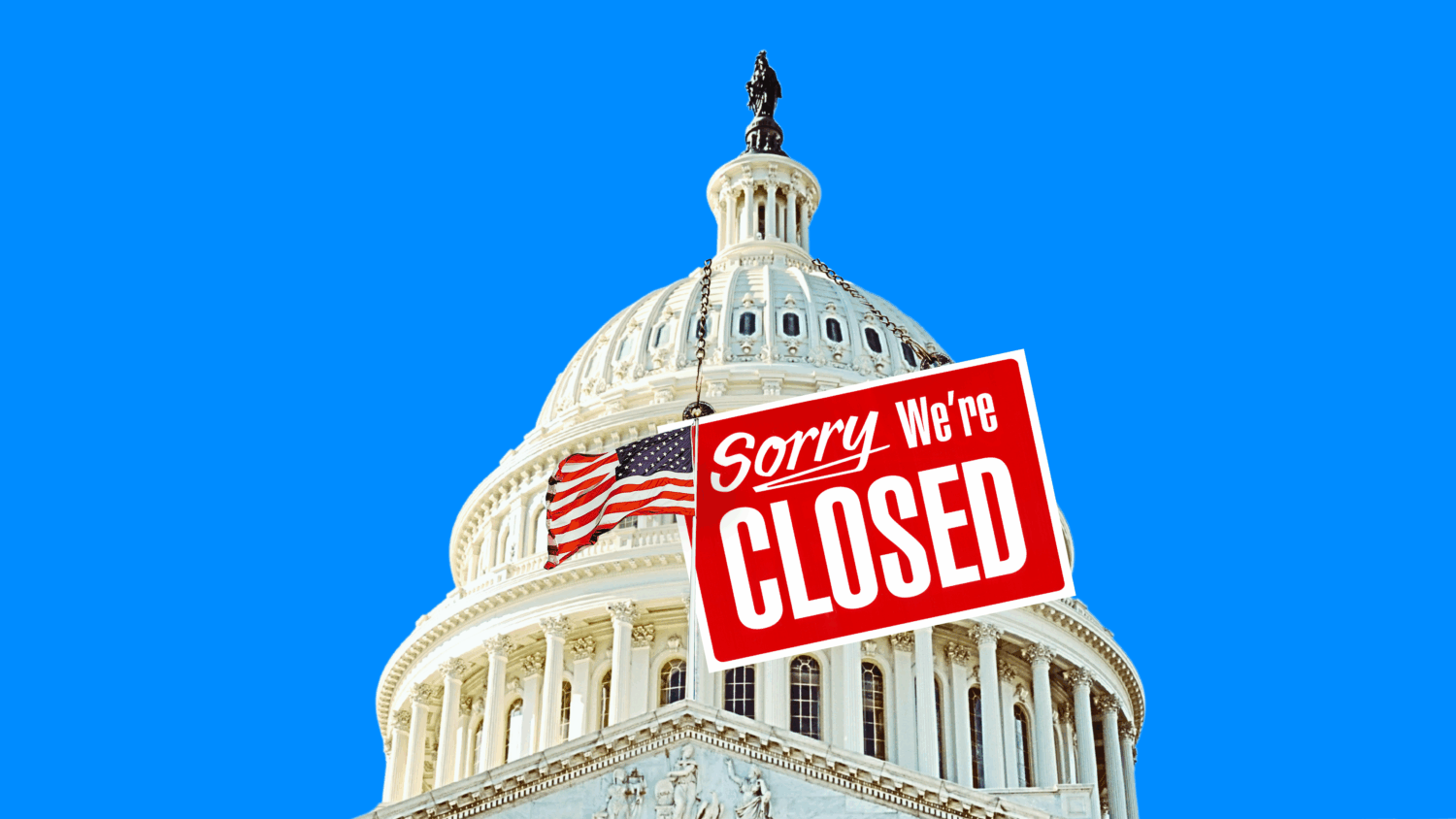
It’s now Day 23 of the shutdown, the second-longest in history. (The longest? You guessed it: The 35-day funding lapse in Trump’s first term.) House Republican leadership has canceled votes for four weeks; the House has been out of session for 33 days.
There’s no end in sight. Democrats view their unwillingness to help Republicans reopen the government without an extension to the Affordable Care Act enhanced premium tax credits as a moral stand on health care and fairness. The GOP sees it as hostage politics. I’ve been on the Hill every day of the shutdown, enduring the shifting moods, fatigue, and constant recalibration that comes with covering a standoff where both sides believe they have the support of the American people.
The shutdown has already produced a unique rhythm: a locked House chamber and out-of-session members; an in-session Senate struggling to project normalcy; and a daily parade of Democratic and Republican leadership pressers competing to frame the narrative.
With the House out, the Senate is where the action is. Most mornings begin in the marble corridor outside Leader Thune’s suite, just steps from the chamber, alongside a dozen or so reporters trying to divine any shift in Republican strategy. My focus is Democratic politics and policy, but Thune is the Senate’s shot-caller—and his mood often signals whether the stalemate might finally break.
I’ve covered nearly a dozen failed Senate attempts to advance the House-passed bill and the coordinated Democratic push—from Leader Jeffries to rank-and-file members—to center the fight around extending the ACA’s enhanced premium tax credits.
A few moments have stood out.
When Thune stopped allowing Schumer to set up votes on a Democratic counterproposal to the House bill, it was an attempt to box Democrats into supporting the only legislative vehicle to reopen the government. When he put a stand-alone Pentagon funding bill on the floor last week, he framed it as a return to regular order. But Democrats saw it as another attempt to divide them and swiftly blocked it. This afternoon, Thune plans to call a vote on a bill to pay furloughed workers and servicemembers, which Democrats are expected to filibuster on grounds it would give the Trump administration too much discretion over who gets paid.
Body language tells its own story. Thune is usually measured, but in recent scrums and floor speeches, he’s shown flashes of irritation over Democrats’ unity, perhaps expecting more of them to peel off by now. Instead, their discipline underscores how central health care has become to this fight. It’s the hill they’ve chosen to stand on.
The House may be out of session, but party leaders haven’t gone quiet.
Daily press conferences have become the main stage for both sides’ messaging campaigns. Speaker Johnson grows visibly more frustrated each day, peppered with questions about his refusal to reconvene the House, negotiate with Democrats, or swear in Rep.-elect Adelita Grijalva, who won a special election more than four weeks ago to replace her late father. Her vote would be the final signature needed on a resolution to force a vote on the release of the Epstein files.
Across the aisle, Leader Jeffries has used his appearances to spotlight Americans who will lose coverage if the ACA’s enhanced premium tax credits expire. He reminds reporters that Republicans have already voted down three attempts to extend them this year. He’s also pressed Trump to intervene directly in negotiations, arguing that House Republicans won’t move an inch without his blessing.
While most rank-and-file House Republicans have been away from Washington, Democrats have made a point of being seen. At different points in the shutdown, members have returned to the Capitol to underscore that they’re “on duty” while, as Jeffries often puts it, Republicans are “on vacation.”
It’s meant covering rallies on the Capitol steps where dozens of Democrats stand shoulder-to-shoulder with Americans who could lose coverage when the ACA subsidies lapse. The caucus’s steering and policy committee has staged a series of shadow hearings to amplify those stories. And for someone who already spends too much time in the Capitol basement, I’ve logged plenty of overtime staking out caucus meetings to gauge how firm Democrats’ resolve remains—and whether any fatigue has started to set in.
When House Democrats head home, the work doesn’t slow down—it just shifts mediums. I’m constantly texting and calling members and aides to gauge what they’re hearing from constituents and how the message is landing on the ground. The caucus meetings don’t stop; they just move to Zoom. Those calls have become an important window into how Democrats manage morale and message. One member told me last Friday’s call was all about discipline and unity. Leadership urged them to keep hammering the health care contrast and said the caucus had the upper hand in the shutdown messaging wars. The assignment for the week: sustain the momentum back home.
With more federal workers set to miss paychecks, programs like SNAP and WIC approaching funding lapses, and holiday travel threatening to swamp understaffed airports, I’ve shifted into contingency mode—gaming out every possible scenario for how the shutdown could end so I’m not caught flat-footed when signs of a breakthrough finally appear.
Until then, it’s back to the Hill, back to the stakeouts, and back to the press scrums. Hopefully, somewhere in the middle of it all, I’ll find a moment to catch my breath… and some sleep.
Michael Jones is an independent Capitol Hill correspondent and contributor for COURIER. He is the author of Once Upon a Hill, a newsletter about Congressional politics.