Trump’s women’s health promises run into his own budget
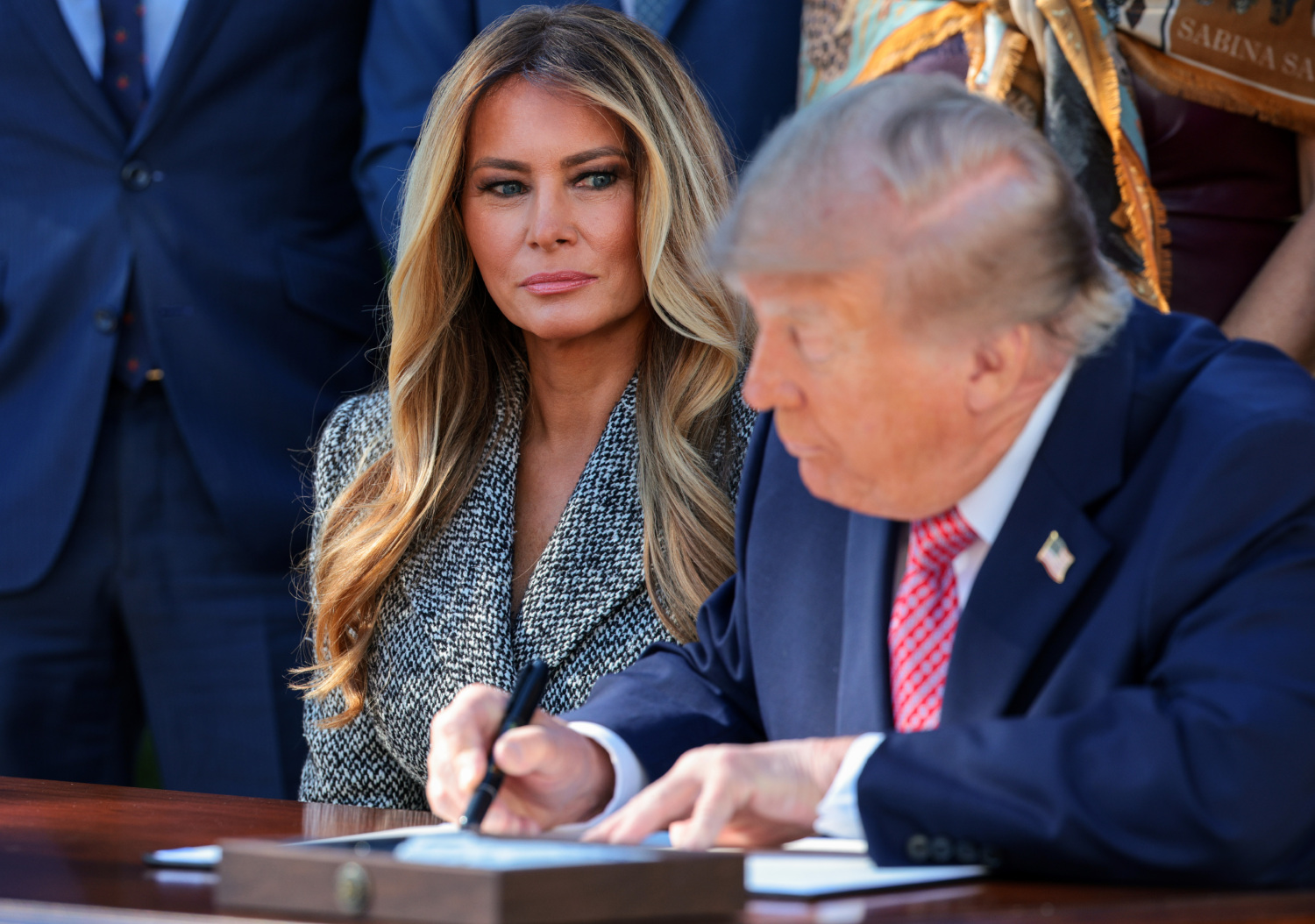
Photo by Chip Somodevilla/Getty Images
By Michael Jones
First Lady Melania Trump stood beside her husband in the White House Rose Garden on Monday and promised a new chapter in women’s health.
“This is a transformative moment for women in America,” she said. “Beginning today, we will change the reality of women’s health.”
President Donald Trump had just signed an executive order establishing a White House Women’s Health Task Force and a new Women’s Health Division at the National Institutes of Health (NIH). The initiative promises to accelerate research into conditions that disproportionately affect women, develop new treatments and make medical breakthroughs more accessible.
There’s just one problem: The president’s own budget tells a very different story.
Trump’s fiscal year 2027 budget request proposes cutting roughly $5 billion, or 12%, from NIH, while eliminating federal funding for several programs supporting maternal health and reproductive care. The executive order establishes new priorities but does not specify additional research funding.
Rep. Rosa DeLauro (Conn.), the top Democrat on the House Appropriations Committee, quickly noticed the contradiction.
“Can someone tell OMB and the rest of the Republicans this is what the First Lady wants because their budgets are the complete opposite,” she wrote on X.
Her criticism carries particular weight with the midterm elections less than two weeks away. If Democrats regain the House majority, DeLauro could become chair of the committee responsible for writing the spending bills that fund NIH and other federal health programs.
That would give Democrats an opportunity to challenge the administration’s priorities through appropriations and oversight, although Republicans could still control the Senate and Trump will remain in the White House.
The question facing voters isn’t simply whether the administration wants better health outcomes for women. It’s whether the federal government will provide the resources to deliver them.
What the budget would actually cut
The funding debate begins at NIH, where researchers investigate diseases and conditions that affect millions of American women.
A 2025 National Academies report found that women’s health research accounted for just 8.8% of NIH funding between 2013 and 2023, even as the agency’s overall budget increased.
The administration’s new initiative identifies conditions including menopause, endometriosis and autoimmune diseases as research priorities. But its FY27 budget proposes cutting NIH funding to about $41 billion while reorganizing or eliminating several research institutes.
The White House has defended those changes as an effort to focus federal spending on more effective science and eliminate programs it considers wasteful. But a new organizational structure does not replace the research dollars Congress is being asked to cut.
And the proposed reductions extend well beyond laboratory research.
The administration’s budget also calls for eliminating funding for Healthy Start, a federal program intended to improve maternal and infant health outcomes, and Title X, which supports family planning and preventive health services, including contraception and screenings for certain cancers and sexually transmitted infections.
Other proposals would affect federal programs that help states investigate pregnancy-related deaths and improve maternity care.
For women already struggling to find affordable care, these aren’t abstract budget lines. Whether they can access a nearby clinic, health insurance, or maternal health services can determine whether they receive treatment at all.
A House Democratic aide told me that members of the Democratic Women’s Caucus are particularly concerned that the proposed federal reductions would compound existing barriers to care, especially in rural communities where maternity services are already limited.
The aide also pointed to Medicaid reductions, rising insurance costs and restrictions on reproductive health services as interconnected pressures on women and families.
The administration’s approach departs from the Biden White House, which pursued additional investments in women’s health research and initiatives to address maternal mortality. Biden also established a federal women’s health research initiative that Trump’s new order revokes.
Neither administration’s executive actions alone determine federal spending. Congress ultimately decides how much money agencies receive.
Still, the difference between announcing research priorities and proposing the resources to pursue them is central to assessing the new initiative.
The administration’s broader budget also proposes eliminating funding for the Small Business Administration’s Women’s Business Centers, which provide training, counseling and other assistance to women entrepreneurs. The centers received $27 million in the previous fiscal cycle.
Those centers aren’t part of Trump’s women’s health executive order, a point the Office of Management and Budget emphasized. But their proposed elimination adds another dimension to the administration’s approach to federal programs supporting women.
The White House points to next year
I asked the White House how the president’s new initiative aligns with the proposed reductions, what resources would support the NIH division and when Americans should expect measurable results.
The White House referred my questions to OMB.
“This administration is prioritizing supporting gold standard science, which is critical to improving health outcomes envisioned in the President’s executive order,” an OMB spokesperson said. “The FY28 budget is currently under development, and all of the President’s priorities, including on women’s health, will be reflected.”
The executive order was signed this week. Congress is considering funding for fiscal year 2027. Yet the administration pointed to a fiscal year 2028 budget that has not been released.
OMB did not identify dedicated funding for the new NIH division or explain how its proposed FY27 reductions would advance the executive order’s objectives.
Democrats aren’t convinced that the promise of future funding resolves the contradiction.
The House Democratic aide questioned why the administration would wait until its next budget to demonstrate its commitment. They said members would welcome meaningful investments in women’s health research, including cooperation with the administration, but remain skeptical given its existing funding proposals.
What changes if Democrats win the House?
The answer depends partly on what voters decide in November.
A Democratic House majority could pursue greater funding for NIH, maternal health programs and reproductive care through the appropriations process. It could also use committee hearings, investigations and other oversight tools to examine how the administration implements its initiative and distributes research funding.
The DWC is looking beyond the executive order itself.
According to the aide, members want to address Medicaid and Medicare protections, Affordable Care Act premium tax credits and prescription drug costs. They also intend to prioritize legislation protecting abortion access, contraception and fertility treatments, while seeking to restore funding for women’s health research.
The agenda reflects a broader argument that women’s health isn’t confined to reproductive care or medical research. It extends to whether families can afford insurance, whether a pregnant woman can reach a hospital and whether women have the financial security to obtain the care they need.
But winning the House wouldn’t give Democrats unilateral control over federal spending. Appropriations legislation would still require agreement with Senate Republicans due to the filibuster and, ultimately, Trump’s signature, or sufficient congressional support to overcome a veto.
The administration has announced ambitious goals for improving women’s health. Its own budget, however, proposes fewer resources for several of the federal programs already doing that work.
Nonetheless, the White House is asking Americans to judge its commitment by what it promises to do next. Congress will have to decide what it’s willing to pay for.
Michael Jones is an independent Capitol Hill correspondent and contributor for COURIER. He is the author of Once Upon a Hill, a newsletter about Congressional politics.