What Democrats’ historic majority demands of Hakeem Jeffries
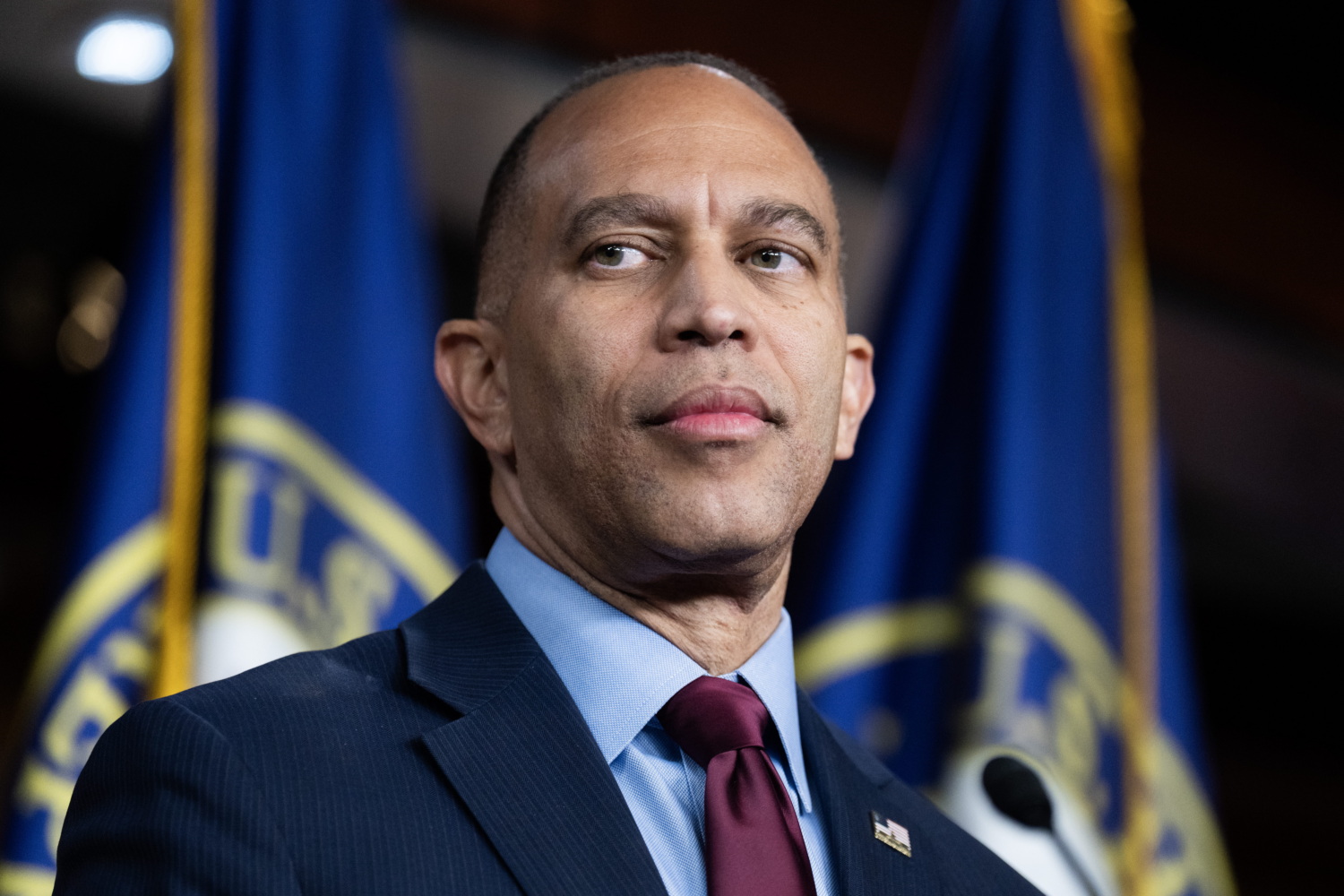
Tom Williams/CQ-Roll Call, Inc via Getty Images
By Michael Jones
Hakeem Jeffries hadn’t even finished celebrating Democrats’ historic midterm victory before some of the party’s most vocal progressive critics began questioning whether he was prepared to use his newfound power.
The backlash followed an appearance last Wednesday on MS NOW’s Morning Joe, where the incoming House speaker said voters wanted Democrats to deliver on affordability rather than seek revenge against President Donald Trump and his administration.
For critics eager to see Democrats aggressively investigate Trump, the remarks raised concerns that accountability would take a back seat to a more cautious governing agenda.
But Jeffries has repeatedly promised both. The more consequential question is how he intends to deliver on those commitments while managing a Democratic majority that includes everyone from democratic socialists to lawmakers elected in conservative districts.
When asked on Monday whether progressives, center-left New Dems or the moderate Blue Dog Coalition had a particular mandate following the election, Jeffries rejected the premise that any one faction could claim the victory.
“When every single vote is counted across the country, House Democrats are going to have the largest majority of any party this century,” Jeffries said. He called the results a mandate “to make life more affordable for the American people, to hold the crooks accountable, and to make sure that this country can return to being the best version of herself.”
His response echoed a message he had delivered throughout the campaign, tying government corruption to the cost-of-living crisis. Jeffries has long argued that public officials who prioritize enriching themselves and their donors aren’t focused on improving Americans’ lives.
He also served as an impeachment manager during Trump’s first presidency and has identified House Judiciary Committee Ranking Member Jamie Raskin (D-Md.) and House Oversight Committee Ranking Member Robert Garcia (D-Calif.) as central figures in the aggressive oversight agenda Democrats intend to pursue.
None of that guarantees Jeffries will deliver the accountability his critics demand. But his record offers little evidence that he views affordability and accountability as competing priorities.
The challenge will be reconciling the competing interests within his caucus.
Democrats’ incoming majority includes lawmakers who campaigned on ambitious progressive policies alongside others who won in traditionally Republican territory. Their constituents may agree that health care is too expensive, corporate power needs greater scrutiny and government corruption should have consequences, but they won’t necessarily agree on how Congress should address those problems.
Jeffries’ responsibility is to bridge those differences and advance legislation that can command enough support to pass. Senior aides and people familiar with his thinking tell me that won’t always mean embracing the most ambitious proposal on the table. But it shouldn’t mean automatically abandoning progressive priorities to accommodate the caucus’s more conservative members, either.
Progressives, for their part, believe the size of the majority creates an opportunity to pass legislation that narrower Democratic majorities couldn’t.
Congressional Progressive Caucus Chair Greg Casar (D-Texas) made that case at an event on Sunday introducing the group’s incoming members, arguing that Democrats across the ideological spectrum had campaigned on ending the Iran war, confronting corruption and bringing down prices.
“The American people handed us a big majority to get big things done,” Casar said. “With a big majority, we can finally get big things done.”
The Progressive Caucus, which expects to have more than 105 members in the next Congress, wants to expand Social Security, raise the minimum wage, reverse Republican health care cuts and pursue aggressive oversight of both the Trump administration and major corporations.
But in a memo I obtained outlining its strategy, Casar made clear that progressives don’t view their growing numbers as a mandate to wage an internal ideological battle.
“Our goal is not to win a battle against other Democratic caucuses,” he wrote. “It is to pass longstanding progressive priorities that bring down costs, root out corruption, and boost wages.”
That agenda overlaps considerably with the priorities Jeffries has outlined.
The disagreements will emerge when Democrats have to decide which proposals receive floor votes, how far to push legislation Trump is likely to veto and whether to pursue opportunities for bipartisan cooperation.
Still, even the Progressive Caucus acknowledges those competing considerations. Its strategy calls for advancing ambitious legislation regardless of Trump’s likely opposition while also pursuing measures on prescription drug prices, credit card interest rates and housing that could attract his support.
That approach reflects a reality Democrats will have to confront as they transition from opposition to governing: Passing legislation through the House is only the first step toward delivering the changes voters were promised.
The Senate presents another challenge. Democrats’ newly elected members from traditionally Republican states will face pressure to advance the party’s agenda while maintaining the independence that helped them win their races.
Those competing interests are part of the responsibility Jeffries is preparing to assume.
The Brooklyn Democrat has spent years building relationships across the Democratic caucus and protecting members whose political circumstances differ considerably from his own. His leadership style has generally emphasized consensus and deliberate decision-making, qualities that have sometimes frustrated critics who want a more confrontational approach. It deserves scrutiny, particularly when consensus-building risks becoming an excuse for inaction.
So do Jeffries’ decisions on oversight. His handling of the public reporting on his summer meeting with Trump’s son-in-law Jared Kushner raised legitimate concerns about transparency and his record on Israel remains a source of disagreement within the party.
But his allies argue that Democrats’ accountability agenda should ultimately be judged by what the new majority does with its investigative authority, including whether committee chairs receive the resources and independence to pursue credible allegations of wrongdoing.
Jeffries was asked Monday to identify his first affordability bill and accountability investigation. He declined to announce either unilaterally, saying House Democrats would begin discussing their priorities as a caucus.
He did, however, point to reversing the One Big Beautiful Bill Act’s Medicaid cuts, extending Affordable Care Act tax credits, ending Trump’s tariffs and addressing the economic consequences of the Iran war as immediate legislative priorities. Whether Democrats can translate those commitments into law will depend on the choices their leaders and members make in the months ahead.
The progressive movement has every reason to demand ambitious action from a party that campaigned on dramatic change. Jeffries, in turn, has an obligation to take those demands seriously while representing the interests of the entire Democratic caucus.
Voters have every right to expect both accountability for corruption and meaningful improvements in their daily lives. Democrats now have the majority to pursue both. Jeffries’ speakership will be measured by what he does with it.
Michael Jones is an independent Capitol Hill correspondent and contributor for COURIER. He is the author of Once Upon a Hill, a newsletter about Congressional politics.