Why RFK Jr. may be as dangerous to democracy as ICE
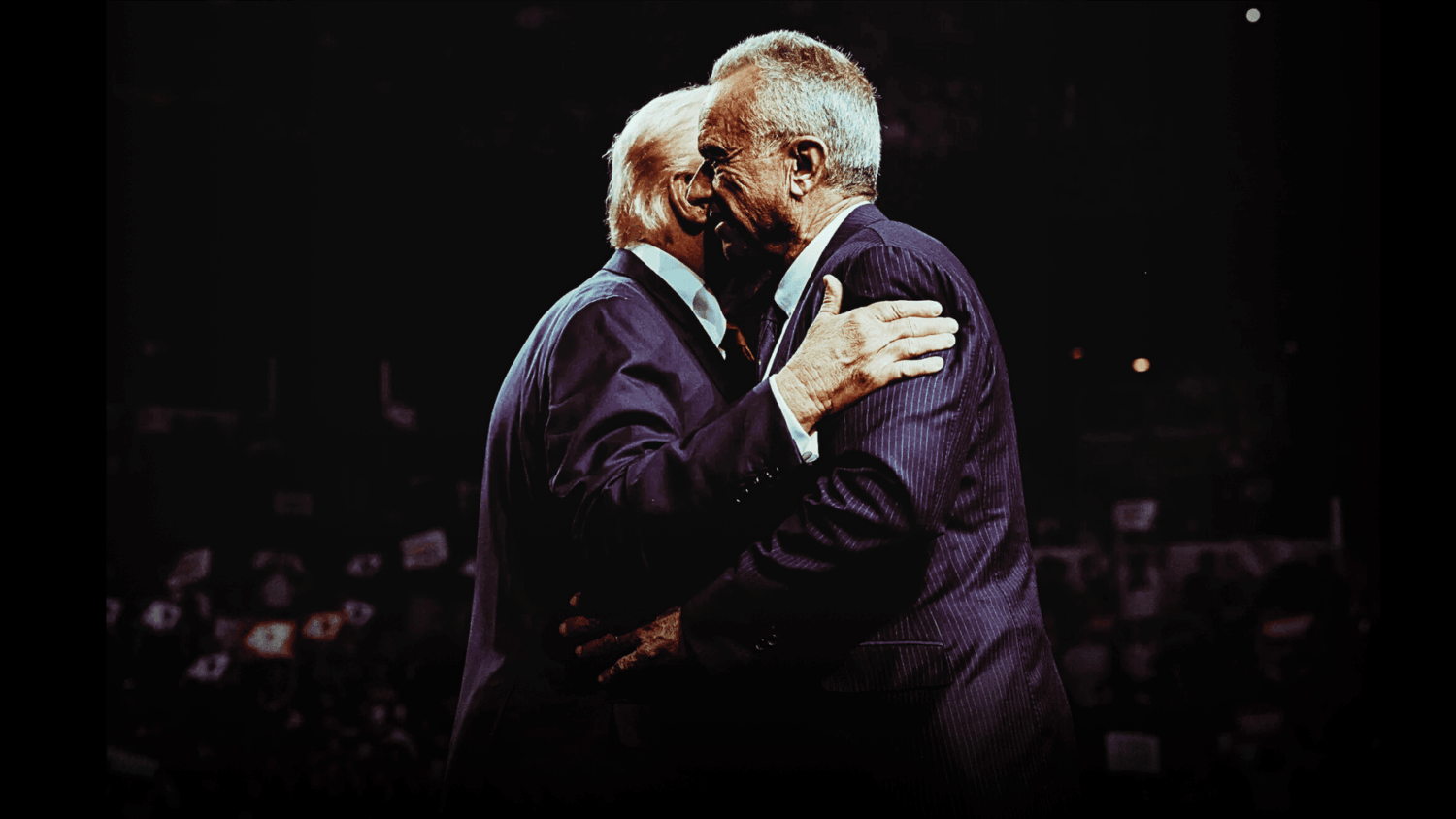
By Michael Jones
Few federal bureaucrats and agencies have received as much public scrutiny during Donald Trump’s first year-plus back in office as Department of Homeland Security Secretary Kristi Noem and Immigration and Customs Enforcement.
And rightfully so. The administration has dramatically escalated immigration enforcement, deploying thousands of ICE agents across the country for large-scale raids and operations that have drawn backlash from local officials, civil-rights groups and communities at the center of those actions, particularly after incidents like the fatal shooting of a U.S. citizen in Minneapolis that sparked protests and legal challenges to enforcement tactics.
But a new report from the left-leaning healthcare advocacy group Protect Our Care marking one year into Trump’s second term makes a strong case that Department of Health and Human Services Secretary Robert F. Kennedy Jr. poses a different but equally dangerous threat through the systematic hollowing-out of public health: dismantling advisory bodies, freezing research, weakening vaccine guidance and eroding trust in science in ways that are already producing measurable harm.
Several Democrats I spoke with this week indicated RFK Jr. would be at the top of their lists for oversight and accountability if they win back one or both chambers in November’s midterm election.
“The so-called Secretary of Health and Human Services is out of control. He’s jeopardizing the health, the safety, and the well-being of the American people,” House Minority Leader Hakeem Jeffries (D-N.Y.) told me this week. “We plan to intensively scrutinize the reckless and irresponsible behavior of this particular cabinet secretary and the department.”
Rep. Marc Veasey (D-Texas), who serves on the powerful House Energy and Commerce Committee, which has jurisdiction over HHS and public healthcare policy, predicted it would take years for the country to recover from the many ways the Trump administration has altered American life.
“I mean, measles is now no longer something that’s eradicated,” he cited as an example. “They talk about making America healthy again. They made measles great again.”
Prior to his emergence as a health-policy lightning rod, RFK. Jr. built a long career as an environmental lawyer and activist, best known for his work with the Natural Resources Defense Council and later Waterkeeper Alliance, where he gained a reputation as an aggressive litigator against corporate polluters. A member of America’s most famous Democratic dynasty, he leveraged the Kennedy name to become a prominent public intellectual on environmental issues in the 1990s and 2000s, writing books and essays that framed regulation as a moral fight against concentrated economic power.
However, his profile shifted sharply over the past decade as he turned into a leading critic of vaccines, pharmaceutical companies, and federal public-health agencies—positions that vaulted him into conservative media, alienated much of the Democratic establishment, and rebranded him from environmental crusader to anti-establishment provocateur. It’s this evolution that set the stage for his presidential bid and, eventually, his unlikely elevation into Trump’s orbit.
Before HHS became a focal point of ideological warfare, its traditional role under both Democratic and Republican administrations was largely technocratic and continuity-driven, including administering federal health programs, funding biomedical research, regulating drugs and medical devices, and coordinating public health responses, with an emphasis on scientific consensus.
HHS secretaries typically acted as stewards of sprawling agencies like the Centers for Disease Control and Prevention, the Food and Drug Administration, the National Institutes of Health, and the Centers for Medicare & Medicaid Services, prioritizing stability, evidence-based guidance, and incremental policy changes over disruption. Even amid partisan fights over Obamacare, drug pricing, or pandemic response, the department’s core mission remained broadly consistent: protect public health, expand access to care, and manage massive entitlement programs—often with political visibility far lower than the White House or Congress, and with secretaries expected to insulate scientific decision-making from overt political pressure rather than invite it.
But RFK Jr.’s first year was defined less by technocratic policymaking than by institutional upheaval and constant controversy.
He moved quickly to assert control over the department’s sprawling public-health agencies, signaling skepticism of long-standing vaccine guidance, pandemic-era authorities, and what he cast as cozy relationships between regulators and pharmaceutical companies. Allies who wanted a reckoning with the CDC, FDA, and NIH were thrilled, but alarmed public health officials, congressional Democrats, and parts of the medical community warned that his rhetoric risked undermining trust in federal health guidance. The result was a turbulent opening year marked by staff departures, high-profile clashes with career scientists, and sustained political warfare on Capitol Hill.
While Protect Our Care’s report blames Trump administration health policies and actions by RFK Jr. for weakening public health infrastructure and undermining trust in science, they argue that congressional Republicans exacerbated the harm rather than providing a check on it. The group cites more than $1 trillion in cuts to Medicaid and the Affordable Care Act and warns that over 15 million Americans are at risk of losing coverage. The report links the lapse of ACA premium tax credits to sharp enrollment declines and rising premiums, and claims hundreds of hospitals and clinics face closure.
Among those Republicans, critics have zeroed in on Sen. Bill Cassidy’s decisive vote to advance RFK Jr. out of the Senate HELP Committee—and ultimately confirm him as HHS secretary—as a nakedly political calculation rather than a policy-driven judgment.
Cassidy, a Louisiana physician and chair of the Senate health panel who had previously voiced deep reservations about Kennedy’s views on vaccines and public health, was seen by skeptics as trading his credibility for perceived protection from Trump ahead of his 2026 Senate race, whether through a Trump endorsement or, at a minimum, a promise to stay out of a Republican primary. Trump dashed those hopes over the weekend when he endorsed Rep. Julia Letlow (R-La.), instantly reshaping the race and leaving Cassidy politically exposed. The episode has sharpened the critique that Cassidy absorbed the blowback of backing one of Trump’s most polarizing nominees without securing the political upside many assumed he was seeking—and raised lingering questions about whether the gamble was ever worth it.
Veasey told me that while the department definitely should receive more scrutiny, President Trump floods both social and traditional media with a constant stream of provocations that ensures no single issue will dominate the conversation for long. There’s also the perceived grassroots pressure Democrats feel to respond to what Jeffries often describes as a “parade of horribles,” which makes it challenging to sustain focus on a handful of significant issues.
“It’s really hard because what ends up happening is that a lot of the activists out there that also don’t like Trump want you to respond to everything. And that’s sort of the cry of the groups and the activists,” he said. “But the problem with that is that if you respond to 50 different things, no one’s going to hear what you’re saying. And so the best thing to do, obviously, is try to respond to three different things and just hope that we can rebuild when he leaves all the other things he burned down. But it is better to try to narrow the focus.”
Michael Jones is an independent Capitol Hill correspondent and contributor for COURIER. He is the author of Once Upon a Hill, a newsletter about Congressional politics.