Why We Need Independent Working-Class Power to Reshape American Politics
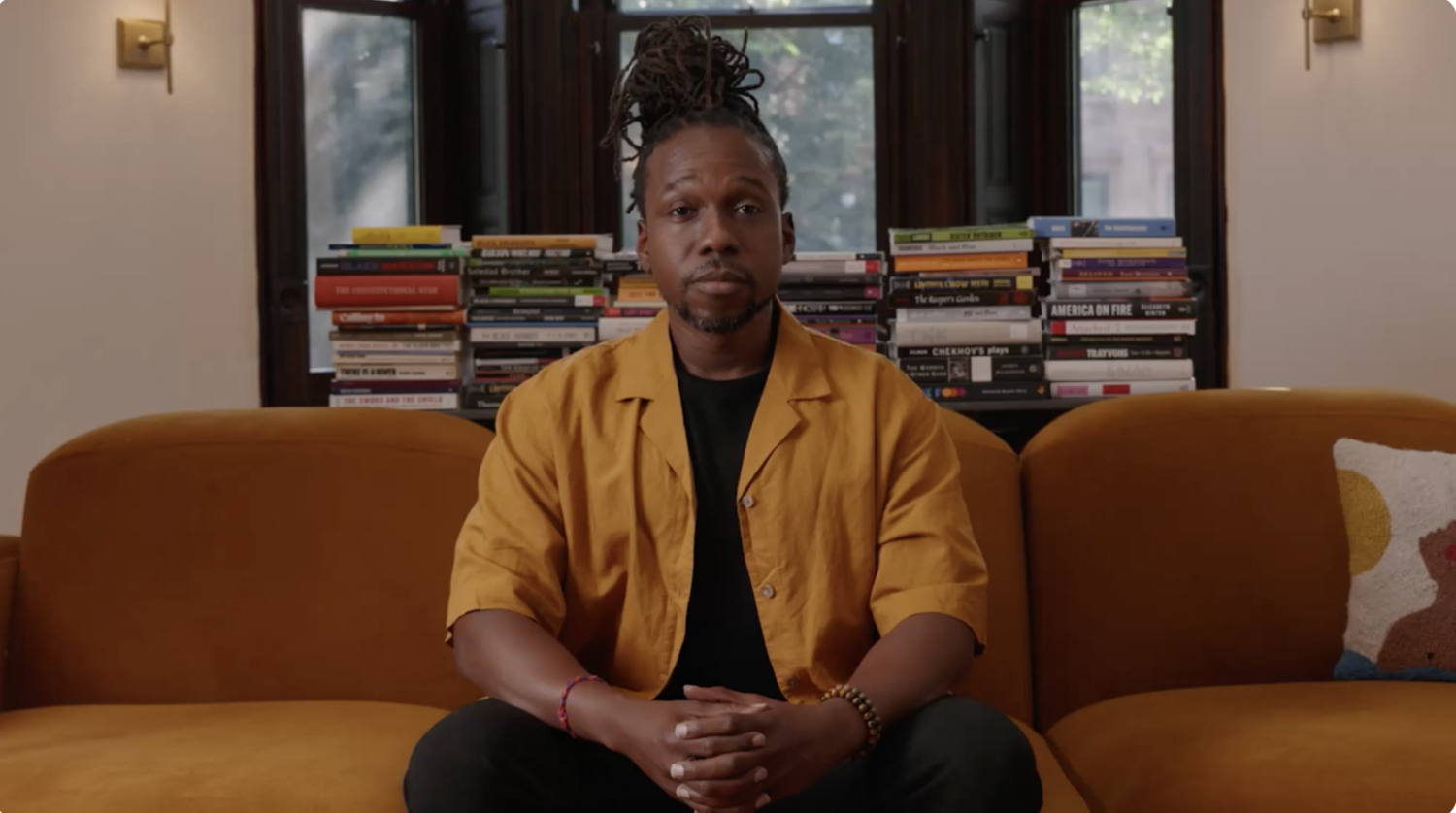
By Maurice Mitchell
Originally published by The Root
I want to tell you about the day I decided to spend the rest of my life as an organizer.
I was a sophomore at Howard University, sitting near the front of Rankin Memorial Chapel, when Kwame Ture walked in — the man the world had known as Stokely Carmichael. By then he was near the end of his life. The cancer had thinned him; you could see what the treatments had taken. But when he began to speak, without a single note, none of that mattered. His voice was strong. His mind was sharp. Even in the plain face of his own mortality, he was completely uncompromising.
He did not talk about himself. Instead he gave something closer to a sermon. It was a love letter to organizing, to Black resistance, and to the global movement for human freedom. The hero of that sermon was never Kwame Ture. It was the people. He used his platform to turn the light away from his own heroics and onto everybody else.
Ture told us about the Freedom Rides, and how perilous they were. He told us about the work he and SNCC did in the poorest, most dangerous Black communities in the Deep South, where trying to register to vote could cost you your job, your home, your life. And he told us how the people there, folks who had almost nothing and suffered the worst oppression, gave the organizers their own beds to sleep on and food to eat. They took risks for strangers that could cost them everything because they believed in the promise of freedom.
That was the thing that captured a college student in a pew and set him to organizing against police violence on his Howard University campus. The figures we write books about drew their courage from people who will never have a book written about them — and that force, rising out of the most forgotten corners of Black America, is what produced the Voting Rights Act. When we say the Black freedom struggle has been the engine of this country’s democracy, that is what we mean. Not the men in suits we remember, but the poor and working-class Black folk who buoyed them.
I have carried that memory with me ever since. I think about it now, on the eve of America’s 250th birthday, because the rights those people risked everything to win are being rolled back.
A few days after the Supreme Court gutted what was left of the Voting Rights Act in Louisiana v. Callais, one of our staffers at the Working Families Party posted something I haven’t been able to shake. “My parents are older than the Voting Rights Act,” they wrote. “They lived long enough to see it implemented. And long enough to see it dismantled.”
It took one generation for Black folks in this country to win the franchise — and that same generation has now watched it be ripped away. Within days of the decision, Republican statehouses in Florida, Tennessee, Alabama, South Carolina, and Mississippi were falling over one another to shutter decades of Black congressional representation — canceling primaries, throwing out ballots already cast, redrawing maps to keep themselves in power.
I am sad for the elders who fought for those rights and may not live to see us win them back. And I am angry. But I am not angry at conservatives. I am not even angry at MAGA.
That may sound odd, but let me explain. You know the old story of the frog and the scorpion. The scorpion can’t swim, so it asks the frog to ferry it across the river. Halfway over, it drives in its sting. And as the two of them go under together, the frog asks the only question left — why? Why doom us both? The scorpion has a simple answer. It is my nature.
There have always been people in this country determined to narrow the meaning of “the people” — to decide, when we say we the people shall govern, precisely which of us gets counted. When Black folks won the vote and a measure of freedom, the Dixiecrats walked out of one party and the other flung its doors open to receive them.
The MAGA coalition did not invent this. Neither did the unelected justices who voted to pull down what the Civil Rights generation built. They are not the first scorpions in our midst, and I cannot be furious at a predator for doing what is in a predator’s nature to do.
Once you see that this is about power and not simply malice, every move makes a terrible kind of sense — the gutted Voting Rights Act, the redrawn maps, the canceled primaries. Strange as it sounds, that should steady us, because it tells us what our own work is.
If their project is power, then so is ours.
So, no. My anger doesn’t travel to the scorpion. It travels to the frogs who knew better, and watched the sting coming but carried it across the water anyway.
In 2021 the House passed the John Lewis Voting Rights Advancement Act. In the Senate it met the filibuster, over and over, looking for sixty votes it was never going to find. And our leaders arrived at a fork: change a Senate rule and write the Voting Rights Act back into law, or keep a parliamentary tradition intact. They chose the institution over the most loyal voters their party has ever had.
That’s because they believe, incorrectly, that a durable majority can be built without Black votes in those Southern districts. The party that cannot survive without Black participation has never made its peace with Black power, and forty years on it still flinches at the ghost of the Southern Strategy, still half-convinced that to name race out loud is to lose. So the only mainstream voices in our politics willing to consistently talk plainly about race are the ones wielding it as a weapon.
This should be a five-alarm fire, but instead you can barely hear the bell.
Dr. King left us the measure for a moment exactly like this one: what history remembers, in the end, is not what our enemies shouted, but “the silence of our friends.”
For all the struggles and setbacks we have endured, I deeply love and fight for the promise of this country. We were founded on an idea so bold it borders on reckless. We weren’t founded on piety, or order, or a bloodline. The founders threw around big words like freedom and democracy and the pursuit of happiness. They said the government should answer to the people, all of us, and not to a powerful few.
It was an audacious thing for a (few, powerful) men to commit to paper, because the moment you write it down, you owe it. Had they promised something smaller, there would be no aching distance between what we claim and what we are. But the founders reached high, and so every generation since has been stuck with the burden of greatness: the gap between the promise and the practice, which grows more glaring the longer we refuse to close it.
Two hundred and fifty years in, the distance between what America says it stands for feels wide, and it’s getting wider.
So who keeps faith with the promise when the people who have run this country offer so little evidence to back it up? Look at the record and the answer comes back the same in every generation: Black people. That, more than anything, is what made the 1619 Project such an affront to the radical right. It was Black folks insisting the struggle at the center of the founding documents — universal freedom, inalienable rights, the pursuit of happiness — started with us.
The fight for a nation truly governed by we the people did not begin or end in 1776. Every generation since has had to fight to make those three words bigger, and the people doing the most fighting have almost always been the ones the words were written to leave out.
All of us live in that gap between the ideal and the real, and there are only two ways to face it. You can shrink the ideal down to fit the ugly reality — which always means shrinking the people, quietly defining some of us out. Or you can do the long, unglamorous work of dragging reality up toward the ideal. That second path is what a patriot actually is. The abolitionists walked it: they made the reality bigger rather than the promise smaller, and they didn’t do it by playing nicely inside the rules they’d been handed.
Crucially, they built independent power — minor parties, fusion tickets — to force the questions the major parties wouldn’t touch.
I lay all of this out now because the men remaking our country today have looked at that very same gap — and they have made the other choice. It is the most radical version of it anyone has dared in my lifetime. These men have dropped any pretense at their aim. Peter Thiel, one of the wealthiest men alive, put it in writing: he had stopped believing that freedom and democracy were compatible.
Thiel is not a crank shouting from the margins; he bankrolls the careers of senators. His house intellectuals — Curtis Yarvin chief among them — have spent years building the philosophy that lets this conviction be said aloud at a respectable dinner party: that self-government has run its
course, that the country would be better run like a corporation, with a chief executive at the top and the rest of us spared the inconvenience of voting.
Democracy is the one thing standing between these men and everything they want, because it’s how the rest of us hold the powerful and privileged to account. And the people who have defended it most stubbornly across this country’s whole arc have been Black people. That’s why erasing Black political power is step one, and why our history sends them into a rage: take out the franchise’s most committed defenders first, and the rest of the wall comes down easier.
Look at what this same Supreme Court majority has done, and the single design underneath it snaps into focus. It gutted the Voting Rights Act. It overturned Roe. It stripped the EPA of the power to hold polluters to account. It ended affirmative action. It handed the president something close to total immunity from the law. Ask what theory could possibly knit those rulings together, and you arrive at one answer: clear pesky people out of the way, so that power answers to no one but the highest bidder.
The officials this decision empowers won’t be accountable to the voters in their safe, redrawn districts. They’ll answer to whoever writes the checks — the people building data centers that drink our water and our power, the people betting that no one will ever regulate the artificial intelligence now coming for hundreds of thousands of jobs.
The aftermath of Callais is not a Black problem, and responding to it is not charity extended to Black people. If that’s how you’ve filed it away, you have missed the whole plot. It was never that these oligarchs and A.I. techno-futurists dislike Black people. They might, but their racism is incidental. They don’t care much for humans generally, and we are first in line.
The experiments are already running on the most vulnerable among us: the surveillance, the detentions, the disappearings aimed at immigrants and undocumented families. Tools tested on one group are in short order being turned on the rest. First they came for — you know how the rest of it goes.
There is no version of the future they are drafting in which a seat is saved for you — whatever your race, wherever you live, however you vote. And I’ll be honest about where my own heart sits: beneath my anger on behalf of Black people runs something colder and larger, a fear for all of us.
Here is the immediate cost of Callais, from an organizer and the leader of organizers:
Every dollar we’re forced to pour into fighting over maps with state legislators in Georgia is a dollar we don’t spend recruiting candidates, training organizers, knocking doors to build the power that governs and liberates. In Mississippi, the Blackest state in the country, organizers had just cracked the Republican supermajority. In Texas, a rushed redraw wiped out five congressional seats held by Black and Latino lawmakers. In Tennessee, they’ve taken a knife to the only majority-Black district in the state. This is what we mean when we say Callais has consequences. They aren’t abstract. They have names, and maps, and zip codes.
And the enemies of democracy will not sit on this victory. They will keep advancing, because it’s their nature. The question is what we do.
Often when we lose a fight over the structure itself and elected leaders simply acquiesce. Look at Citizens United. The ground shifted under us, and the people who were supposed to fight for us adjusted to the fenced-in terrain and asked us to adjust with them.
I have no intention of adjusting.
So here is what we’re actually going to build, and we’re giving ourselves ten years to do it: independent Black political power in the South from the ground up. They can do all the clever, ugly things they like with district lines at the congressional level, but they cannot yet redraw the entire map of American self-government. There are dozens upon dozens of Black towns, cities, and school boards across the South, and a staggering number of those seats run uncontested because the sad fact is no one is recruiting. So we will. In every corner, every county, we’ll find the people already trusted in their communities and ask them to run.
You see it in Philadelphia, which should be a stronghold of civic engagement but where the Black working class has lost faith in our politics. We’re giving them new hope with leaders like Working Families Party Councilmembers Kendra Brooks, Nicolas O’Rourke, and soon-to-be Congressman Chris Rabb. And it’s not just Black leadership. In California’s Central Valley we recruited one of our own members — auto shop owner Randy Villegas — to run for school board. He won. From there he ran for higher office and kept climbing, until he was a competitive candidate for Congress in one of the most important swing seats in the country.
From auto shop owner to school board to Congress is not a fluke. It’s a pipeline, and a pipeline can be built anywhere there are people willing to do the work. We’re going to build it across the South, deep enough and wide enough that within the decade we have the standing to make the big and necessary structural changes of our own, from proportional representation and fusion voting to ending the winner-take-all system that was rigged from the jump.
Because that is the difference between defending and building, and it’s the whole argument. When you win inside the old rules, you spend the rest of your days guarding that one win against the next assault. But when you change the structure itself — when you make full participation the floor rather than the prize — you stop spending your life protecting a sandcastle and you’re finally free to build something new.
This is also why we are not retreating from Tennessee. We’re backing Justin Pearson even after Republicans carved the only majority-Black district in the state into three — exactly the move Callais was built to enable. We’re doubling down because the people newly drawn into that district carry the very same hopes and fears as the people who were there before.
I refuse to write anyone off as unreachable because of the color of their skin or some loose label a pollster hung on them. Nobody is impervious to the truth of this moment. Our job is to go tell it to all of them.
And if that sounds impossible, sit with the word for a second. People say impossible when what they really mean is hard. For Black folks in this country the work has never once been anything but hard, and we have found the way every single time. The choice in front of us is the oldest one we have — the fork between the country that is and the country that was promised — and we have stood at it before. We chose freedom over slavery when freedom was the wildly unlikely bet. We can choose it again.
The country is already with us. Sixty-two percent of Americans tell Gallup the two major parties are doing such a poor job that we need a new one. The Working Families Party is one answer — proof you can build independent, working-class political power outside a system built to give you only two doors.
And because people love to set us against each other, let me be clear: independent Black political power and independent working-class power are not in tension. They never were. We need both. None of us is free until all of us are free. So we’re building a party for all of us.
Two hundred and fifty years ago this country made a promise it has never fully kept — to anyone. The men with the wrecking ball are betting we’ll read that history as proof the promise was always a lie. I read it the other way. I read it as a relay. Every freedom we have was won from below, by people who took those three words — We the People — and made them bigger than the generation before them dared to, and then handed the baton on.
The 250th isn’t a finish line, it isn’t a museum, and it isn’t a rally of overwhelmingly white faces convened by a would-be despot. It’s a handoff. The baton is in our hands now.
Most people who get power spend it teaching their own supporters to accept the world exactly as it is. We can’t do that, the lobbies won’t allow it, be reasonable, settle. I have spent my adult life, since a thinned and dying man held a chapel of college students spellbound and pointed the light away from himself and onto the people, believing the opposite.
We need a new party for the fighters, for the believers. One that says we can.
Maurice Mitchell is the National Director of the Working Families Party.