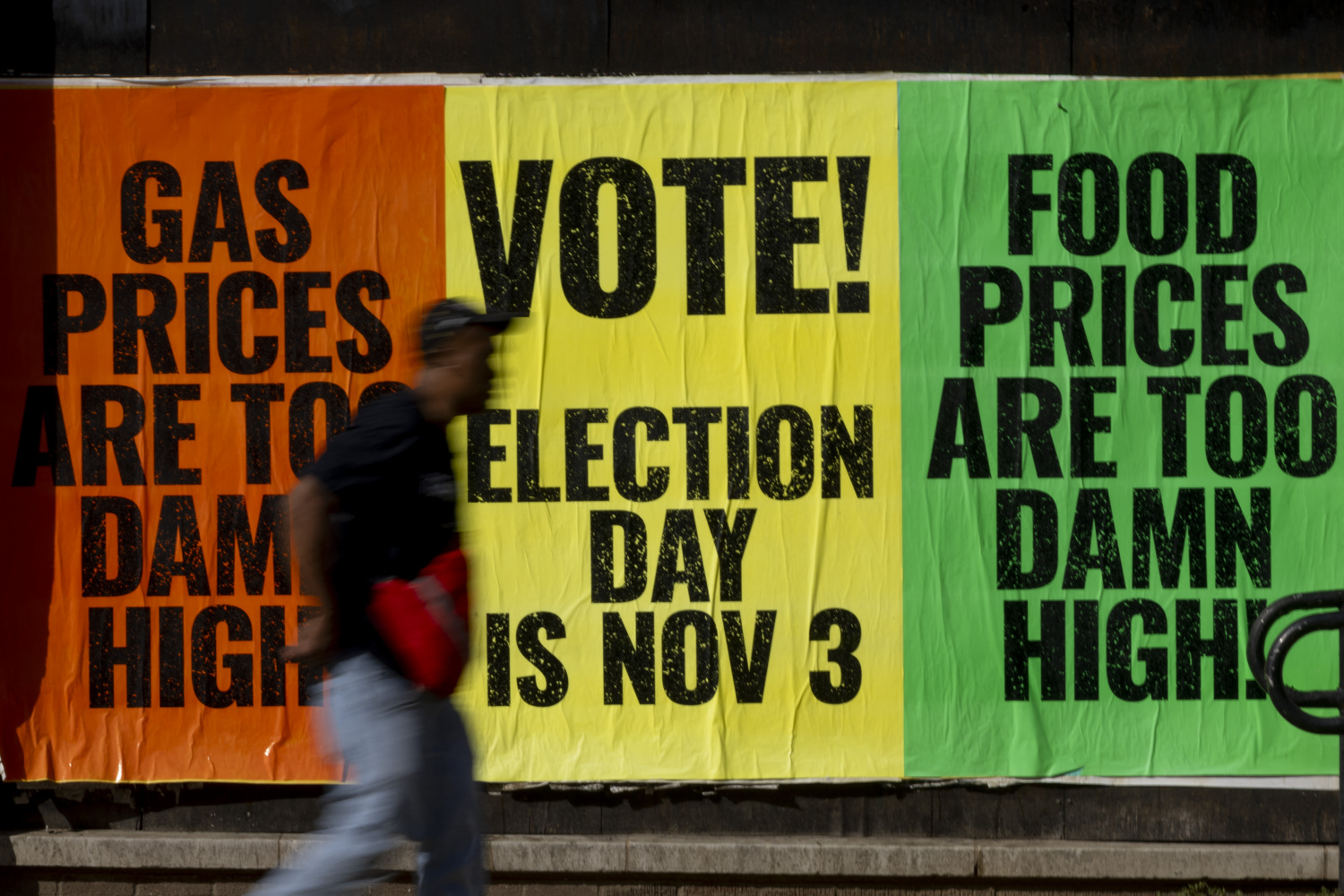
We asked our readers a simple question: What’s inspiring you to vote this year? Here’s what one Austin woman had to say.
Don’t forget Election Day is Tuesday, Nov. 3!
By Kyle Kaminski, The ‘Gander
Early election results show Jocelyn Benson will be Michigan’s next governor and Abdul El-Sayed has won the state’s open US Senate seat.
Several other races remained too close to call as of 1 a.m.
This story will be updated as the results are tallied.
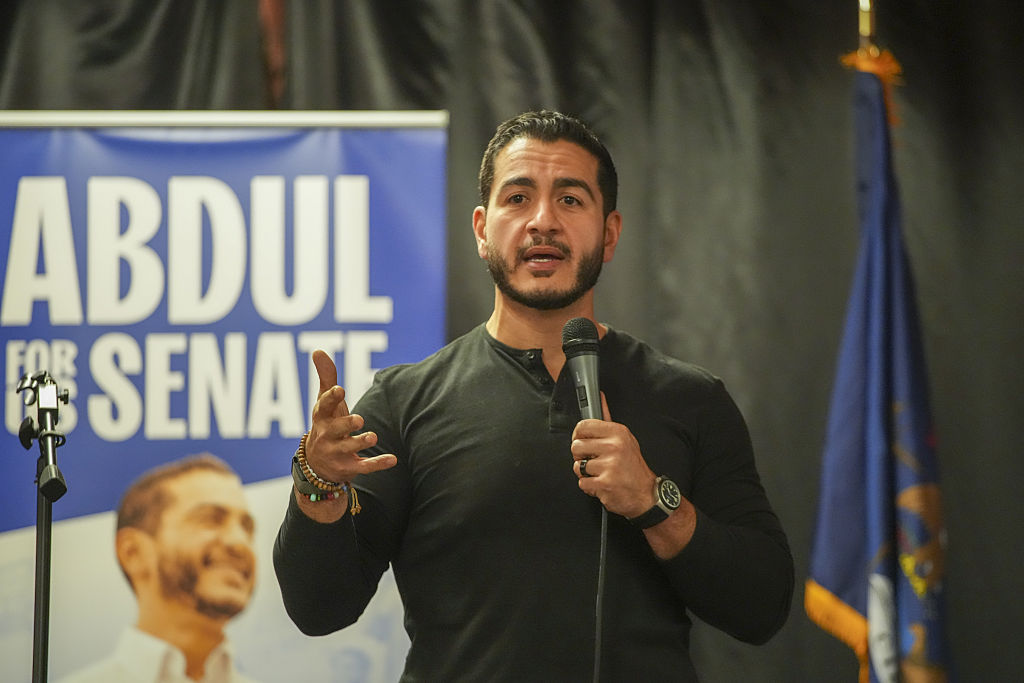
Democrat Abdul El-Sayed has defeated Republican Mike Rogers in the race for Michigan’s open US Senate seat, according to the Vote Hub. El-Sayed led Rogers 51.8% to 46.3%, with an estimated 71% of the vote counted at 1 a.m.
El-Sayed, an epidemiologist with a medical degree, previously ran the public health departments for the city of Detroit and Wayne County. He lost to Gretchen Whitmer in the 2018 primary election for governor and won this year’s primary election over US Rep. Haley Stevens.
Rogers, a US Army veteran and former FBI agent, represented Michigan in Congress from 2001 to 2015 and chaired the House Intelligence Committee. He lost the 2024 US Senate race to Elissa Slotkin by fewer than 20,000 votes.
Democrat Jocelyn Benson has defeated Republican John James in the race to become Michigan’s next governor, according to the Decision Desk HQ, which called the race at 10:45 p.m. Benson leads James 52.4% to 45.8%, with an estimated 61% of the vote counted at 1 a.m., according to the Associated Press.
Benson has been Michigan’s secretary of state since 2019 and oversaw the state’s elections through the 2020 presidential race and its aftermath. She’s a former dean of Wayne State University Law School and won the primary over Genesee County Sheriff Chris Swanson.
James, a US Army veteran, has represented Michigan’s 10th Congressional District since 2023. He lost his campaigns for US Senate in both 2018 and 2020.
Early results show Democrat Eli Savit ahead of Republican Doug Lloyd in the race to become Michigan’s next attorney general. With an estimated 59% of the vote counted, the Associated Press had not yet called the race as of 1 a.m.
Savit has been the Washtenaw County prosecutor since 2021. He clerked for two US Supreme Court justices and won the Democratic Party’s nomination at its April convention over Oakland County Prosecutor Karen McDonald.
Lloyd has worked as a prosecutor for three decades and has led the Eaton County prosecutor’s office since 2013. He is president of the state’s county prosecutors association and won the Republican Party’s nomination at its March convention.
Democrat Garlin Gilchrist has defeated Republican Anthony Forlini in the race to become Michigan’s next secretary of state, according to MIRS News. Gilchrist led Forlini 52% to 46% with an estimated 62% of the vote counted at 1 a.m., according to the Associated Press.
Gilchrist has been Michigan’s lieutenant governor since 2019 and previously worked as a software engineer. He ended his campaign for governor in January to run for secretary of state.
Forlini, a former state representative, has been the Macomb County clerk since 2021, overseeing elections in the state’s third-largest county.
Gilchrist’s win keeps the office that oversees Michigan’s elections in Democratic hands. Benson, a Democrat, has held it since 2019.
Chief Justice Megan Cavanagh and Justice Noah Hood, both nominated by Democrats, won reelection to the Michigan Supreme Court, according to the Detroit Free Press. Cavanagh and Hood had 34% and 29% of the vote, respectively, with an estimated 42% of votes counted at 1 a.m.
Cavanagh, the court’s chief justice, was first elected in 2018 after more than 15 years as an appellate attorney. Hood was appointed by Whitmer in 2025 after serving on the Michigan Court of Appeals and as a circuit judge in Detroit.
Their wins keep the court’s 6-1 Democratic-nominated majority intact.
All 148 seats in the Michigan Legislature are on the ballot, and control of both chambers is up for grabs. Democrats hold the state Senate 20-18, while Republicans hold the state House 58-52.
A party needs 20 seats to control the Senate and 56 to control the House.
Whichever party controls each chamber will shape how much of the next governor’s agenda can pass. This section will be updated as results roll in.
Proposal 1 asks voters whether to hold a convention to rewrite Michigan’s constitution. The state constitution automatically puts the question on the ballot every 16 years, and voters last rejected it in 2010. A large bipartisan coalition of groups urged a no vote on this proposal.
Proposal 2, also known as “Mop Up Michigan,” would bar regulated gas and electric utilities, along with companies holding more than $250,000 in state contracts, from making political contributions. It would also expand disclosure rules for political ads, including online ads. Michiganders for Money Out of Politics, a coalition of left-leaning groups, put it on the ballot.
Michigan voters rejected Proposal 1, according to the Associated Press. With an estimated 52% of the vote counted, 74% voted no and 26% voted yes.
Michigan voters approved Proposal 2, according to the Associated Press. With an estimated 56% of the vote counted, 81% voted yes, and 19% voted no.
Democrats won back control of the US House.
Among the most competitive races in Michigan:
MI-04: Republican US Rep. Bill Huizenga, who has served in Congress since 2011, faces Democratic state Sen. Sean McCann of Kalamazoo. With an estimated 35% of the vote counted, Huizenga led McCann, 49.3% to 49.1% at 1 a.m.
MI-07: First-term Republican US Rep. Tom Barrett faces Democrat Will Lawrence, a community organizer, in the state’s most expensive House race. With an estimated 80% of the vote counted, Barrett led Lawrence, 52% to 47% at 1 a.m.
MI-08: First-term Democratic US Rep. Kristen McDonald Rivet defeated Republican Thomas J. Smith, MIRS News reports. With an estimated 59% of the vote counted, McDonald Rivet led Smith, 53% to 44.5% at 1 a.m.
MI-10: Republican Mike Bouchard and Democrat Christina Hines are running for the open seat John James is leaving to run for governor. With an estimated 51% of the vote counted, Hines led Bouchard, 50.1% to 47.4% at 1 a.m.

By Brian McManus, Courier Texas
James Talarico won the most expensive U.S. Senate race in American history, and Gina Hinojosa triumphed over Greg Abbott to become Texas’ next governor, marking the first statewide Democratic wins in over three decades. The outcome of Texas’ blue wave also helped Democrats win control of the US House and Senate. Five of the most competitive House races in the country are in San Antonio and South Texas, most of them in districts Republicans redrew last year at President Donald Trump’s urging.
Here’s what Courier Texas is watching.
At 8:42 p.m. local time, VoteHub called the election for Democrat James Talarico, who defeated Republican Ken Paxton in the race for Texas’ US Senate seat.
Talarico becomes the first Democrat to win a US Senate race in Texas since Lloyd Bentsen in 1988. He overcame record spending against him, much of it from billionaire Elon Musk. His win makes him the first Democratic senator in Texas since 1994.
Talarico, an Austin state representative and former middle school teacher, narrowly led in most recent polls, while a Fox News poll found the race tied.
Democrat Gina Hinojosa has defeated Republican Gov. Greg Abbott in the race for Texas governor, according to multiple outlets.
Hinojosa becomes the first Democrat elected governor of Texas since Ann Richards in 1990. She ousts a three-term incumbent who outspent her 8-to-1 and raised tens of millions of dollars, including from data center and tech executives. She’ll take office facing a Republican-controlled Legislature.
With 67% of votes in, Hinojosa leads the race with 57% of the vote.
Republican Lt. Gov. Dan Patrick is favored to win a fourth term over Democrat Vikki Goodwin. Patrick presides over the Texas Senate and controls which bills reach the floor, and he has used that power to pass conservative priorities, including the state’s school voucher program. Goodwin, a state representative from Austin, is trying to become the first Democrat elected lieutenant governor since Bob Bullock in 1994.
Democrat Nathan Johnson has defeated Republican Mayes Middleton in the race for Texas attorney general, according to The Texas Tribune, which called the race for Johnson at 10:10 p.m. CST.
Johnson becomes the first Democrat elected attorney general since Dan Morales in 1994. His win hands Democrats control of the state’s top legal office after nearly three decades of Republican leadership.
Democrat Sarah Eckhardt has defeated Republican Don Huffines in the race for Texas comptroller, according to The Texas Tribune, which called the race for Eckhardt at 10:46 p.m. CST.
Eckhardt, a former Travis County judge, will oversee, in part, the state’s new school voucher program, which she and Democrats have largely opposed. It’s a historic win, as Eckhardt becomes the first Democrat in decades to take over the state’s finance office. With roughly 82% of votes in, the current state Senator had nearly 52% of the vote.
Republican Nate Sheets and Democrat Clayton Tucker are facing off to oversee the state’s farm and ranch programs and school lunches as Texas Agriculture Commissioner. Sheets, the founder of Nature Nate’s honey, ousted Agriculture Commissioner Sid Miller in the March primary with Abbott’s endorsement, and Miller has since urged voters not to back him, the Texas Tribune reported.
Tucker, the secretary of the Texas Farmers Union and a member of a Lampasas ranching family, has campaigned against large AI data centers and challenged Sheets’ eligibility, arguing his honey business doesn’t meet the state’s requirement that the commissioner work in agriculture.
Democratic US Rep. Vicente Gonzalez has defeated Republican Eric Flores in the race for Texas’ 34th Congressional District, according to NBC News, which called the race for Gonzalez at 8:24 p.m. CST.
Gonzalez wins a sixth term in a district Republicans redrew specifically to defeat him. His win is a setback for the GOP’s mid-decade redistricting push and a sign that its gains with Hispanic voters in South Texas were temporary.
Republican Brandon Herrera and Democrat Katy Padilla Stout are competing in a tight race for the open seat in Texas’ 23rd Congressional District, which became vacant when Republican US Rep. Tony Gonzales resigned in April amid a sexual misconduct scandal. Herrera, who twice challenged Gonzales in Republican primaries, became the nominee when Gonzales dropped out before their runoff. Padilla Stout is a child welfare attorney and first-time candidate. Read Courier Texas’ preview.
Republican Carlos De La Cruz is favored over Democrat Johnny Garcia in Texas’ 35th Congressional District, which Republicans moved out of Austin and redrew from southern Bexar County into more conservative Guadalupe, Wilson, and Karnes counties. The Cook Political Report rates the open seat as leaning Republican.
De La Cruz, an Air Force veteran endorsed by Trump, is the brother of US Rep. Monica De La Cruz. Garcia, a Bexar County sheriff’s deputy who calls himself a “Blue Dog” moderate, has campaigned on household costs. Read Courier Texas’ preview.
Democratic US Rep. Henry Cuellar has defeated Republican Tano Tijerina in the race for Texas’ 28th Congressional District, according to NBC News, which called the race for Cuellar at 11:17 p.m. CST.
Cuellar wins another term in a district Trump carried in 2024, extending more than two decades in Congress.
Latin Grammy-winning Tejano singer and Democrat Bobby Pulido has defeated Republican US Rep. Monica De La Cruz in the race for Texas’ 15th Congressional District, according to DecisionDeskHQ, which called the race for Pulido at 9:58 p.m. CST.
Pulido flips a district Trump won by double digits in 2024, ousting a Republican who first won the seat in 2022.
In the race for Texas Railroad Commissioner, Democrat Jon Rosenthal has won over Republican Bo French. Decision Desk HQ called the election at 11:21 p.m. CST, with Rosenthal defeating French with 53% of the vote.
By Courier Georgia Staff
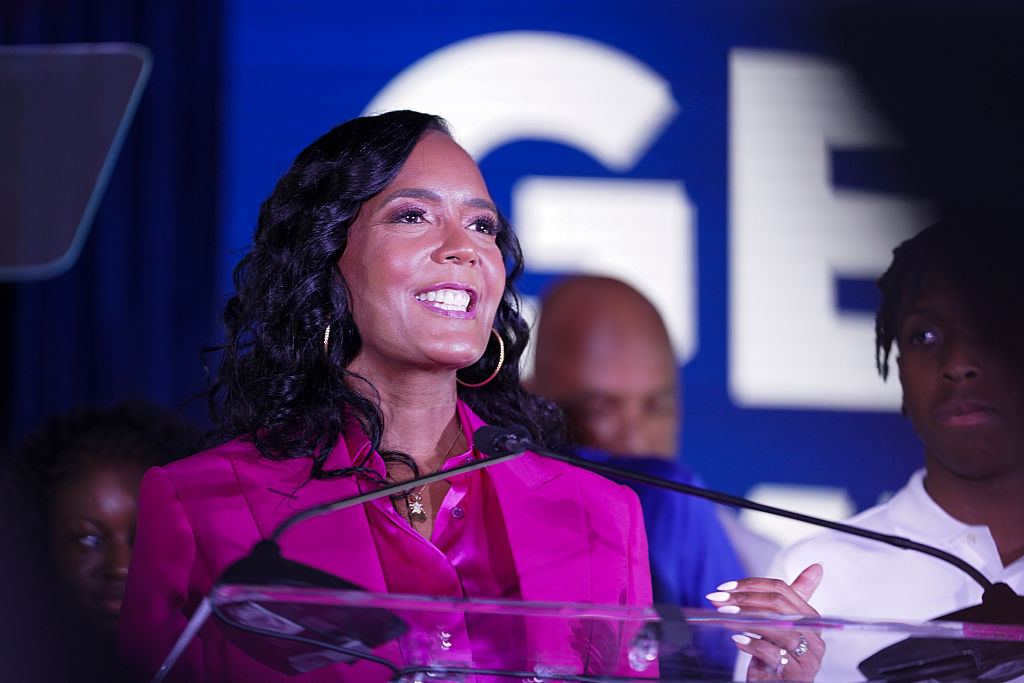
Sen. Jon Ossoff (D) and former Atlanta Mayor Keisha Lance-Bottoms are both projected to win their respective elections for US Senate and and governor. Democrats are also expected to win Georgia’s Attorney General and Secretary of State races as well.
Meanwhile, both Public Service Commission have yet to be called after polls closed on Nov. 3.
Ossoff defeated Republican Rep. Mike Collins, 76.14% to 23.86% as of 7:30 p.m. ET, to win a second term. Decision Desk HQ called the race at 7:18 p.m. ET.
The result was no surprise. Ossoff led every major public poll in the final stretch, including an October Atlanta Journal-Constitution poll that showed him up 48% to 40%.
Collins, a self-described “MAGA warrior,” campaigned alongside Trump and stuck to an “America First” message even as Trump’s approval in Georgia stayed underwater.
His campaign was dogged by controversy, most prominently a July CNN report that his son-in-law, David Alan Scheer II, is a white nationalist influencer who shared antisemitic material and Nazi imagery online.
Ossoff built a fundraising advantage of millions of dollars, while the Senate Leadership Fund, the main super PAC for Senate Republicans, pulled back from Georgia. A super PAC is a type of political action committee that can raise and spend an unlimited amount of money in a race. Ossoff’s win will fuel speculation about a 2028 presidential run, which he has repeatedly ruled out, saying he has “zero interest.”
Former Atlanta Mayor Keisha Lance Bottoms defeated Republican Rick Jackson, according to NBC News, making history three times over. The race was called 9:04 p.m. EST by NBC News, with 55.3% of the vote compared to Jackson’s 44.7%, with 75% of the vote counted. She will be Georgia’s first woman governor, its first Black governor, and the first Black woman elected governor of any US state.
Bottoms won despite a lopsided funding disadvantage. Jackson, a billionaire healthcare executive, put more than $200 million of his own fortune into his campaign.
But the spending was not enough to sway an electorate that had soured on Republicans and on Trump in particular. Bottoms campaigned on kitchen-table issues: expanding Medicaid, letting local governments drop sales taxes on groceries, eliminating state taxes on car and homeowners insurance premiums, building more housing and fully funding schools. She cast Jackson as an out-of-touch billionaire who wanted to be “Trump’s favorite governor.”
Democratic state Rep. Tanya Miller is projected to be Georgia’s attorney general, according to NBC News, which called the race for Miller at 9:10 p.m. EST. Miller currently leads Republican Brian Strickland 57% to 43% with 73% of the vote counted.
The attorney general is the state’s top lawyer, enforcing state laws, issuing binding legal opinions, representing state agencies in court and protecting consumers.
Miller, a former Fulton County prosecutor and civil rights attorney, argued that Republican Attorney General Chris Carr had been “asleep at the wheel” in protecting Georgians from corporate misconduct and argued that Strickland would be more of the same. She built her campaign around fighting price gouging and highlighting her experience prosecuting violent crime.
Democrat Penny Brown Reynolds is projected to be the Georgia Secretary of State, according to NBC News, which called the race for Brown Reynolds at 9:09 p.m. EST. Brown Reynolds currently leads Republican Tim Fleming 57% to 43% with 73% of the vote counted.
Brown Reynolds will become Georgia’s first Black woman secretary of state and its first Democrat in the job in nearly 20 years, succeeding Brad Raffensperger.
The secretary of state oversees Georgia’s elections, a critical role in a state where battles over election integrity have raged since Trump’s false claims of fraud following the 2020 election. The winner will oversee the state’s 2028 presidential election.
Brown Reynolds, who later served as a civil rights official at the US Department of Agriculture, made the race a referendum on Trump’s push to overhaul elections. She pledged to do everything in her power to keep the federal government from interfering in Georgia’s elections.
“What I have to do is make certain that we do everything in our power so that the federal government does not come and try to take away our right to vote,” she told Capital B in October.
Democrats Peter Hubbard and Shelia Edwards are up against Republicans Fitz Johnson and Josh Tolbert for seats on the five-member Public Service Commission. The commission regulates Georgia Power, the state’s investor-owned electric monopoly. During the campaign, Democrats argued that years of Republican control led to repeated rate hikes while Georgia Power’s profits climbed, driven in part by the rapid growth of data centers, which became the flashpoint of both races.
By Colleen Hamilton
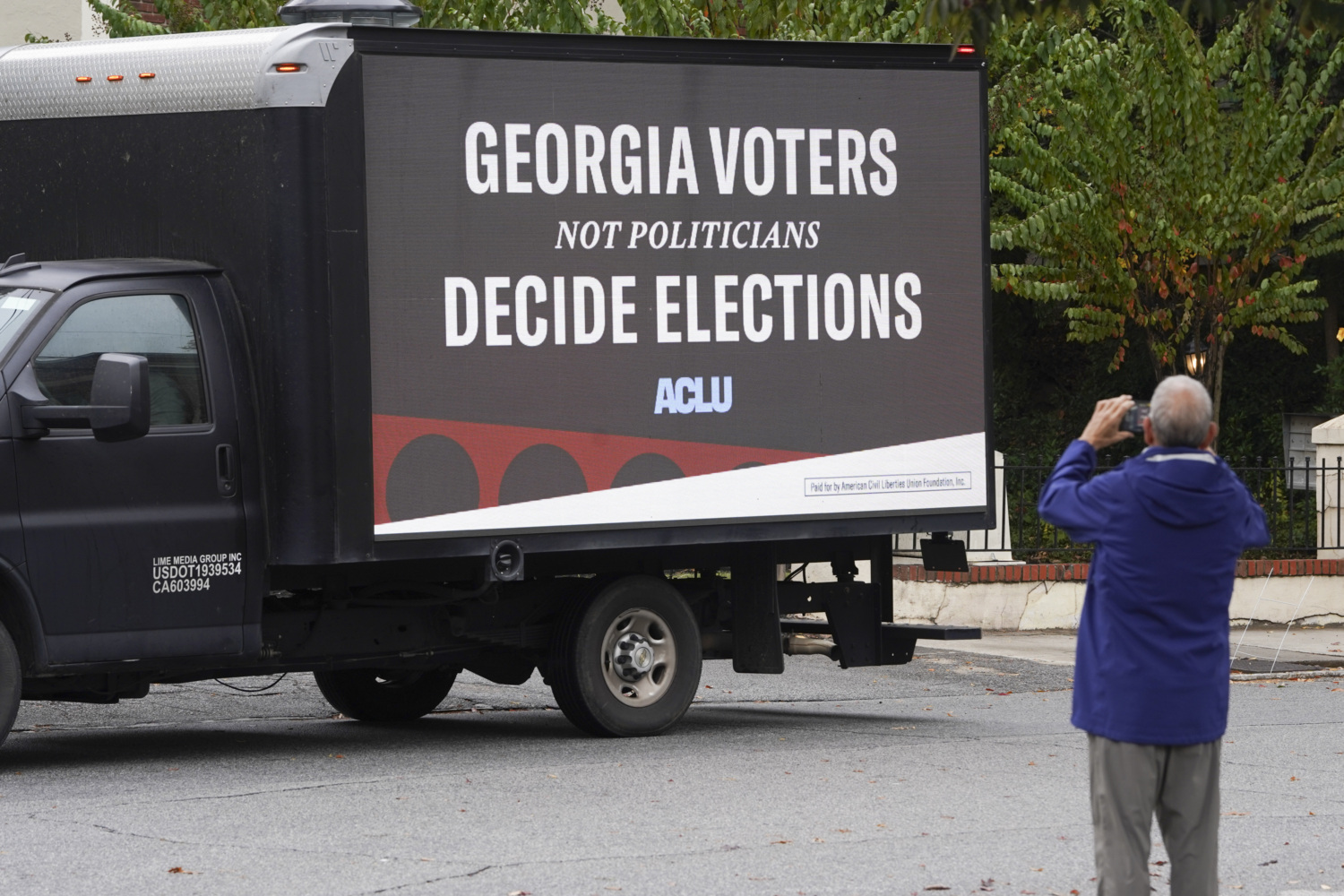
The 2026 midterms are Georgians’ first chance to deliver a verdict on President Donald Trump’s second term—and by every early measure, they’re eager to do it.
More than two million Georgians cast ballots during early voting, and millions more are expected at the polls today.
“People are chomping at the bit to vote,” said John Hurley, a Fulton County voter.
In the days leading up to Election Day, Courier Georgia political correspondent Colleen Hamilton spoke with voters about what’s driving them to the polls.
Five concerns came up again and again: healthcare, the war with Iran, the spread of data centers, the tone of the campaign, and corruption in Washington.
Healthcare has been one of the defining issues of this election cycle. Premiums in Georgia have skyrocketed since Trump signed the One Big Beautiful Bill Act, and Georgia remains one of 10 states that have not adopted the Affordable Care Act’s Medicaid expansion—a decision that has frustrated voters across the state.
“The overwhelming issue for me is Medicaid expansion,” said Paul Bolster, outside the early voting site at Beulah Heights University.
“It’s just a crazy thing that we would not take all of that federal money and get all those people covered.”
Bolster argued that expansion would double as economic development, sending millions of dollars to hospitals and medical providers across the state.
For younger voters, the issue is about who gets left behind. Marcus Hepburn, a Georgia State University (GSU) student, said he’s voting for a government that “actually cares about our communities”—which, to him, means investing in Medicare.
Kiarah, a fellow GSU student, agreed.
“Medicaid and Medicare is very important to me,” she said, pointing to vulnerable people, including those experiencing homelessness, who struggle to get care.
The issue sits at the center of the governor’s race.
Democratic nominee Keisha Lance Bottoms, a former Atlanta mayor, has made Medicaid expansion a centerpiece of her campaign. Her Republican opponent, billionaire healthcare executive Rick Jackson, has said he supports “intelligent Medicaid expansion,” but has offered few details about what that would look like.
Since the war with Iran began in February, 60% of Americans have said they oppose it. For some voters, it’s a broken promise: Trump campaigned on ending “forever wars.” Now, they say, they’re voting to make clear they don’t want new entanglements abroad.
“We need to stop bombing Iran,” said Eli Irby, a GSU student.
“Right now, a lot of our involvement in other countries is actually hurting us more than it’s helping us. I think we need to focus on problems in our own country.”
Hurley believes the war and other foreign entanglements are a major reason turnout is so high.
“Everyone who’s paying attention realizes how dire the situation is,” he said. “Not only here, but also globally.”
Few issues have scrambled Georgia’s partisan lines like data centers.
In a recent AJC poll, three out of five Georgians said they don’t want Georgia to build more data centers, and voters in both parties are looking for leaders willing to slow the industry’s rapid growth.
The boom is real.
Metro Atlanta now has more data center capacity under construction than any other market in the country, overtaking Northern Virginia this year, according to commercial real estate firm CBRE.
Nyah, a GSU student, worries about what that growth means for nearby communities: Corporations, she said, are “taking water from them, polluting the air” without regard for the consequences.
This is the most expensive election in American history, outpacing even the 2024 presidential race. A significant portion of that money has gone to advertising, and in Georgia, much of it has been bitter. Ads featuring Secoria Turner, the 8-year-old girl killed in Atlanta in 2020, ran without her family’s consent. Sen. Jon Ossoff has repeatedly called his Republican challenger, US Rep. Mike Collins, a “bigot.” And Trump has attacked Ossoff with an obscene nickname.
Many voters said they’re tired of the vitriol.
“We need to focus on political leaders who treat others with respect,” Irby said. “Without any conservatives, I think our country would fail. But I think without any liberals, our country would fail. We should try to build each other up rather than tearing each other down.”
Hurley said he hopes his vote advances the values that matter most to him: “Inclusion, tolerance, patience, humanity.”
And Bolster, despite Ossoff’s sometimes fiery rhetoric, sees the senator as uniquely able to hold together a multiracial coalition with a forward-looking, anti-corruption message.
“He has the potential to change Southern politics,” Bolster said.
For Bolster and Hepburn, the frustrations they voiced over healthcare and the war came back to a single question: who is the government really working for? When they turned to Washington, neither held back.
“It’s just shocking the amount of corruption that has taken over the federal government,” Bolster said. “You have a president who has increased his personal wealth by $2 billion over the past twelve months.”
Hepburn agreed. “What’s happening in DC cannot be ignored,” he said. “We have a president who is more focused on enriching himself”—all while, in Hepburn’s view, life is getting harder for everyday Americans.
Polls are open today until 7 p.m.
By USA Today Network via Reuters Connect
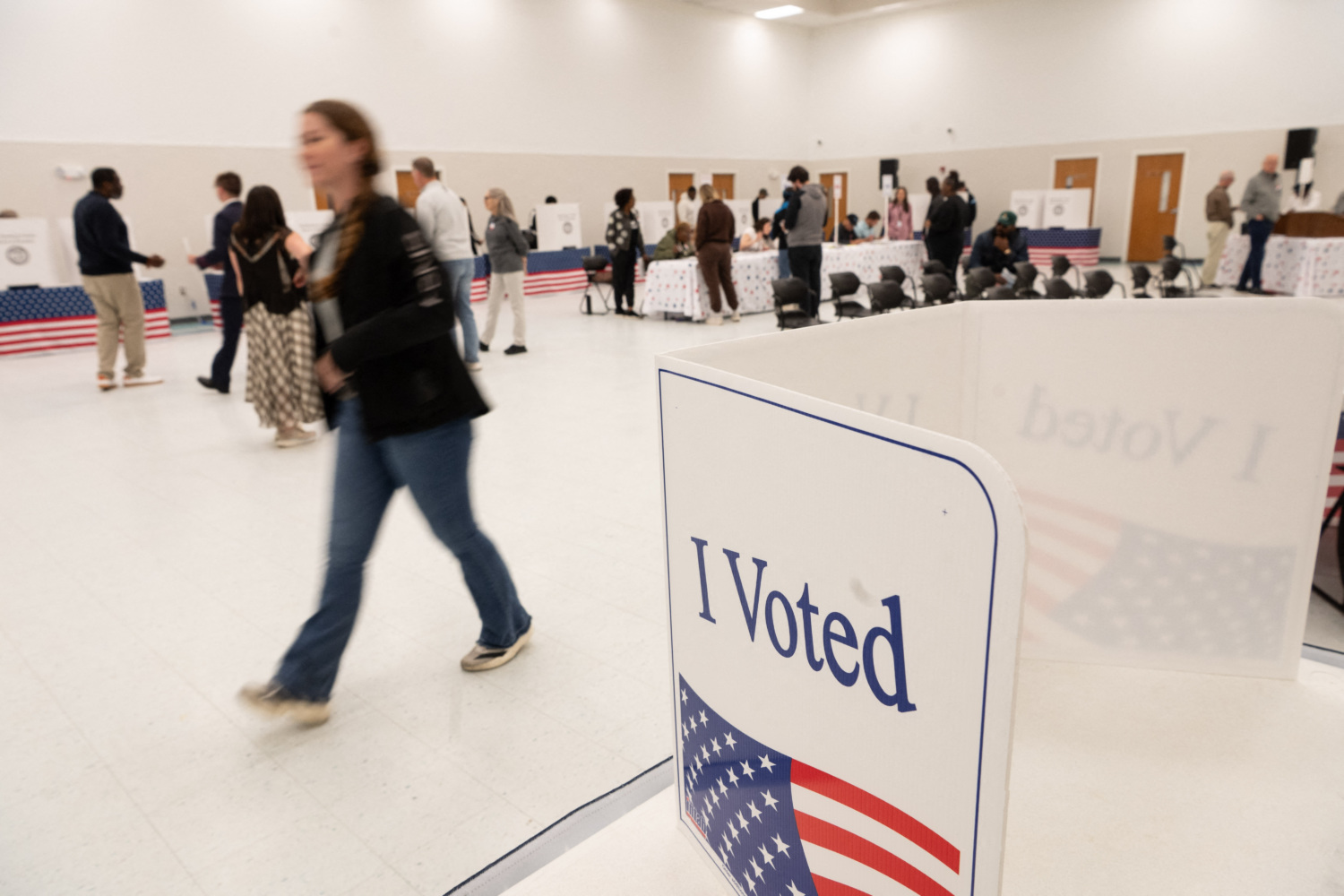
The 2026 midterm general election is today, with 14 North Carolina U.S. House Seats and one U.S. Senate seat up for election.
During this election, N.C. voters will be able to choose between four U.S. Senate candidates. Additionally, all 14 N.C. district seats for the U.S. House of Representatives are up for election. Voters will also be given further elected offices to vote on based on their location.
There are several districts located in Western N.C., including NC-5, 10, 11, 12 and 14. The N.C. Board of Elections website provides a tool that voters can use to find their district. Additionally, several Western N.C. counties will be voting for local seats, including mayors, judicial seats, school board members, and more.
Here’s what to know today.
What is a midterm election? Who do you vote for in a midterm election?
The U.S. Vote Foundation explains that in short, midterm general elections are “all about Congress.” Presidential general elections fall every four years, and midterm elections fall at the two-year mark in between this cycle every four years.
Congress, which is the Legislative Branch of the U.S. government, is made up of 435 House of Representatives members and 100 Senators. The Vote Foundation explains that Congress “provides a check and balance on the Executive Branch of our government, led by the President and Vice President,” meaning that a change in the composition of Congress can “create a dramatic power shift in the function of an administration.”
In the 2026 midterm election, the following seats are up for election statewide:
Additionally, local judges and district attorneys, county offices like sheriffs, county commissioners, and Board of Education members and municipal election options in some jurisdictions may be on your ballot based on where you live.
You can find your sample ballot via the state’s voter search here.
There are four Senate candidates on the ballot in North Carolina:
All 14 N.C. U.S. House of Representatives districts have elections Nov. 3, with the candidate on each ballot depending on where you live. Some of the westernmost district races in NC include:
Additionally, there are three ballot measures on the ballot today, including:
In Buncombe County, ballots will include judicial seats up for election, including N.C. District 40 District Court, Prosecutorial Court and Superior Court. County seats up for election include Buncombe County Board of Commissioners Districts 1, 2 and 3, County Clerk of Superior Court, Sheriff, Soil and Water Conservation District Board of Supervisors. Buncombe County Schools seats up for election include school board Districts 3, 5 and 6.
In Asheville, seats up for election include City Council and Mayor. Asheville City Schools Board of Education seats are also up for election. In Black Mountain, seats up for election include Town Council and Mayor. In Montreat, seats up for election include Town Commissioner.
In Henderson County, ballots will include judicial seats up for election, including N.C. District 42 District Court and Prosecutorial Court District 42. County seats up for election include Henderson County Board of Commissioners Districts 1, 3 and 4, County Clerk of Superior Court, Register of Deeds, Sheriff, Soil and Water Conservation District Board of Supervisors and County Schools board at-large.
In Hendersonville, seats up for election include City Council At Large and Mayor. In Flat Rock, seats up for election include Village Council Districts 1, 2 and 3. In Fletcher, seats up for election include Town Council Districts 1 and 4 and Mayor. In Laurel Park, seats up for election include Town Council. In Mills River, seats up for election include Town Council Districts 1, 2 and 3. In Saluda, seats up for election include Mayor of Saluda and City Commission.
In Madison County, judicial seats up for election include N.C. District 35 District Court, Prosecutorial Court and Superior Court. Madison County seats up for election include Board of Commissioners, Clerk of Superior Court, Sheriff, Soil and Water Conservation District Board of Supervisors, County Schools Districts 1 and 2 and County Schools Chair.
Reporting by Iris Seaton, Asheville Citizen Times / Asheville Citizen Times
By Courier Texas Staff
We asked our readers a simple question: What’s inspiring you to vote this year? Here’s what one Austin woman had to say.
Don’t forget Election Day is Tuesday, Nov. 3!
By The 19th, Courier Georgia
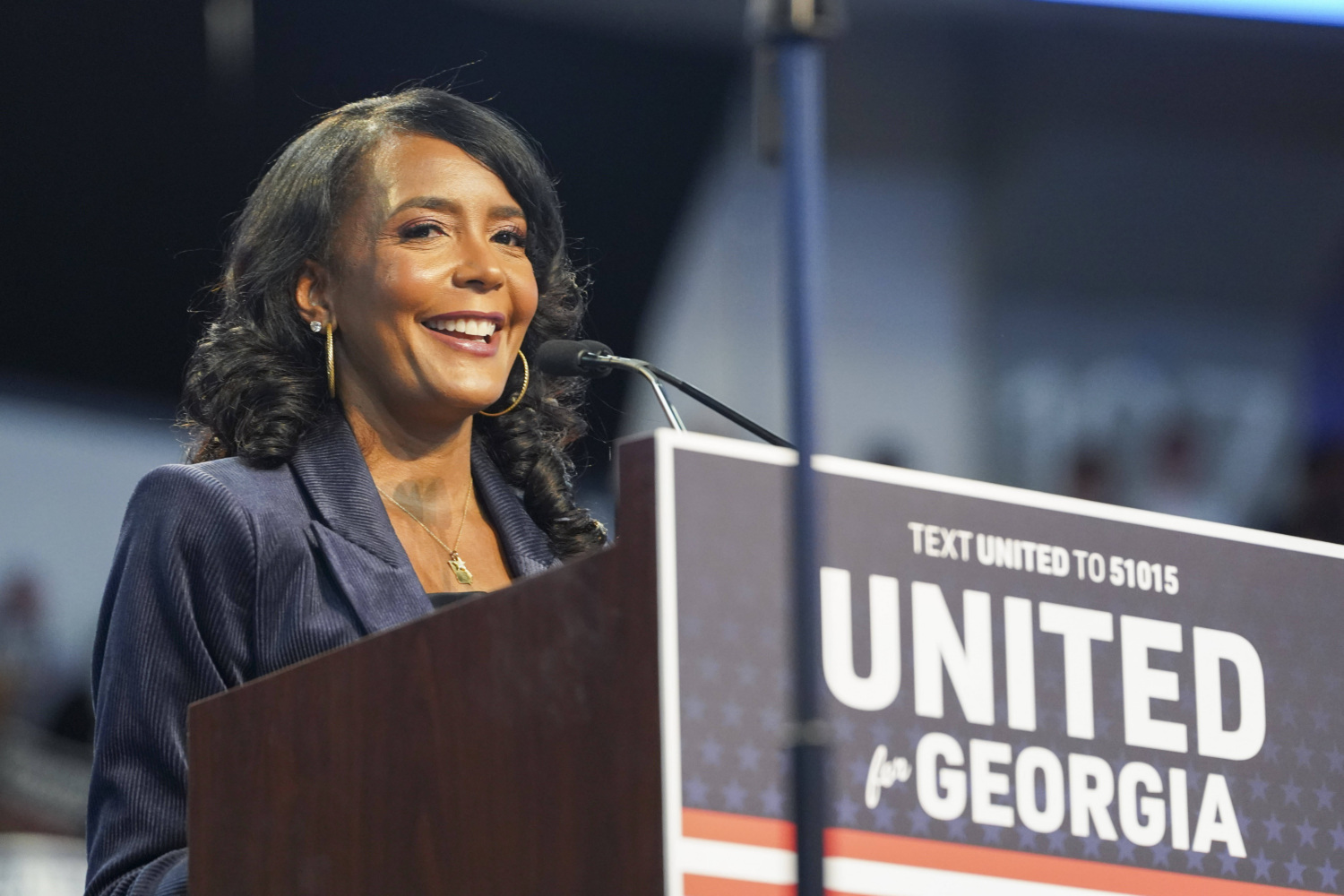
The 2016 election changed how Tanya Miller felt about politics. The 2024 election — President Donald Trump’s defeat of then-Vice President Kamala Harris — changed how she saw her career.
“Who I viewed as one of the most qualified folks to ever run for president got beat by a convicted felon,” she said. “It was really devastating in a personal way. It was personally devastating to watch as a Black woman.”
But then she saw Democratic attorneys general across the country standing up to Trump. She looked at her career and thought about her daughter, about the history of the Civil Rights Movement in Georgia — and knew she could do that, too. Now Miller, who successfully ran for Georgia’s state legislature in 2022, is on the ballot again, this time running for attorney general.
“All that experience led me to think that I was uniquely qualified in this moment to step up and fight for our democracy and to fight for the rule of law and to protect the people of Georgia from all of the harm that was coming from this administration,” Miller said.
Miller is far from alone in feeling her background and lived experiences made her ready to meet this political moment.
She’s one of eight Black women in politics, all Democrats, whom Georgia voters will have the chance to vote for in 10 statewide elections this year, a new record in the state.
Heading the ticket is Keisha Lance Bottoms, the former mayor of Atlanta, who would be the first Black woman governor not just in the state but in U.S. history. Joining them are Judge Penny Brown Reynolds, running for secretary of state; Katherine Juhan-Arnold, running for agriculture commissioner; Keisha Waites, running for insurance commissioner; Nikki Porcher, running for labor commissioner; Sheila Edwards, running for public service commissioner; and Lydia Powell, running for school superintendent.
It’s a moment not lost on the women who are running.
“People like me generally don’t run,” Brown Reynolds said. Her decision to run for secretary of state is directly connected to what she sees happening around her: the attacks by the Trump administration on diversity, equity and inclusion programs, Black women facing disproportionate job losses, the assault on voting rights.
“The voices of women are so very, very important, which I think is why we have eight women on the ticket right now in Georgia,” she said.
The gubernatorial race between Bottoms and billionaire Republican healthcare executive Rick Jackson is rated as a toss-up; recent polling by the Atlanta Journal-Constitution in the down-ballot statewide races shows tight contests.
Winning statewide as a Democrat in Georgia is challenging, even as the state has gotten more blue in recent cycles. That’s especially true for Black women. Stacey Abrams’ gubernatorial losses in 2018 and 2022 and Harris’ presidential loss in 2024 hang over Black women candidates. But the win-loss record for Black women is only a small part of the narrative, said Nadia Brown, a professor of government at Georgetown University and a scholar on intersectionality, politics and identity.
“I think the bigger story is that there are these eight Black women running for statewide office and to me this is undoubtedly connected to the grassroots work that so many Black women have put into Georgia for decades, for generations.”
Brown pointed to the work done by LaTosha Brown and Black Voters Matter and Abrams and her voting rights group, Fair Fight. Their work registering and mobilizing voters helped redefine what organizing and voter activation can mean for Black women throughout the South, and Georgia specifically. It’s work that also doesn’t always yield results in real time but rather changes the electorate going forward.
“If these women win, it will be because of the mobilization efforts that Black women have put into communities,” Brown said. “The Democratic Party, not so much. This isn’t necessarily a story about how parties are supporting Black women, how these eight women got to be on the ballot because they were following party machine politics, but rather that these are capable women right who have a history of serving their communities. They have the political expertise and know-how.”
What happens next is up to voters. “You might not agree with some of their policy positions,” Brown said. “But no one can say that these women aren’t qualified.”
Christina Greer is a professor of political science at Fordham University and the author of “How to Build a Democracy: From Fannie Lou Hamer and Barbara Jordan to Stacey Abrams.” She also pointed to the work that Abrams did in organizing as well as running for governor in 2018 and 2022 — though she said Abrams is likely not to be credited for that work because of the way that “we have relatively short political memories.”
In addition to her organizing, Abrams changed the landscape by showing that Black women can raise money, including from donors who have historically saved the majority of their dollars to back White men.
It’s still uneven. Many Black women candidates have struggled with fundraising efforts post-2024. Bottoms has been vastly outspent in her race, as Jackson has put over $200 million of his own money into his campaign.
However, candidates including Miller say small-dollar donations have been critical to their campaigns. They mean a lot, she said, not just in terms of funding but what they mean in terms of voter confidence. She said she thinks of her own mother, whose first-ever political donation was $10 monthly to Barack Obama’s 2008 run.
“I just feel, for me, when people give any amount of money in support of the campaign, it matters so much to me because oftentimes folks are giving you their last,” Miller said. “I think that is the beauty of a lot of the small-dollar donations; it allows all of us to participate in helping make sure that we get folks in office who are going to look out for working and everyday people.”
It reflects the very spirit that is motivating so many of these women’s campaigns, Greer said. She said that after 2024, a lot of the conversation around Black women and political engagement focused on the way that these women felt like they needed a moment for rest, a pause after reckoning with Harris’ loss. But again, that was never the full story.
“Fast forward two years and we’re seeing a lot of Black women saying, ‘You know what? I’m tired of supporting people to try to get them to understand what we need. Why am I constantly begging people to do the thing we need them to do? I’m going to run myself and do the thing.’”
Brown Reynolds has already had an illustrious career as a former prosecutor, an assistant attorney general, a judge, and a television star. She has a PhD in criminal justice and is an ordained minister who also served in the U.S. Justice Department’s Office of Civil Rights in the Biden-Harris administration.
“I’m running now because more than ever, I believe that the right to vote is under attack and the right to vote should be a right and not a fight, and I believe that competence matters,” Brown Reynolds said.
Her decision to run has been deeply inspired by legendary Atlanta-based civil rights leaders — and the women who were critical to that work who never became household names.
“They were the ones at the kitchen table. They were the ones who constantly now work in the churches,” Brown Reynolds said. “They were integral parts of the Civil Rights Movement and so, for me, it’s almost as though it’s a spiritual baton that has been passed to me.”
Brown Reynolds is running against Republican Tim Fleming, who worked for Gov. Brian Kemp and is now serving in the state legislature. Now, Brown Reynolds is thinking about what it means to be not only working behind the scenes, but making your name and face a part of that work.
“It’s what we call visibility versus viability. I’ve always been that viable person,” Brown Reynolds said. When deciding to run for secretary of state, she knew it was time to become visible, too. And she said she’s hearing from voters — especially younger Black women — about how much her candidacy means to them.
Brown Reynolds said that her campaign isn’t just about the fight for voting rights, but helping younger people see themselves in politics, too. It’s why she established her campaign headquarters just minutes from the Atlanta University Center, the hub for Atlanta’s five historically Black colleges and universities; it’s why she’s set up a fellowship program within her campaign to train these very students in how politics and campaigns work.
“I know that what I’m doing is not just walking through the door, but that I’m also required to open that door,” she said.
While Bottoms, Miller, Brown Reynolds and the other women candidates would make history, it’s not the focus of their messaging.
Brown at Georgetown said this is a shift from earlier when identity was, by necessity, central to the candidacies of Black women. They knew that voters expected them to call attention to what made them a historically underrepresented candidate.
Increasingly, Brown said, “people with two eyes can see, ‘Oh this is a Black woman running for office’” and candidates don’t need to speak directly about their identity or potential to make history.
It’s a shift that has happened as more Black women have run for office.
“Candidates aren’t leaning in to talk about their race and gender, but what the policies that they support are or how they view the world that is definitely informed by race and gender,” she said. “What this shows me is that we have a much more sophisticated electorate that doesn’t need to be spoon-fed marginalized candidates.”
It was only a few generations ago, she noted, that Black women were denied access to law schools.
“Now you have a Black woman running for secretary of state in the Deep South that could possibly win. That’s an amazing story. But also knowing the doors she will open whether she gets elected or not and people seeing her on the ballot, it changes the conversation about what Black women can do and how they have been able to do it. That’s the larger story,” Brown said.
Greer said Tanya Miller’s candidacy is a perfect snapshot of what this moment is for Black women candidates. She pointed to how Miller has routinely stressed on the trail that voters should vote for her because of her record and the fact that she’s an “attorney’s attorney” — albeit one who also happens to be a Black woman who, Greer said, is “beyond supremely qualified for this job.”
Miller’s opponent, Republican Brian Strickland, is an attorney and state senator who chairs the Senate Judiciary Committee.
In the final push before Election Day, Miller said she’s grounding herself by telling her family’s story: Her grandmother was born in 1922 in Mississippi and Miller was raised by her mother in Ohio. She frequently describes herself on the campaign trail as a “working-class kid.”
“I watched my mom work hard and still get pushed around because people with power always had someone in their corner, and my family never did,” Miller said. “I became a lawyer to be the advocate my family never had.” These are experiences that she carries with her today — and she thinks they help connect her with voters.
Miller worked for a major law firm, clerked for a federal judge, and served as an assistant U.S. attorney in New York and as an assistant district attorney in Fulton County.
“I am the product of the hopes and dreams of the people like my grandmother and the folks who came before me and it is an honor to take the baton to do something that matters, to do something that protects the people, to do work that makes them proud,” she said. “I think we should always be striving for a more perfect union, a more perfect democracy, and I feel lucky and really honored to be in a position to use the talent and the skill that I have in service of that.”
It is, in short, why she’s running.
“I refuse to sit on the sidelines.”
To check your voter registration status or to get more information about how to vote and what’s on your ballot, visit vote.org.
By The Texas Tribune, Courier Texas
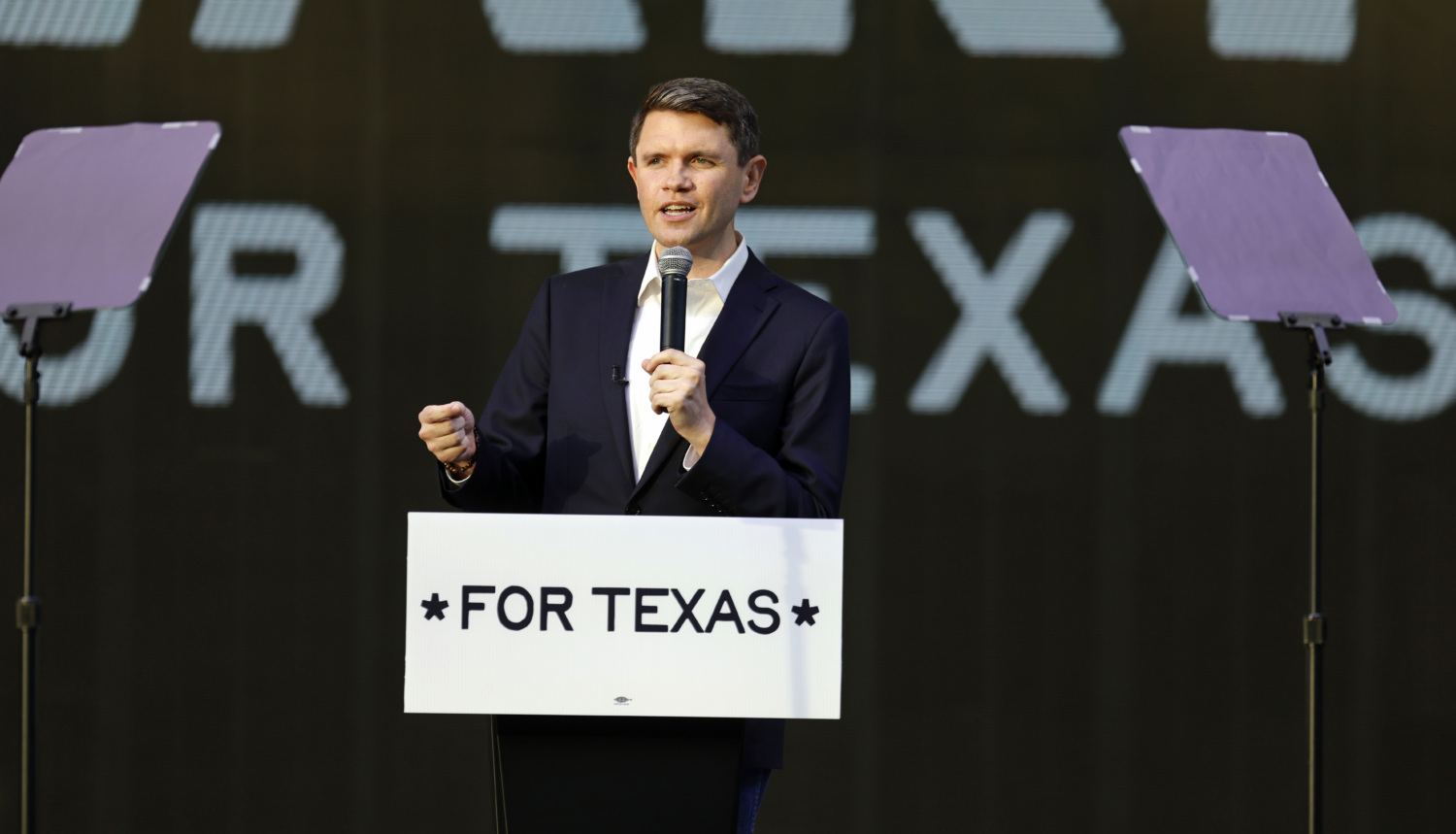
Election results will begin rolling out the evening of Election Day, and although winners will be declared and victory speeches made, the results will be official only after they’re certified.
That final step will come weeks later when Texas election results are formally locked in and a “certificate of election” is granted to the winners.
The certification itself is typically brief and without fanfare, but after rioters tried to stop certification of the 2020 presidential election at the U.S. Capitol, the process has received more scrutiny.
In Texas, the governor, House speaker and county commissioners play a role in certifying state and local elections, but they don’t have much to do beyond approving the results and calling it a day, experts say.
“There is no discretion,” said Jonathan Diaz, director of voting advocacy and partnerships at the nonpartisan Campaign Legal Center. “The certification of election results is a ministerial duty under the law, which means it’s mandatory.”
It’s typically a relatively noncontroversial and formulaic part of the election process, he said.
“By the time we get to the point of certifying the results, state and local officials have already gone through all of the post-Election Day processes in state law to confirm the accuracy of the results,” Diaz added.
Certifying the results is a legal responsibility, said Joshua Blank, research director of the Texas Politics Project at the University of Texas at Austin.
The Texas Election Code states that public officials “shall certify the tabulations.”
“It’s not a ‘may,” it’s a ‘shall,’” Blank emphasized. “It’s an obligation.”
Even so, voting rights advocates will be paying attention to the Texas certification process.
“A lot of people are watching very carefully and hoping for the best but preparing for the worst,” said Kenneth Parreno, counsel at Protect Democracy, which describes itself as a nonpartisan anti-authoritarianism group.
“We’ve seen, unfortunately, from our state and federal officials efforts to spread disinformation about who is voting and the integrity of our elections here,” Parreno said. “Just because they’ve called into question the integrity of the vote, we’ve just been concerned that these rogue officials may try to mess with Texas elections.”
But under provisions in the Texas Election Code, “they shouldn’t, and they can’t,” he said.
On Oct. 27, the Potter County Republican Party in the Texas Panhandle filed a lawsuit seeking to block certification of the Nov. 3 midterm elections unless all machine-cast paper ballots were counted by hand. The lawsuit, without providing proof, warned of the potential for interference from artificial intelligence and foreign adversaries such as China. But the Texas certification process already requires a portion of paper ballots to be hand-counted to verify the accuracy of machine tabulations.
Certification is the last step of the process of canvassing results, which includes tabulating ballots and verifying the accuracy of the count. The Election Code states that it’s a felony if someone “knowingly or intentionally makes any effort to … refuse to count votes the person knows are valid or alter a report to exclude votes the person knows are valid.”
Failing to certify canvassed results would violate that provision, Parreno said.
“There are very clear requirements here about how our elections have to happen and what those officials are required to do. They’re required to follow the law, just like everyone else,” he said.
If a public official declines to certify the results of an election, Parreno said, state law also says candidates and voters may be “entitled” to seek a court order “to prevent the violation from continuing or occurring.”
Local canvassing authorities — typically a county commissioners court — certify local elections, such as races for city council and mayor.
After Secretary of State Robert Howden tabulates and verifies election results for statewide and congressional races, Gov. Greg Abbott must issue a certificate of election to the winners — although the races for governor and lieutenant governor will be certified by House Speaker Dustin Burrows, R-Lubbock.
There are deadlines:
If there are efforts to challenge or undermine election results, voting advocates say that is likely to happen between Election Day and the formal certification of a winner, including candidates who may take inspiration from President Donald Trump and supporters who in 2020 filed dozens of lawsuits to contest his defeat.
“We can expect some candidates, especially those closely aligned with the president, to follow suit and try similar things,” Diaz said.
Voting rights advocates remain hopeful that certification will be smooth, quick, and largely unnoticed in Texas.
“Certification should be like a boring bureaucratic government task that nobody thinks about,” Diaz said.
Disclosure: The University of Texas at Austin has been a major financial supporter of The Texas Tribune. The Texas Tribune is a nonprofit, nonpartisan news organization that is funded in part by donations from members, foundations, and corporate sponsors. Financial supporters play no role in our journalism. Find a complete list of them and more information about our financial and disclosure policies here.
By Abigail Deatrick, The ‘Gander
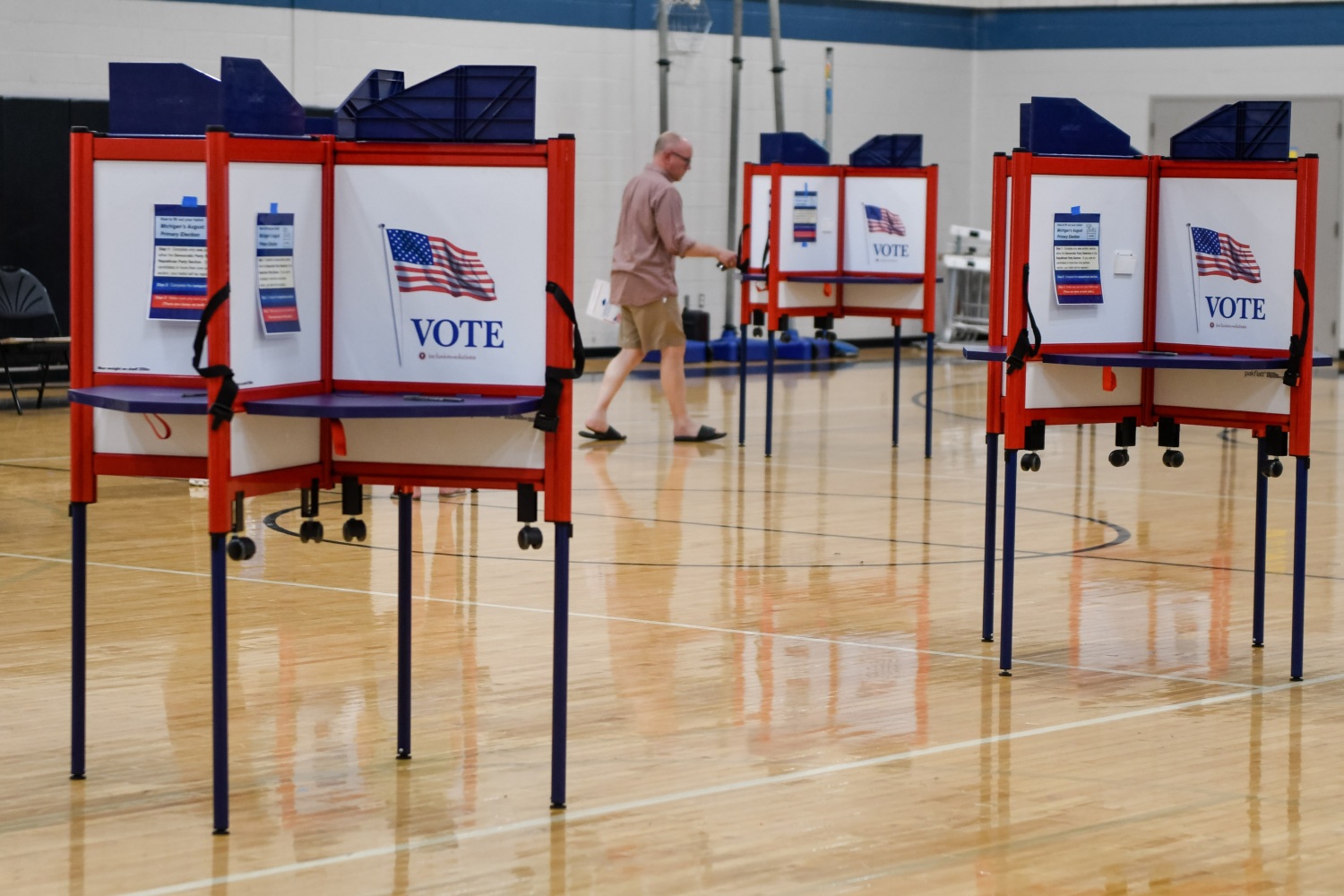
For millions of Americans, reliable transportation can be a major obstacle to voting. Public transit agencies and community organizations across Michigan are working to address this challenge by offering free and discounted rides to the polls.
Voters should verify their polling location and check reservation deadlines, eligibility requirements, and service areas when making ride plans.
Here are free and discounted rides to polling locations in Michigan on Tuesday, Nov. 3:
Voting Early? Click here to find rides to early voting locations.
RELATED: Rallies, celebrations, and walks to the polls are planned across Michigan on Election Day, Tuesday, Nov. 3. Find a Party at the Polls near you.
Use The ‘Gander’s voter hub to verify your registration status, find your polling place, and access key voting information.