Who gets to define patriotism at 250?

Photo by Erik McGregor/LightRocket via Getty Images
By Michael Jones
America’s 250th birthday arrives next month and if President Donald Trump has his way, the celebration will be impossible to miss.
The White House-led Freedom 250 initiative envisions a patriotic showcase featuring a national state fair, a National Garden of American Heroes, major public events and other programming designed to commemorate the country’s semiquincentennial. The effort exists alongside the official America250 Commission, the bipartisan body created by Congress to coordinate the anniversary.
But beneath the fireworks, festivals and fanfare lies a political question that is becoming increasingly difficult to ignore: Who gets to define what it means to love America?
For Democrats, the challenge is particularly acute.
Many have spent much of the Trump era warning that democratic norms, voting rights and constitutional institutions are under strain. At the same time, they are approaching a milestone birthday for the country they insist is worth defending.
Republicans have long enjoyed an advantage on questions of patriotism and national identity. Trump and his allies frequently accuse Democrats of being anti-American, soft on law enforcement or insufficiently proud of the country. Democrats reject those characterizations, but America 250 presents an opportunity to do more than rebut them.
It gives them a chance to offer their own vision.
Rep. Veronica Escobar (D-Texas) told me the anniversary should serve as a reminder of the ideals that launched the American experiment.
“One of the things that’s been so alarming to me is how many Americans have forgotten why we started this great experiment,” she said. “This anniversary is a really important moment for us to remind constituents and fellow Americans why America should take a look at our roots.”
Escobar acknowledged the nation’s founding contradictions, pointing to slavery and other injustices that shaped its early history. But she argued that those realities strengthen rather than weaken the case for celebration.
“This is a country worth fighting for,” she said. “And the ideals it was founded on are worth fighting for.”
That sentiment surfaced repeatedly in conversations with Democratic lawmakers. They framed patriotism less as loyalty to a political leader and more as a commitment to democratic participation and the country’s unfinished promise.
For Rep. Sydney Kamlager-Dove (D-Calif.), that connection begins at the nation’s founding.
“America was founded because of dissent,” she said. “It’s part of the fabric of democracy, but also this country.”
In her view, disagreement is not evidence of disloyalty. It is evidence that democracy is functioning as intended.
“Democracy means that you have a voice that you can use,” she said.
That perspective stands in sharp contrast to a political environment in which criticism of government policy is often portrayed as criticism of the country itself.
Escobar pointed to the aftermath of the January 6 attack on the Capitol.
She recalled returning to the House floor that night to certify the 2020 election after rioters assaulted police officers and breached the building.
“We said we’re not going to let them stop us,” she said.
House Minority Leader Hakeem Jeffries (D-N.Y.) put it more directly when I asked how Democrats can celebrate America 250 while continuing to warn about what they view as threats posed by Trump and the MAGA movement.
“It’s not about one man. It’s not about the current occupant of the White House,” Jeffries told me. “It’s about the country, our journey, and the American people.”
Jeffries said House Democrats are already participating in America 250 events and plan to continue doing so in the weeks ahead.
He pointed to the opening of the Obama Presidential Center on Chicago’s South Side this week as another marker of what he sees as the continuing evolution of the American story.
“The framers didn’t give us a perfect country,” he said. “But they gave us a march toward a more perfect union.”
Rep. Marc Veasey (D-Texas) described the anniversary as both a celebration and a challenge.
“We’re celebrating 250 years of democracy,” he said. “But we’re also trying to figure out how we can make that democracy a more perfect democracy.”
Veasey pointed to some of the country’s darkest chapters, including slavery and Jim Crow, as evidence that American democracy has never been static. Progress, he argued, has depended on citizens demanding that the nation live up to its promises.
Sen. Andy Kim (D-N.J.) framed the anniversary in similarly forward-looking terms. “We should be doing everything possible to just celebrate,” he told me.
But he quickly added that the occasion should be about more than parades and fireworks.
“It’s also about rededicating ourselves to the values of this country from 250 years ago and ensuring that those values are leading us for the next 250 years,” he said.
Kim said the country needs a renewed commitment to public service and civic engagement, invoking President John F. Kennedy’s famous call to citizenship nearly 65 years ago.
Of course, not everyone is approaching America’s 250th birthday in a celebratory mood.
For many Americans, the anniversary arrives amid deep political polarization, declining trust in institutions and genuine fears about the country’s future. For some, patriotism feels less straightforward than it once did.
Yet after listening to Democrats describe the moment, I was struck by how rarely they talked about patriotism as pride alone.
Instead, they talked about responsibility. They talked about voting. Public service. Dissent. Defending democratic institutions. Telling the truth about the country’s failures while refusing to give up on its promise.
In other words, they described patriotism not as a feeling but as a practice.
Whether Americans embrace that vision remains to be seen. But as the country approaches its 250th birthday, perhaps the more revealing question isn’t whether Americans feel proud of their country. It’s whether they still believe the American experiment is worth participating in.
The Democrats I spoke with clearly do.
Michael Jones is an independent Capitol Hill correspondent and contributor for COURIER. He is the author of Once Upon a Hill, a newsletter about Congressional politics.
Gates, Lutnick, Wexner: why billionaires don’t see child abuse as a deal breaker in business

By Camaron Stevenson, National Correspondent
The House Oversight Committee on Wednesday interviewed a third billionaire as part of its investigation into Jeffrey Epstein’s criminal enterprise, providing further clarity into the world of wealth and privilege that fostered his trafficking operation.
Tech billionaire Bill Gates sat with congressional investigators for over four hours, answering questions about his relationship with Epstein and responding to accusations made against him. Like fast-fashion mogul Les Wexner, Gates chalked up the relationship to poor judgement, allowing business interests to trump any ethical concerns. And like Commerce Secretary Howard Lutnick, Gates denied having a personal relationship with Epstein, despite evidence from both of their wives at the time to the contrary.
While the trio’s answers to the committee were fairly sanitized, filtered through high-profile lawyers and exceptionally poor memories, Oversight Committee member Rep. Yassamin Ansari (D-AZ), said the broad similarities revealed an austere mentality collectively held by our country’s wealthiest elites.
“Ultimately, what this shows to be is this culture in the Epstein Class that exists in the billionaire class in this country, of legitimizing people even when they have committed crimes,” said Ansari. “It’s not just about Bill Gates, but all of the other rich and powerful people who surrounded Jeffrey Epstein and continued to engage with him and meet with him and hang out with him. That is what allowed Jeffrey Epstein to continue the crimes and to continue abusing countless other women, even after 2008 until 2019, when he was finally arrested.”
Nearly every person interviewed by the committee who wasn’t a survivor of Epstein’s depravity has been adamant that, despite their proximity to him, they were completely unaware of his multibillion-dollar international criminal enterprise that claimed over 1,000 victims. Even the financial institutions that facilitated and documented Epstein’s money laundering deny any knowledge of wrongdoing, despite paying more than $1 billion in civil lawsuit settlements to keep cases against them from going to trial.
For Gates, Wexner, Lutnick, and Wall Street billionaire Leon Black — one of Epstein’s primary bankrollers, who is scheduled to testify June 26 — Epstein’s criminal history and rumors surrounding his sexual abuse seemed to warrant such little consideration that it didn’t even register as part of standard business due diligence. Gates, who built his fortune by carefully analyzing Microsoft’s startup competitors and crushing them by way of illegal monopolization, claims he “didn’t take the time to “fully understand the extent of the crimes [Epstein] committed” when he sought to leverage billions from the disgraced financier for his philanthropic endeavors.
“It’s obviously really, really troubling, and I’m somebody who believes that Bill Gates has done extraordinary philanthropic work around the world and truly life-saving work,” committee member Rep. James Walkinshaw (D-Va.), told Politico. “But we obviously have to separate our feelings about that from this investigation, and those two things co-exist.”
While Gates sought money from Epstein’s network, Wexner and Black entrusted their own wealth to him, to the tune of hundreds of millions of dollars. Wexner went so far as to grant Epstein power of attorney over his personal finances, and Black admitted in 2023 that he helped fund operations on Epstein’s islands in the US Virgin Islands.
Fellow billionaire and Epstein associate President Donald Trump similarly maintained a relationship with the deceased sex trafficker, though his association was primarily social. The pair were known to spend significant time together, and it was revealed in 2025 that Epstein used Trump’s Mar-a-Lago resort as a recruiting ground, grooming young female employees and luring them to his neighboring mansion, where he sexually abused them.
Ansari says it’s simply not believable that men who had climbed to such high positions of power could have been completely unaware of the risks that came with associating with Epstein. The freshman congresswoman was in high school when Epstein was first arrested and remembers stories about Epstein’s pedophilia and evasion of justice percolating amongst her teenage social circles.
“I was a child in 2008 when Jeffrey Epstein got this crazy sweetheart deal, when he was accused of abusing girls, children, and then ultimately was prosecuted,” Ansari said. “Everybody knew about Jeffrey Epstein, at least about accusations against him, even if you didn’t believe the accusations.”
Democrats see a familiar opening in the GOP’s anti-fraud push

By Michael Jones
House Republicans spent much of last week advancing legislation aimed at rooting out fraud in federal benefit programs. This week, they’re back with another slate of bills targeting everything from student aid and government payments to alleged abuse of taxpayer-funded social services.
The focus is hardly new.
Republicans have long argued that eliminating waste, fraud and abuse is essential to protecting taxpayer dollars and improving government efficacy. But as fiscal conservatives search for ways to finance an increasingly ambitious agenda, the concept is taking on a more prominent role in the party’s governing strategy.
That dynamic was on full display on Monday when House Oversight Republicans released a report accusing Minnesota Gov. Tim Walz and Attorney General Keith Ellison of failing to stop widespread fraud in state-administered programs. On Tuesday, Vice President J.D. Vance referred the allegations to the Justice Department for criminal investigation.
Democrats say the GOP’s anti-fraud campaign is about more than accountability. They argue Republicans are increasingly using the language of fraud to build support for policies that shrink government programs and target political opponents.
“Republicans are not serious about rooting out waste, fraud, and abuse in the United States of America. You know why?” House Minority Leader Hakeem Jeffries said. “Because the biggest fraud being perpetrated on the people of this country right now is coming out of 1600 Pennsylvania Avenue.”
Jeffries contended that Trump has turned the presidency into a vehicle for personal and political enrichment and said Republicans would focus their oversight efforts on the White House if they were genuinely interested in rooting out waste, fraud and abuse.
“And anything else right now that they’re trying to do on the Oversight Committee, on any other committee, is just trying to distract the American people from the fact that the Republican-controlled Congress has failed on the economy, failed on health care, failed on immigration, and failed on matters of war and peace by getting us into this reckless and costly war of choice in Iran.”
The concept of eliminating waste, fraud and abuse has long been a bipartisan political talking point. Under Trump, however, House Republicans—particularly members of the Freedom Caucus and fiscal conservatives—have increasingly elevated the phrase into a governing philosophy, using it to justify efforts to reduce spending and restructure federal programs.
Supporters argue the approach protects taxpayer dollars and ensures public benefits are directed to eligible recipients rather than being lost to improper payments, inefficiency or abuse. The framework has been applied not only to social programs but also to efforts to reduce the size and scope of the federal bureaucracy, including regulatory agencies and parts of the civil service.
Democrats have tried to neutralize that message by arguing that Republicans routinely overstate the scale of fraud to build support for policies that ultimately reduce benefits or restrict access to government programs.
During the fight over the GOP’s first reconciliation package, Democrats contended that proposed changes to Medicaid and SNAP were being marketed as anti-fraud measures, even though many eligible recipients would lose coverage or assistance. Polling suggests these attacks have resonated with many voters and helped fuel Democratic optimism about the midterms.
The debate over fraud extends well beyond the social safety net.
President Trump and his allies have increasingly applied the same rhetoric to elections, particularly in California, where they have pointed to the state’s lengthy vote-counting process as evidence that the system is vulnerable to abuse.
Those claims resurfaced in recent days after several California primary races shifted as mail ballots were processed in the days following Election Day, including one contest in which a Republican candidate’s early lead evaporated as additional votes were counted. Trump allies cited the changes as proof that the elections were “rigged” and renewed calls for stricter voter identification requirements and limits on mail voting.
Election officials and voting experts, however, note that California’s counting process is largely a function of state law and the size of its electorate. Mail ballots postmarked by Election Day can be counted after the polls close, and each ballot must undergo signature verification and other review procedures before it is tabulated. State election leaders also say audits have repeatedly found no evidence of widespread voter fraud.
Rep. Judy Chu (D-Calif.) pointed to the GOP’s yearslong obsession with election fraud when I asked her why Democrats view Republican claims with such skepticism.
“It merely builds upon their premise that all the elections are fraudulent unless it goes in Trump’s favor, and it all started with January 6,” she told me. “[The results] were in line with the polling and there were not huge surprises. There were a couple of suspenseful moments, which is the race between Nithya Raman for second place and Spencer Pratt for third place. But it’s not out of line with what people would expect.”
Chu went on to argue that while the frustration at the glacial pace with which votes are counted in the Golden State is undeniable, it’s also evidence that the state’s process works.
“The fact that they take so long shows how careful they are and how much integrity there is in the system. It’s actually the opposite,” she said. “The fact that they’re not going to just do it as quickly as they can, and not even validate the signatures shows that they are using every means possible to make sure that every vote reflects a true person.”
Michael Jones is an independent Capitol Hill correspondent and contributor for COURIER. He is the author of Once Upon a Hill, a newsletter about Congressional politics.
Nationwide anti-corruption tour aims to help local communities fight back against political corruption
By Camaron Stevenson, National Correspondent
While polarization is part of the Trump administration’s brand, Donald Trump’s insistence on using his position for personal gain has united voters around one issue: the fight against corruption.
Concerns about political corruption rank among voters’ top issues — even higher than affordability, according to polling commissioned by the political action committee End Citizens United. Anti-corruption sentiment spans the political spectrum, exacerbated by Trump’s penchant for trading stocks based on privileged information, abusing the unregulated cryptocurrency market, and selling pardons for profit and personal favors.
While the six-times-bankrupted Trump and his family have leveraged his position in public service to make $4 billion, wages across the US have remained stagnant, the cost of basic necessities has skyrocketed, and inflation has risen to its highest point in nearly a year with no sign of relief.
“Americans are fed up with the pay-to-play culture that has taken over government,” said Tiffany Muller, president of End Citizens United. “They’re watching the cost of everyday essentials like groceries and health care go up while wages stagnate and opportunities disappear. At the same time, they see their elected officials tripping over themselves to reward billionaire donors and corporations while working families get ignored.”
Many, including Muller, see her organization’s namesake as the root of the problem: since the US Supreme Court’s 2010 ruling in Citizens United v. FEC, the amount of money spent on political campaigns per cycle has exploded. In presidential elections alone, spending — largely by corporations and billionaires — increased from $16 million in 2008 to $2.6 billion in 2024.
In an attempt to tap into that frustration and give voters resources to fight back against corruption in local and national politics, End Citizens United plans to hold a nationwide Kick Out Corruption tour. At each stop, local politicians will present their plans to address the abuses of position and power that have become entrenched in modern American politics.
The tour is a joint effort between End Citizens United and anti-corruption advocacy nonprofit Stand Up America. The first stop is scheduled for June 7 in Tempe, Arizona, where Sen. Mark Kelly will deliver remarks focused primarily on stock trading. He is expected to outline his legislation that would require members of Congress and their families to put their stock holdings in blind trusts while in office, preventing them from profiting from nonpublic information obtained through their positions.
Several stops are planned this summer. In addition to insider trading, organizers plan to address aspects of corruption that tend to fly under the radar, including politicians changing the rules in order to remain in power — such as through congressional gerrymandering — and preferential treatment for donors once in office, like the no-bid contracts awarded to private prison contractor GEO Group, a major Trump donor.
“Americans are paying more for health care, housing, and groceries because Donald Trump has handed Washington over to billionaires and powerful corporations who benefit when the system stays broken,” said Christina Harvey, executive director of Stand Up America. “The Kick Out Corruption Tour is our chance to elevate leaders who are serious about the reforms that will be needed to end the era of government by and for the powerful few.”
FBI Director killed Epstein case after review of less than 7% of investigation files
By Camaron Stevenson, National Correspondent
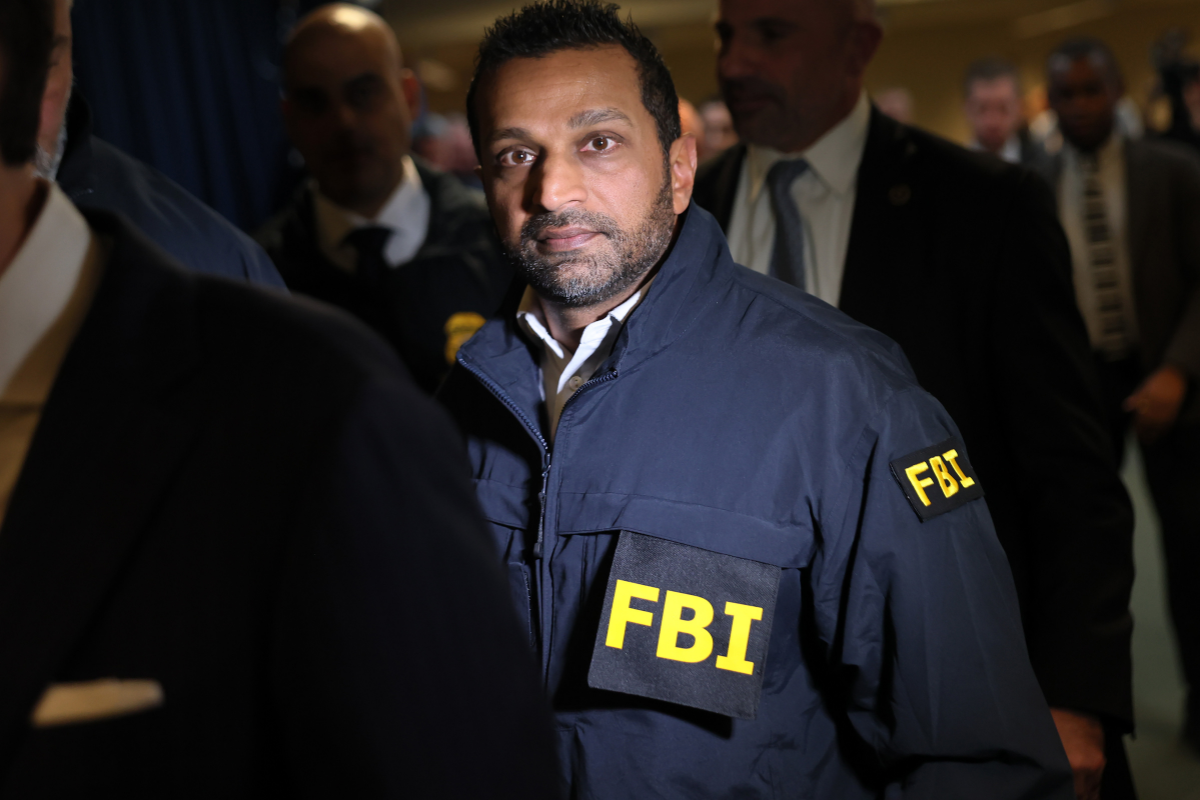
Internal communications from the Department of Justice reveal that the decision to close the investigation into Jeffrey Epstein was made after a narrowly focused review of less than 7% of the case files, centered entirely on photo and video evidence.
FBI Director Kash Patel tasked agents in March 2025 to “determine if there are any images of individuals on any videos which should be considered for prosecution,” according to emails published as part of the Epstein Files Transparency Act. The resulting review examined an estimated 400,000 of the 6 million files compiled against Epstein and did not include financial documents, personal communications, or a majority of witness testimony.
The review was conducted by an agent working out of the DOJ’s Southern District of New York office and completed within a few hours of the request. It supposedly found no evidence implicating anyone other than Epstein and his now-convicted accomplice, Ghislaine Maxwell.
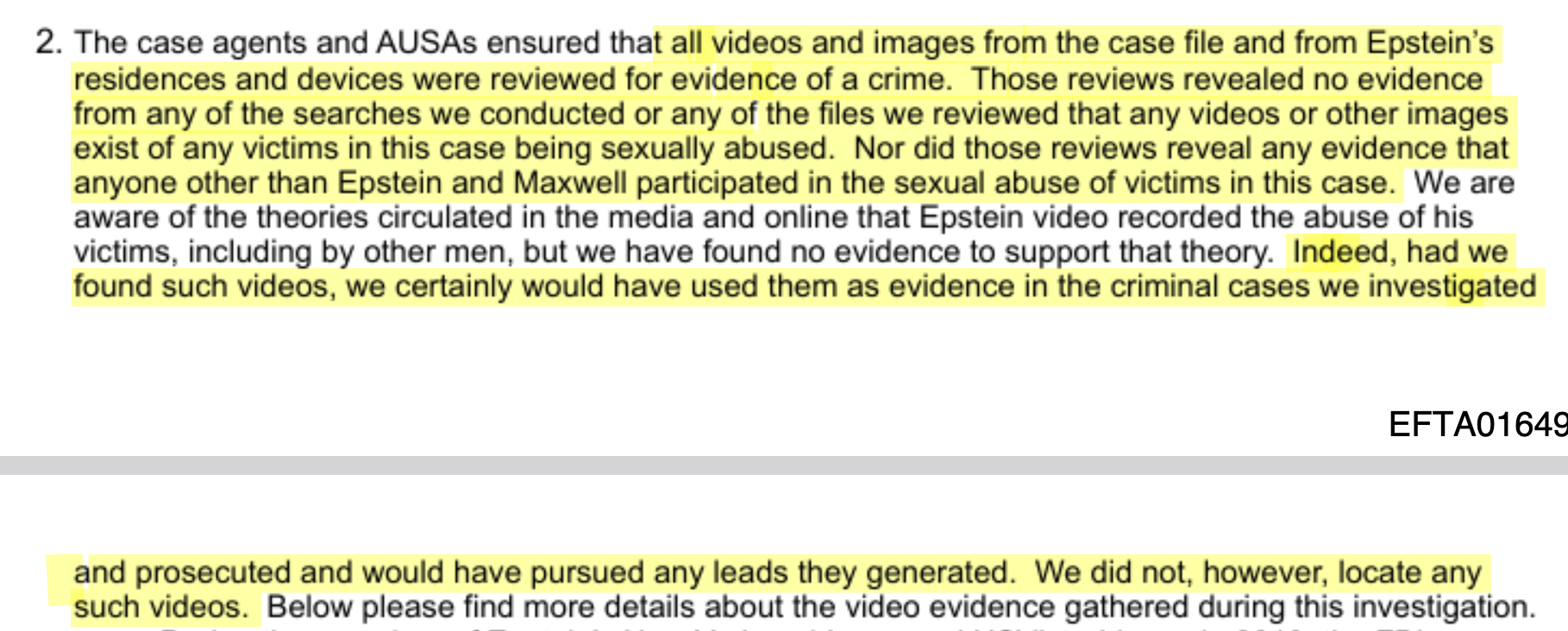
Internal FBI email assessing the contents of videos and photos contained in the Epstein Files. Courtesy US Department of Justice.
“All videos and images from the case file and from Epstein’s residences and devices were reviewed for evidence of a crime,” the agent wrote in their analysis. “Those reviews revealed no evidence from any of the searches we conducted or any of the files we reviewed that any videos or other images exist of any victims in this case being sexually abused. Nor did those reviews reveal any evidence that anyone other than Epstein and Maxwell participated in the sexual abuse of victims in this case.”
The internal memo sheds new light on the agency’s abrupt decision to end its investigation into Epstein’s multi-billion dollar sex trafficking operation, and adds context to the public memo on the matter that many derided as woefully insufficient. In the analysis, the agent emphasized that their determinations were made exclusively based on visual evidence, and even that was limited to include investigations specific to the SDNY.
The review omitted all surveillance footage, for example, as the 2019 search warrant executed at Epstein’s properties only authorized confiscation of evidence related to crimes committed within the preceding 20 years. Witness testimony was also severely limited: anything other than on-camera interviews with the Palm Beach Police department was not considered.
The language in Patel’s official FBI memo announcing the closure of the investigation mirrors the internal analysis almost identically, and a reexamination of the text suggests the video and image elements were the only determining factors.
“The files relating to Epstein include a large volume of images of Epstein, images and videos of victims who are either minors or appear to be minors, and over ten thousand downloaded videos and images of illegal child sex abuse material and other pornography. Teams of agents, analysts, attorneys, and privacy and civil liberties experts combed through the digital and documentary evidence” the memo stated. “This systematic review revealed no incriminating ‘client list.’ There was also no credible evidence found that Epstein blackmailed prominent individuals as part of his actions. We did not uncover evidence that could predicate an investigation against uncharged third parties.”
The DOJ and FBI did not respond to requests for comment on this story.
The decision to close the investigation into Epstein’s criminal enterprise without pursuing additional inquiries into potential accomplices or co-conspirators was seen as a miscarriage of justice by survivors, witnesses, and members of Congress, particularly after the DOJ acknowledged that there were “over one thousand victims” connected to the case.
Two weeks after the investigation was closed, Democrats on the House Oversight Committee forced a vote to open an inquiry into the government’s handling of the files. Patel’s decision not to pursue charges based on a small, selective portion of evidence reinforces committee members’ assertion that the DOJ has been involved in a cover-up to protect those implicated from harm.
“This is obviously really concerning. We have a lot of questions about this,” said Rep. Robert Garcia (D-CA), ranking member of the Oversight Committee. “We have some other information as it relates to the FBI director and the way he’s mismanaged the redaction process, so there are a lot of questions for Kash Patel, including the really serious ones that you raised. And so this is why Kash Patel has got to be in front of the committee, and he’s got to answer our questions.”
On Tuesday, Garcia sent a letter to committee chair Rep. James Comer (R-KY) requesting that Patel and acting Attorney General Todd Blanche be brought in for questioning.
Patel and Blanche were repeatedly referenced by former Attorney General Pam Bondi during her recent interview with the committee, during which she redirected nearly all criticism to her subordinates. According to Bondi, Blanche handled the day-to-day affairs of the Epstein investigation — including transferring convicted sex trafficker Ghislaine Maxwell to a more desirable prison with low security and luxurious amenities — while Patel oversaw the consolidation of the files and redaction process.
“Pam Bondi deflected to Todd Blanche over 30 times. I mean, it was crazy how often she would put the blame on Blanche. So, if that’s going to be the case, we want to talk to Blanche. We want to understand why Bondi was saying that Blanche was the one in charge of the redactions, in charge of the investigation. He has questions to answer,” said Garcia. “She did mention Patel numerous times on the FBI redaction side. And so we have questions obviously for Kash Patel. These are people that we want to talk to as soon as possible.”
Survivors of Epstein’s abuse have also come forward in support of Garcia’s request, demanding answers as to why they were never contacted by the DOJ as part of its investigation and why the FBI failed to redact personal and identifying information about them while adding redactions to the names of those implicated in criminal activity.
Inside the surveillance debate that scrambles American politics
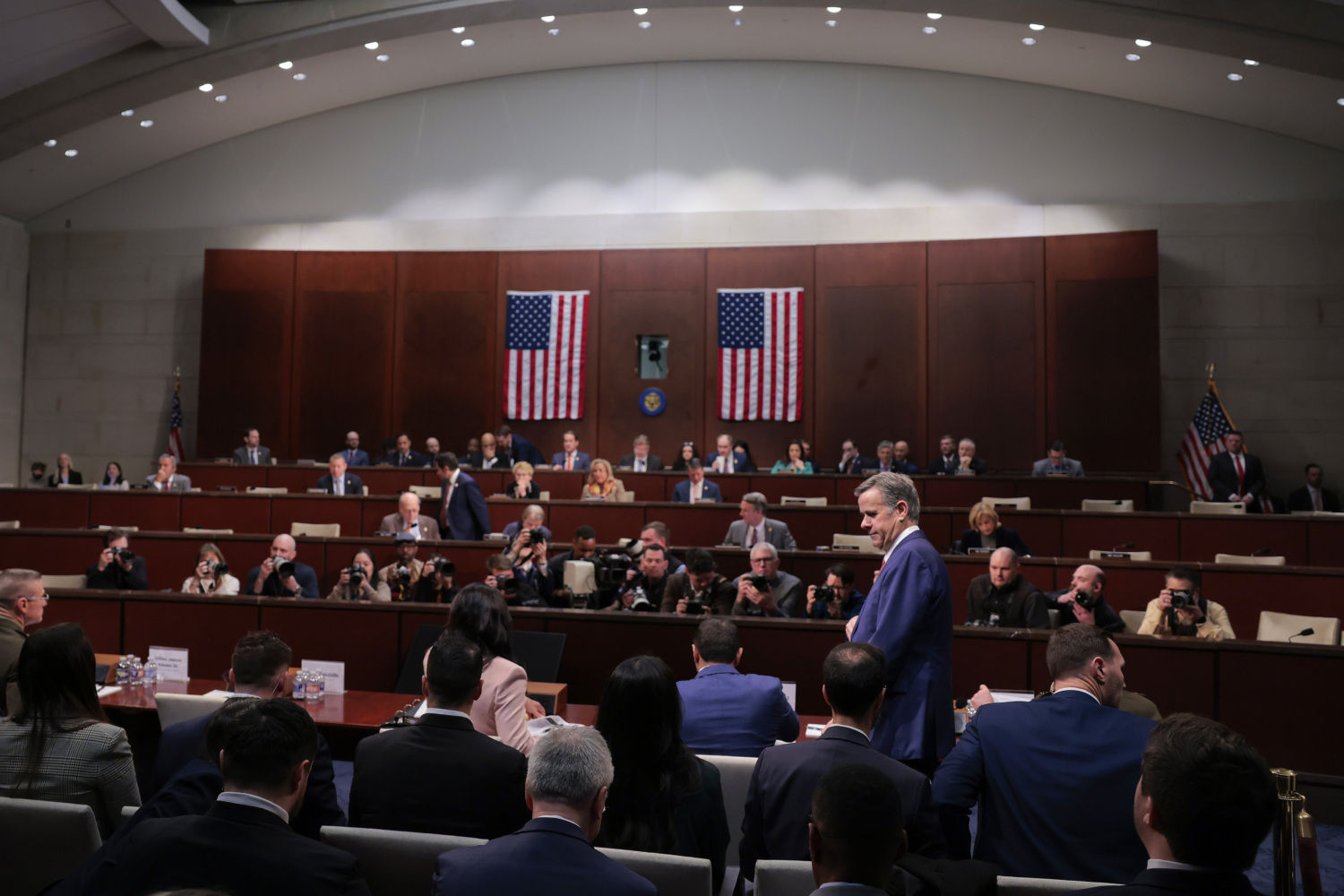
Photo by Heather Diehl/Getty Images
By Michael Jones
Americans live in a country where their private communications can be swept into government databases, while many of the officials seeking continued access to those databases operate behind layers of secrecy, classification and institutional mistrust.
That inversion helps explain why Congress returns from the Memorial Day recess with just one week to settle a proxy fight over privacy, executive power and what Americans are willing to tolerate in the name of national security during President Donald Trump’s second term.
Lawmakers face a deadline next Friday to extend the federal government’s foreign surveillance authority under Section 702 of the Foreign Intelligence Surveillance Act. The provision allows the government to collect communications from foreign targets overseas without a warrant, but it can also capture exchanges involving Americans.
The core tension pits privacy hawks across the ideological spectrum, who want warrant requirements before the government can search Americans’ communications swept up through foreign surveillance, against intelligence officials and congressional leaders who argue preserving the status quo is essential to counterterrorism and national security operations.
Few contemporary policy debates scramble the political landscape quite like Section 702.
Some progressive Democrats and MAGA-aligned Republicans share a deep distrust of the intelligence apparatus, albeit for very different reasons. At the same time, many lawmakers who routinely warn about authoritarianism and executive overreach under Trump are also being asked to renew one of the government’s broadest surveillance authorities.
“I have been skeptical that the majority of Republicans want to do anything to reform FISA, but I am optimistic that we have continued to delay it because the vast majority of people want a warrant requirement,” Rep. Pramila Jayapal (D-Wash.), a member of the House Judiciary Committee and former chair of the Congressional Progressive Caucus, told me. “And so hopefully what they understand is we’re not going to do another extension, and they have to actually give us a vote on a warrant requirement in order for FISA to ever pass.”
Rep. Jim Himes (D-Conn.), the top Democrat on the House Intelligence Committee, which shares jurisdiction over FISA with Judiciary, told me before the Memorial Day recess that allowing the government’s foreign surveillance authorities to expire is not an option. But with the House largely in a holding pattern, lawmakers are waiting to see whether the Senate can assemble the 60 votes needed to advance a long-term extension.
“FISA is hung up in the Senate right now,” Himes said. “So it’s a little hard to know what’s coming back to us. But yeah, no, you cannot let FISA expire.”
The urgency stems from the role Section 702 plays in the nation’s intelligence architecture.
Intelligence officials argue the authority helps the United States identify terrorist plots, track foreign adversaries, disrupt cyberattacks and monitor espionage threats from countries such as China, Russia and Iran. Because the program targets non-Americans located overseas, supporters argue it provides insights that would be difficult or impossible to obtain through traditional warrant-based surveillance.
The intelligence community has repeatedly described Section 702 as one of its most valuable collection tools. Supporters of a long-term extension warn that allowing the authority to lapse could create intelligence gaps at a moment of rising geopolitical tensions and increasingly sophisticated cyber operations and influence campaigns targeting Americans.
That argument has persuaded lawmakers in both parties for years. The question now is whether Congress can preserve those capabilities while satisfying growing demands for stronger protections.
Notably, even many of the lawmakers pushing hardest for reform do not want Section 702 to expire. Instead, they argue that the authority can be preserved while adding stronger safeguards for Americans whose communications are swept up in foreign surveillance.
For privacy hawks on both sides of the aisle, the fight over warrant requirements is about more than just surveillance policy. It is a test of whether Congress is willing to place guardrails on government power at a time when trust in public institutions remains near historic lows and concerns about executive overreach span the ideological spectrum.
Congress has spent much of the spring lurching from one Section 702 deadline to the next without resolving the underlying disagreement.
The first major breakdown came in April, when Speaker Mike Johnson (R-La.) attempted to move a five-year reauthorization package that included several reforms negotiated with conservatives. The effort collapsed after a dozen Republicans voted against the bill and 20 GOP lawmakers joined Democrats to defeat the rule needed to bring a separate 18-month extension to the floor.
House leaders ultimately resorted to a two-week extension of existing authorities to prevent the program from expiring while negotiations continued.
The failed April push exposed the depth of the divide. Members of the House Freedom Caucus and civil-liberties advocates argued the legislation did not go far enough to require warrants before searching Americans’ communications. Intelligence officials and many congressional leaders countered that additional restrictions could undermine a critical national security tool.
By the end of April, lawmakers still had not reached a compromise. The House approved a three-year extension, but the measure stalled in the Senate after Republicans attached an unrelated ban on a central bank digital currency. Facing another deadline, Congress instead approved a clean short-term extension through mid-June. The agreement came only after Sen. Ron Wyden (D-Ore.) secured a commitment from Senate Intelligence Committee leaders to pursue declassification of a key FISA court opinion that privacy advocates argue could shed additional light on how Americans’ communications are collected and searched.
Now, with that latest extension nearing expiration, Congress finds itself back where it started: facing another deadline, divided over warrants and privacy protections, and under pressure to find a compromise.
“Look, they either need to take the House bill on FISA or send us back something that looks a lot like it,” Himes told me.
As with most issues in this era of Congress, that’ll be easier said than done.
Michael Jones is an independent Capitol Hill correspondent and contributor for COURIER. He is the author of Once Upon a Hill, a newsletter about Congressional politics.
Bondi used binder stunt to cover-up secretive Epstein Files redaction project, documents reveal
Written by Camaron Stevenson, National Correspondent
What initially appeared to be a failed political stunt by the Trump administration — gifting far-right influencers binders of material related to Jeffrey Epstein — now appears to have served another purpose entirely: providing cover for a massive redaction effort designed to protect the president.
Internal correspondence between federal agents, published as part of the Epstein Files Transparency Act, outlines exactly how former US Attorney General Pam Bondi used the public stunt to quietly launch the redaction project within the DOJ. In a public letter sent to FBI Director Kash Patel on Feb. 27, Bondi demanded that his bureau “deliver the full and complete Epstein Files to my office” in Washington, DC.
“By 8:00 a.m. tomorrow, February 28, the FBI will deliver the full and complete Epstein files to my office, including all records, documents, audio and video recordings, and materials related to Jeffrey Epstein and his clients, regardless of how such information was obtained,” Bondi wrote. “The Department of Justice will ensure that any public disclosure of these files will be done in a manner to protect the privacy of victims and in accordance with law, as I have done my entire career as a prosecutor.”
Patel went to great lengths to help prop up the facade of transparency, loading physical documents into a rented U-Haul so the full files could be transferred simultaneously. The operation, first reported on by ABC News in March 2025, was at the time characterized as a Trump-style media stunt, a cartoonish waste of time and resources meant to satisfy his supporters’ lust for the release of the Epstein Files.
But internal DOJ communications tell a different story. Officials made clear that the case file consolidation was intended to facilitate a massive redaction project that ultimately cost nearly $1 million in overtime pay alone. The process focused on redacting names of high-profile individuals like Donald Trump, while exposing the names and violating the privacy of hundreds of Epstein’s victims.
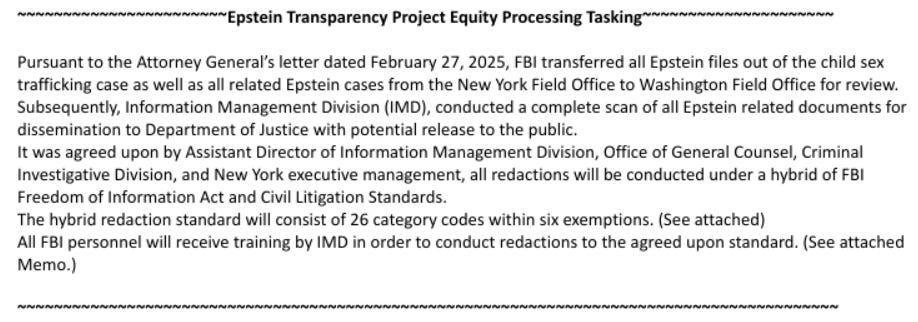
“Pursuant to the Attorney General’s letter dated February 27, 2025, FBI transferred all Epstein files out of the child sex trafficking case as well as all related Epstein cases from the New York Field Office to Washington Field Office for review,” the memo stated. “All redactions will be conducted under a hybrid of FBI Freedom of Information Act and Civil Litigation Standards.”
The Files eventually made their way to a field office in Winchester, Virginia, not Washington, where the agents assigned to the project were poorly trained on the hybrid redaction process. According to a whistleblower who contacted Sen. Dick Durbin (D-IL) last year, agents instead prioritized cataloging every mention of Trump and removing his footprint from the files.
“My office was told that these personnel were instructed to ‘flag’ any records in which President Trump was mentioned,” said Durbin. “Despite tens of thousands of personnel hours reviewing and re-reviewing these Epstein-related records over the course of two weeks in March, it took DOJ more than three additional months to officially find there is ‘no incriminating client list.’”
The determination that there is no client list — and not enough evidence to prosecute any of Epstein’s clients, accomplices, or co-conspirators — stems from Bondi’s rush-order redaction assignment. Emails contained within the Epstein Files detail how Patel would occasionally make requests for information, which would later be carefully used to nip any investigative threads in the bud.
When the redaction process first began, Patel asked agents on duty to determine whether there was any photo or video evidence that could be used for future prosecutions. Weeks later, an agent sent Patel a detailed and nuanced response in the negative.
“All videos and images from the case file and from Epstein’s residences and devices were reviewed for evidence of a crime,” the agent wrote. “Those reviews revealed no evidence from any of the searches we conducted or any of the files we reviewed that any videos or other images exist of any victims in this case being sexually abused. Nor did those reviews reveal any evidence that anyone other than Epstein and Maxwell participated in the sexual abuse of victims in this case.”
This specific finding — that there was no visual evidence that could incriminate anyone other than Epstein — was later cited more broadly in Bondi’s decision to close the case without pursuing further prosecutions, omitting the possibility that evidence could still exist in financial records, private emails, or other text-based documents in the Files.
The decision marked the end of an anti-climactic, whiplash-inducing chapter in Bondi’s saga with the Epstein Files. For a comprehensive breakdown of Bondi’s time at the DOJ — and how it became inexorably tied to an apparent cover-up for the Trump administration — American Freakshow has put together a timeline of the former attorney general’s “swan song.”
Bondi is expected to appear before the House Oversight Committee on Friday, where congressional investigators plan to question her about her stewardship of the Epstein Files during her brief tenure as Attorney General. Republicans on the committee have agreed to keep the interview off-camera and not under oath, a compromise Democrats say is unacceptable. Rep. Yassamin Ansari (D-AZ), who sits on the committee, said Bondi has much to answer for, and relegating the deposition to a transcribed interview as opposed to a recorded video is a disservice to the American public.
“We need to make sure that the [Republican] majority demands that Pam Bondi testify under oath and on video. We’ve been calling for this, but we have not received reassurances,” said Ansari. “It’s up to her whether or not she’s going to be honest. She’s been at the center of this. She has a lot of knowledge. She has an opportunity here to really course-correct and, at least, save herself in this cover-up.”
Subscribe to Below the Belt(way)

COURIER’s newly-launched Epstein investigation project
For too long, the Epstein Class has dealt in wealth, power, and politics to avoid accountability and deny victims & survivors their due justice. The public deserves the truth, but the Trump Administration is failing its legal obligation to deliver it.
That’s why we’re expanding our coverage to follow the money and investigate the power players in and outside the government. With a new database by Thorian AI, we have unprecedented access and ability to navigate more than 1.2M files and we’re sharing access—and what we’re finding—with you.
Subscribe to The Cover-Up and get one concise, easy-to-read email a week that cuts through the noise with the headlines you need and the breakdowns you want.
By staying plugged in and leveraging our reporting to make your own calls-to-action louder, together, we can turn information into justice.
Inside the progressive push to dismantle the super PAC system
By Michael Jones
By the time Rep. Thomas Massie lost his Republican primary by double digits last week, millions of dollars from MAGA-aligned groups and pro-Israel organizations had turned a Kentucky House race into the most expensive congressional primary in American history.
To Sen. Bernie Sanders (I-Vt.) and Rep. Summer Lee (D-Pa.), the outcome underscored a deeper problem unfolding across American politics. Despite their policy disagreements with the libertarian Massie, both lawmakers agree that wealthy interests and super PACs now wield so much financial power that outside groups can reshape elections from afar while ordinary voters struggle to cut through the noise.
Sanders and Lee say the problem extends far beyond attack ads or eye-popping fundraising totals. In their view, the super PAC era has fundamentally altered who can run for office, how candidates campaign and whether ordinary voters still believe the political system belongs to them at all.
They believe that massive outside spending increasingly forces candidates to court wealthy benefactors while flooding elections with disinformation and negative advertising, leaving many Americans cynical about participating in politics altogether.
“I can tell you that every time a negative ad drops on air, it disenfranchises a voter. It reinforces this idea that there are no good politicians, that politics is inherently evil, and that it is a rigged game that regular people shouldn’t get in,” Lee told me. “But also what it does is it ensures that Black and brown and poor and working-class people are less likely to be able to break it in the first place.”
Sanders argued the current political environment discourages ordinary people from seeking office altogether by making candidates fear overwhelming outside spending, relentless personal attacks and disinformation campaigns if they challenge entrenched political or economic interests.
“We believe in democracy. We want people to run for office and give a damn what your political view is. Get involved, stand up, and defend yourself,” he told me. “But how many people are going to do that where they have millions and millions of ugly dollars in ugly ads? There’s gonna be a lot of hesitancy. It takes very brave people to run.”
Sanders and Lee’s solution is the Abolish Super PACs Act, legislation they introduced last week to place a $5,000 annual cap on individual contributions to super PACs, effectively dismantling the unlimited-donor model that exploded after the Supreme Court’s 2010 Citizens United decision and subsequent federal court rulings.
The lawmakers argue the current system has enabled billionaires, corporations and powerful interest groups to pour unprecedented sums into federal elections with little meaningful restraint.
The bill arrives as outside spending tied to crypto interests, AI investors, and AIPAC-aligned groups is already shaping the 2026 midterms. Sanders pointed to Elon Musk’s roughly $290 million in political spending during the 2024 election cycle, along with vast sums in broader billionaire spending as evidence that the country is drifting toward what he describes as oligarchic politics rather than representative democracy.
But the proposal faces extraordinarily steep odds in a Republican-controlled Congress and would almost certainly trigger major constitutional challenges if enacted. Still, Sanders’ involvement marks a meaningful step forward for legislation that began last year as a House-only effort led by Lee and Rep. Ro Khanna (D-Calif.).
By relaunching the bill alongside one of the most recognizable figures in progressive politics, Lee said she believes the campaign against super PAC money is reaching voters at a moment when Americans are increasingly connecting economic frustration and political dysfunction to the influence of wealthy donors and outside groups. The renewed push also comes as public skepticism toward big money in politics remains deeply bipartisan, even as both parties continue relying heavily on super PAC infrastructure to compete in modern elections.
“I think that there are Americans of every stripe right now who are looking at our government and they’re ashamed, they’re disgusted, they’re discouraged, and as they’re starting to organize what they actually want it or believe it should look like,” Lee told me, “We need to make sure that they understand how integral this piece is to that.”
However, the deeper test for Democrats may not be whether Republicans block bills like the Abolish Super PACs Act, but whether Democrats themselves are willing to fundamentally rethink the political incentives that shape modern campaigns should they return to power.
House Minority Leader Hakeem Jeffries (D-N.Y.) has already elevated anti-corruption proposals such as a congressional stock trading ban, campaign finance reform and Supreme Court reform as part of Democrats’ broader argument for reclaiming the House. But Lee acknowledged that turning those campaign promises into governing priorities would require Democrats to confront uncomfortable questions about their own relationships with wealthy donors, corporate influence and the super PAC system they increasingly rely on to compete.
Lee argued that many Democrats genuinely support policies like universal health care and broader economic reforms, but operate within a political ecosystem where industries and outside groups can effectively shape political behavior by helping make or break congressional careers.
“I think there are many members of Congress who actually, in their hearts, do want to do the right thing. They didn’t come here because they wanted to serve the fossil fuel industry, the crypto industry, or whatever it may be,” Lee said. “But I think it’s very easy here, and incredibly incentivized to get off track, right? And we want to take away that opportunity to get off track.”
Michael Jones is an independent Capitol Hill correspondent and contributor for COURIER. He is the author of Once Upon a Hill, a newsletter about Congressional politics.
Email reveals the Lutnicks’ eagerness to visit Epstein’s island: ‘We would love to join you’
By Camaron Stevenson, National Correspondent
The US Secretary of Commerce spent the majority of a four-hour interview with congressional investigators emphasizing the disdain he and his wife had for their former neighbor, Jeffrey Epstein — a claim wholly undermined by his spouse’s own words.
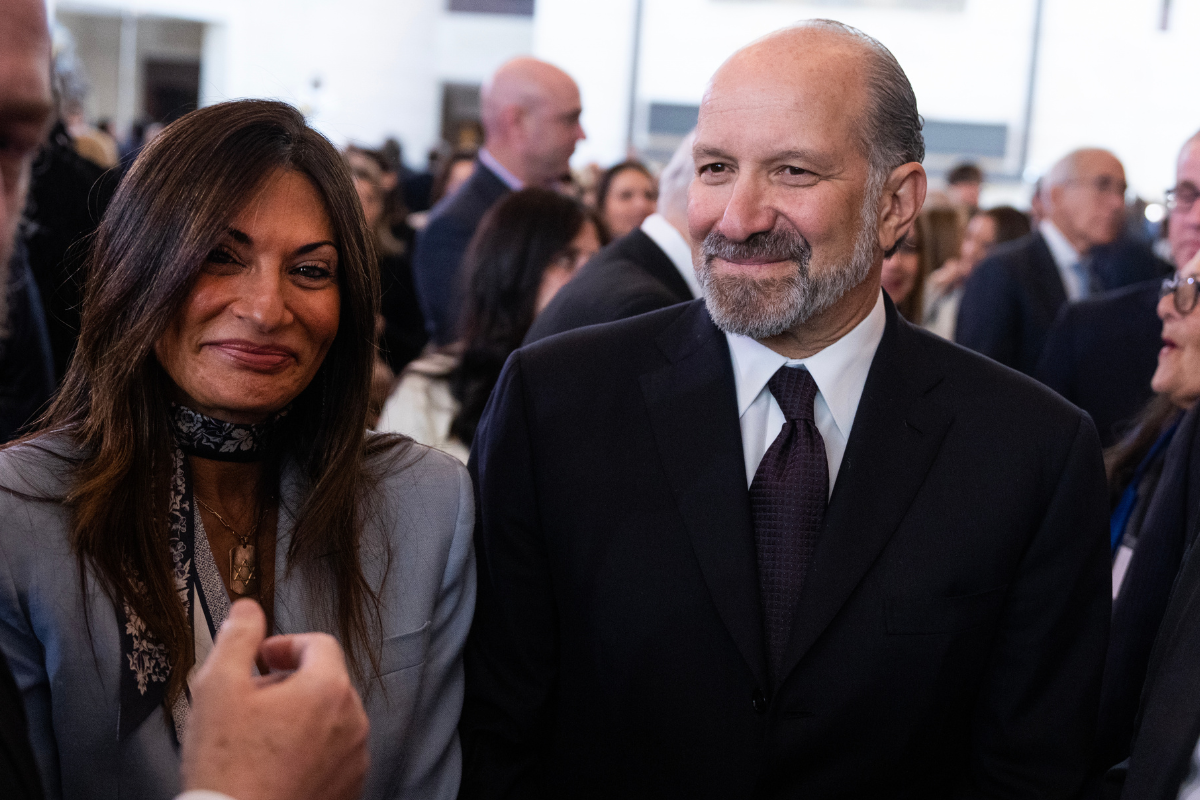
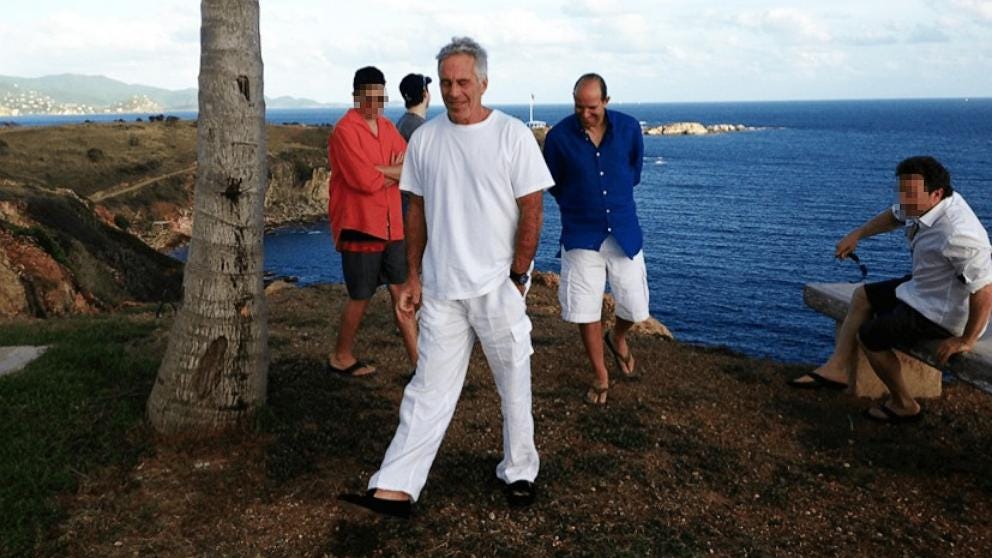
The House Oversight Committee asked Commerce Secretary Howard Lutnick to speak with them after a 2012 photo surfaced showing him with Epstein on the financier’s private island, a known hub of Epstein’s sex trafficking operation. During the deposition, Lutnick admitted that he briefly visited the island with his family, but was adamant that he and his wife, Allison — also a Trump appointee — had agreed when they first met Epstein to never establish a relationship with him.
“I had an informal conversation with my wife, and that’s what we discussed, and I would think that most people who are married would understand,” said Lutnick. “They have a conversation with their wife, that someone says something inappropriate, gross, gross, that when you leave with your wife, she says, ‘You should avoid that guy. He’s gross,’ right. And I did. So I don’t think that’s like — I think that’s kind of inconsequential, which means just avoid him, which I did.”
Throughout the deposition, Lutnick repeatedly pointed to his wife’s insistence that he avoid a personal or professional relationship with Epstein. But despite his insistence — Lutnick referenced his wife at least 50 times, almost always in connection to how they both found Epstein “gross” or “disgusting” — Allison’s correspondence with Epstein’s staff when coordinating their island visit tells a very different story.
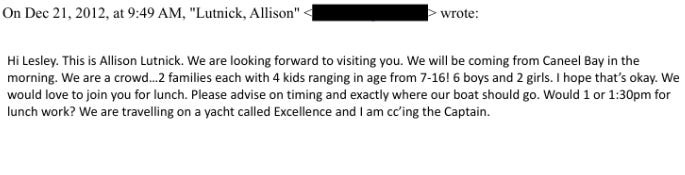
“Hi Lesley. This is Allison Lutnick. We are looking forward to visiting you,” Allison wrote to Lesley Groff, Epstein’s personal assistant. “We will be coming from Caneel Bay in the morning. We are a crowd…2 families each with 4 kids ranging in age from 7-16! 6 boys and 2 girls. I hope that’s okay. We would love to join you for lunch.”
The Lutnicks’ eager decision to sail a yacht full of minors to Epstein’s island came eight years after the couple says they agreed to avoid him and four years after Epstein registered in New York as a sex offender for soliciting an underage prostitute. At the time of the visit, Epstein was actively expanding his trafficking empire, according to documents released as part of the Epstein Files Transparency Act. In the weeks before and after the Lutnicks’ trip, Epstein was actively working with known accomplices to procure girls and manipulating women already under his control.
Allison’s apparent enthusiasm for spending part of her family’s winter holiday with Epstein pokes holes in her husband’s flimsy yet carefully crafted testimony before Congress. Throughout the four-hour deposition, Lutnick’s memory appears to begin and end where his name is mentioned in the Epstein Files. He vividly recalled writing exactly four emails to Epstein, claimed that their last communication was a 2018 correspondence included in the Files, and remembered only the portion of Epstein’s island shown in the released photograph.
Lutnick initially denied having any contact with Epstein after 2005, even after emails confirmed the 2012 island visit; it was only after the photograph of him there became public that his memory was apparently jogged. US Rep. James Walkinshaw (D-VA), a member of the Oversight Committee who questioned Lutnick, believes the Commerce Secretary had a personal and professional relationship with Epstein for years — far beyond what he disclosed to the committee.
“The most likely explanation here is that the visit to Epstein’s townhome when they, as neighbors, went over to visit — the entire story about Lutnick and his wife being, quote, grossed out by Epstein — it’s fabricated. I think that’s the logical explanation here, that Lutnick completely fabricated that original story after the fact, many years later, now, that Epstein is a liability,” Rep. Walkinshaw told COURIER. “It’s clear, based on that email and the other contact between Lutnick, Lutnick’s wife, and Epstein, and Epstein’s orbit, that there was a dialog and a relationship for many years — a friendly one, and they had no qualms about having a relationship and dialog with Jeffrey Epstein.”
The alleged fabrication is one of a series of misleading statements from individuals the Oversight Committee has interviewed as part of its investigation into the government’s lackluster case against Epstein. Earlier this year, close Epstein associates Richard Kahn and Darren Indyke claimed no knowledge of illegal activity — assertions disproved by numerous suspicious activity reports filed by Epstein’s financial institutions, as well as testimony from survivors.
While Oversight Chair Rep. James Comer (R-KY) said he would hold anyone caught lying to Congress accountable, no action has been taken against Kahn, Indyke, or Lutnick. In contrast, former US Attorney General Pam Bondi quickly reversed her plans to ignore the committee’s subpoena after ranking committee member Rep. Robert Garcia (D-CA) filed contempt charges over her refusal to testify.
Comer, a close ally of President Donald Trump, has so far been resistant to any action that could anger the president, who has worked to oust members of Congress who continue to investigate Epstein. The cooperation between Comer and the White House may provide only temporary reprieve for the Lutnicks and others, however, if Democrats take control of the US House in the 2026 midterm elections.
“In a future Congress, we’ll be able to get Lutnick in, under oath on camera, to answer these questions again, because there’s no question he tried to slip out of the lies that he told publicly,” said Walkinshaw. “I don’t think there’s any scenario under which Chairman Comer and the Republicans would agree to that, given the lengths they went to to keep the Howard interview as under wraps and covered up as possible. I don’t think they would go along with bringing in Mrs. Lutnick, but I think all that’s got to be on the table. We can’t rule out talking to anybody who might have information that could advance our investigation.”
COURIER’s newly-launched Epstein investigation project
For too long, the Epstein Class has dealt in wealth, power, and politics to avoid accountability and deny victims & survivors their due justice. The public deserves the truth, but the Trump Administration is failing its legal obligation to deliver it.
That’s why we’re expanding our coverage to follow the money and investigate the power players in and outside the government. With a new database by Thorian AI, we have unprecedented access and ability to navigate more than 1.2M files and we’re sharing access—and what we’re finding—with you.
Subscribe to The Cover-Up and get one concise, easy-to-read email a week that cuts through the noise with the headlines you need and the breakdowns you want.
By staying plugged in and leveraging our reporting to make your own calls-to-action louder, together, we can turn information into justice.
How the sandwich generation is reshaping conversations on Capitol Hill

By Michael Jones
There’s something uniquely exhausting about being responsible for both your parents’ decline and your children’s future at the same time.
It’s a paradox that was on display this week when the Senate Aging Committee convened a hearing on the sandwich generation—the growing group of middle-aged adults balancing the demands of raising children while caring for aging parents. Lawmakers examined how families are navigating supporting loved ones with medical services and supervisions, coordinating medications and prescriptions and aiding their financial, legal and emotional difficulties, and explored targeted policy solutions to remove obstacles and ease those burdens.
Members of Congress themselves increasingly fall into this generation, especially Gen X lawmakers now balancing older parents and younger families while legislating on care policy.
Sen. Angela Alsobrooks (D-Md.), who serves on the Aging Committee, said her own life mirrors the pressures facing millions of Americans in the sandwich generation. She described the financial and emotional strain of supporting a daughter in college while helping care for her mother, who has Alzheimer’s, following the recent death of her father.
Alsobrooks said the experience has sharpened her focus on the interconnected costs weighing on families, from long-term care and prescription drugs to housing, groceries and basic health care access. She noted that her parents worked hard and played by the rules but still were not wealthy and acknowledged that many families are struggling to stretch limited resources as caregiving and living expenses continue to rise.
“I’m really grateful that I’m here and I can say to my constituents, not that I imagine how this must make them feel, it is literally that I am living it,” she told me this week. “It’s important that we have people in the Senate who live like the people they represent. I think it makes all the difference in how we make decisions.”
Sen. Raphael Warnock (D-Ga.) said he sees the pressures of the sandwich generation’s both at home and through his pastoral work, describing the balancing act of raising young children while helping care for his 88-year-old mother as she navigates the challenges that come with aging and declining health.
Warnock said those overlapping responsibilities have given him firsthand insight into the affordability pressures many families face as they juggle caregiving, work and daily expenses all at once—experiences he said regularly surface in conversations with constituents struggling to make it all work.
“I think it gives me a perspective, common touch and understanding of the struggles of everyday people,” he said. “And I try to bring that insight to the committee.”
An estimated 11 million Americans care for both aging parents and their own children, according to data provided by the committee. Unpaid family caregivers provide about $600 billion worth of care each year, doing work that the health care system can’t handle alone.
The squeeze facing the sandwich generation was, in many ways, mathematically inevitable.
Americans are living longer, meaning more adults are spending years caring for aging parents with chronic illnesses, dementia or mobility challenges. At the same time, child care costs have soared while housing, health care and grocery prices continue rising faster than many families’ incomes.
The result is that millions of middle-aged Americans are now simultaneously supporting children, helping aging parents and trying to prepare for their own financial futures, often while working full-time jobs themselves.
Americans are also having children later in life, increasing the likelihood that adults raising school-age or college-age children will also have parents in their 70s, 80s or even 90s who need growing levels of support.
Yet Washington still largely treats child care and elder care as separate policy conversations.
Child care debates are often centered around workforce participation, tax credits, preschool and paid leave. Elder care discussions tend to revolve around Medicare, Medicaid, Social Security and nursing homes.
But for many families, those costs are intertwined inside the same monthly household budget.
One adult may be paying for daycare while also helping cover prescriptions, assisted living costs or in-home care for a parent with Alzheimer’s. The financial strain, emotional burden and time demands overlap.
The result is a disconnect that has left many caregivers feeling invisible in a political system that often discusses care in isolated silos while families experience it as one interconnected affordability crisis.
Aging Committee Chair Rick Scott (R-Fla.) and Ranking Member Kirsten Gillibrand (D-N.Y.) have proposed a suite of legislative solutions to help family caregivers across the country and provide them with financial security.
Scott has backed bipartisan efforts aimed at easing both the financial and emotional burdens facing older Americans and their families, including proposals to combat senior loneliness, expand support for family caregivers and create a tax credit for adults providing in-home care to aging relatives.
Gillibrand has focused her proposals on providing greater economic stability for caregivers, including legislation that would allow eligible caregivers to earn Social Security retirement credits and guarantee workers partial paid leave when they need time away from their jobs to care for family members or deal with serious medical events.
Sen. Elizabeth Warren (D-Mass.), another member of the Aging Committee, told me the sandwich generation feels the affordability crisis especially acutely because there’s little families can cut back on without sacrificing care for the people who depend on them most.
“It’s a reminder how desperately we need to make changes in this economy,” she said. “Billionaires are sucking up all the value and working families are getting left further and further behind.”
Michael Jones is an independent Capitol Hill correspondent and contributor for COURIER. He is the author of Once Upon a Hill, a newsletter about Congressional politics.
Former US Attorneys General Bondi and Garland in crosshairs of Epstein investigation
by Camaron Stevenson, National Correspondent
During a field hearing on Tuesday in Palm Beach, Florida, Democratic members of the House Oversight Committee detailed 30 years of prosecutorial failures that allowed Jeffrey Epstein’s sex trafficking operation to flourish into a multi-billion dollar criminal enterprise.
Rep. Robert Garcia (D-CA), the committee’s ranking member, argued that systemic failures beginning in Palm Beach continued through both Trump administrations and remained largely unaddressed under the Biden administration. Aside from the conviction of Epstein associate Ghislane Maxwell, no additional alleged co-conspirators were prosecuted by Biden’s Department of Justice, while Trump’s DOJ has repeatedly claimed that there is not enough evidence to charge anyone else with a crime.
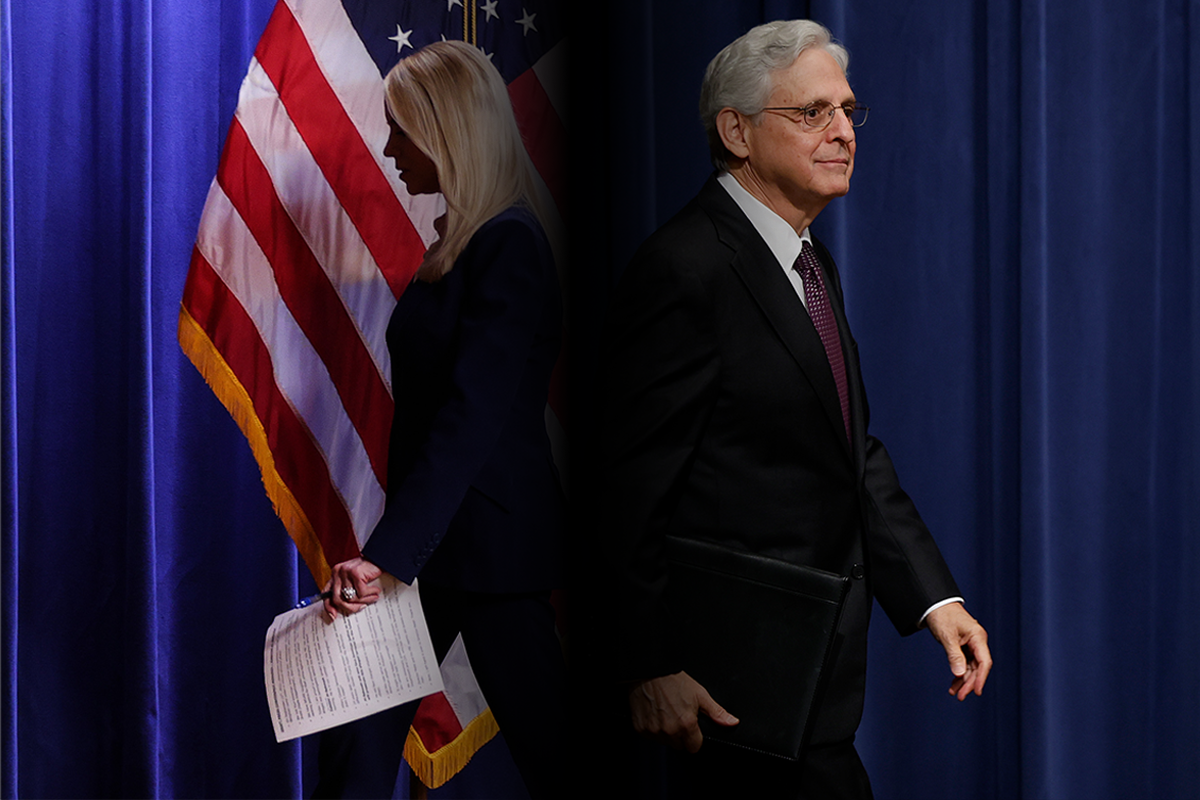
“I want to understand why Merrick Garland and the former Justice Department under the Biden administration did little to nothing to bring justice for the survivors or have additional prosecutions,” said Garcia. “Merrick Garland, for me, is at the top of that list of folks that we need to speak to and ask questions of.”
Tuesday’s hearing outlined how law enforcement and government prosecutors repeatedly bent over backwards to accommodate Epstein after his first arrest in 2006. Women who survived years of abuse described how the justice system not only failed them, but was often used against them. After Epstein pleaded guilty to solicitation of a minor, Palm Beach County Sheriff Ric Bradshaw approved unsupervised work release privileges that enabled him to continue his trafficking operation undeterred. Epstein would regularly tell his victims that if they went to the police, it was them, not him, who would be treated as the criminals.
“Jeffrey had already threatened my friend, and he had told me that I would be charged with prostitution if I ever interacted with law enforcement,” said Dani Bensky, a dance choreographer who had been abused by Epstein when she was a minor. “He made it clear that he held the cards.”
Special treatment continued to follow Epstein wherever he went. He was granted at least $300 million in tax breaks by the US Virgin Islands, exempted from registering as a sex offender in New Mexico, and obtained discreet medical care in New York for girls and women he abused. Meanwhile, multiple banks turned a blind eye as Epstein made over $1 billion worth of suspicious transactions — activity that financial institutions are required to report to federal authorities as potential red flags for money laundering and human trafficking.
The privileges granted to Epstein appear to have extended to his clients and co-conspirators as well. Witness accounts allege sexual abuse by billionaires such as Leon Black and Donald Trump, money laundering by longtime Epstein associates Darren Indyke and Richard Kahn, and questionable financial entanglements with high-level officials, including US Commerce Secretary Howard Lutnick.
Even officials not associated with Epstein have appeared eager to maintain the status quo at the expense of justice. Former US Attorneys General Bill Barr, Merrick Garland, and Pam Bondi oversaw an investigation that members of the Oversight Committee believe produced countless leads, yet documents released under the Epstein Files Transparency Act indicate that none were pursued. Others, including current and former US Treasury Secretaries Scott Bessent and Janet Yellen, have stonewalled financial investigations in both the House and the Senate, prioritizing the interests of implicated financial institutions above all else.
Rep. Yassamin Ansari, a member of the committee who attended the hearing, said her goal is to put an end to the sweetheart deals and gentlemen’s agreements embedded in the system that make justice unobtainable.
“So much could have been prevented if institutions and government had done its job,” Ansari told COURIER. “Moving forward, we have a real opportunity here to right the wrongs of the past, to make sure that future generations and children and young girls who are watching this today feel that they can trust their government, feel that if they are abused or they are raped, or if they are assaulted and they report that abuse, that there will be accountability and that there will be justice.”
The committee plans to continue holding depositions and interviews, but without buy-in from Republicans, who currently control the House, it’s unclear whether any actions taken will carry real weight. Garcia and Ansari are hopeful that this dynamic could shift in January, however, if Democrats are able to secure a majority in Congress.
COURIER’s newly-launched Epstein investigation project
For too long, the Epstein Class has dealt in wealth, power, and politics to avoid accountability and deny victims & survivors their due justice. The public deserves the truth, but the Trump Administration is failing its legal obligation to deliver it.
That’s why we’re expanding our coverage to follow the money and investigate the power players in and outside the government. With a new database by Thorian AI, we have unprecedented access and ability to navigate more than 1.2M files and we’re sharing access—and what we’re finding—with you.
Subscribe to The Cover-Up and get one concise, easy-to-read email a week that cuts through the noise with the headlines you need and the breakdowns you want.
By staying plugged in and leveraging our reporting to make your own calls-to-action louder, together, we can turn information into justice.
How the affordability crisis reshaped the politics of motherhood

By Michael Jones
President Donald Trump promised during his second inauguration last year that his administration would usher in what he described as a new “Golden Age of America.”
But in the 16 months since, Trump and congressional Republicans have slashed trillions of dollars in healthcare and nutrition assistance for low-income Americans to help offset trillions in permanent tax cuts benefiting large corporations and the nation’s wealthiest people.
They have since approved billions more for the war in Iran and are now pushing tens of billions in additional deficit spending to fund Immigration and Customs Enforcement and Customs and Border Protection through the remainder of Trump’s second term. Their latest proposal also includes $1 billion for Trump’s East Wing ballroom project, despite his earlier promise that private donors, not taxpayers, would cover the cost.
Democrats argue those policy choices are affecting Americans broadly, but members of the Democratic Women’s Caucus say working moms and families are bearing the brunt of the fallout.
Last week, the DWC partnered with the Congressional Mamas’ Caucus for a shadow hearing ahead of Mother’s Day. The session focused on the financial pressures facing mothers and families, from childcare and healthcare to housing costs and the broader affordability squeeze Democrats have spent much of the past year warning about.
Members and witnesses argued Republicans’ economic agenda is intensifying those burdens. Several mothers described childcare costs as tantamount to a second mortgage, while lawmakers connected the affordability crisis to maternal health, economic security and the long-term stability of working families.
“It has never been harder for families, harder for moms and kids to thrive,” Democratic Women’s Caucus Caregiving Task Force Co-Chair Brittany Pettersen of Colorado said. “And I think that this is the most important discussion as we start building a legislative agenda for what we can deliver to not just right this ship, but deliver for the American people to bring back that American dream and ensure that our kids have a safe place to go, where they have access to childcare and can thrive, where parents can go to work, and where we can afford the basic necessities and build a better future for our kids.”
The hearing also doubled as a strategic effort by Democrats and allied advocacy groups to put tangible numbers behind the affordability crisis they argue Republicans have downplayed.
Kristin Rowe-Finkbeiner, CEO and executive director of MomsRising, told lawmakers that childcare now costs more than public college in most states and exceeds rent in 17 states, while the federal minimum wage remains stuck at $7.25 an hour.
Rowe-Finkbeiner contrasted the economic anxiety facing many mothers with the spectacle of Washington’s pageantry. As King Charles III prepared for a formal White House dinner on the evening of the hearing, she noted, many moms across the country would spend the same night stretching instant ramen or Hamburger Helper—without the hamburger—to feed their children while skipping meals themselves to make ends meet.
The hearing reflected an ongoing broader political effort by Democrats to recast the Republican Party’s so-called family values message as an economic argument heading into the midterms.
Democrats argue that supporting families means lowering the cost of raising children, expanding access to healthcare, investing in childcare and tackling housing affordability. They also see moms, particularly working mothers and younger women squeezed by rising costs, as both a key policy focus and a critical voting bloc in 2026.
While last week’s hearing may have centered on moms and families, DWC members increasingly view their agenda and political coalition more broadly than that.
The caucus partnered last month with Future Forum, the generational caucus of Millennial and Gen Z House members, for a roundtable focused on how younger women are experiencing many of the same economic pressures dominating Democrats’ recent messaging.
Participants described struggling with rising healthcare costs, student debt, child care expenses and widening economic insecurity while also navigating tighter abortion restrictions and weakened worker protections. Several also spoke about relying on nontraditional employment or family support to stay afloat, underscoring how economic instability is shaping the life decisions of younger Americans well before they become parents themselves.
Rep. Sarah Elfreth (D-Md.), one of the moderators of the discussion, told me Democrats should spend less time trying to perfect poll-tested messaging for younger voters and more time allowing them to speak directly about their lived experiences.
“What these young women highlighted is their experience with this complex policy in a way that people can understand,” Elfreth said. “And maybe we need to stop thinking about the 30,000-foot policy wonk in us and start to center their voices and experiences.”
The outreach also reflects a growing recognition among Democrats that younger women, particularly Gen Z voters who are increasingly skeptical of institutions and frustrated by rising costs, could become one of the defining political constituencies of the Trump era and beyond.
But in an institution still dominated by men, advocates argue the fight over caregiving and affordability cannot be treated solely as a women’s issue.
Rep. Maxwell Frost (D-Fla.) tied the debate to his own upbringing, describing how he was raised and supported by multiple maternal figures, including his adoptive mother, a Cuban refugee and longtime special education teacher, and his grandmother, who cared for him as a child and whom he later cared for during his first congressional campaign.
“I’m part of the Congressional Mama’s Caucus as a son,” Frost said during the hearing. “Because I am who I am because my mom loved me. And I’m proud to be a part of this fight.”
Michael Jones is an independent Capitol Hill correspondent and contributor for COURIER. He is the author of Once Upon a Hill, a newsletter about Congressional politics.