Araceli Cruz: Latino journalists reporting on their own communities are paying the price

Pictured: Nick Valencia | Credit: Adam Gray/ ASSOCIATED PRESS
By Araceli Cruz
Just two days after federal agents shot and killed Alex Pretti in Minneapolis, independent journalist Nick Valencia — a phone in each hand, reporting live — found himself staring down the barrel of a shotgun.
An immigration agent pointed the weapon directly at him.
Valencia had flown in from California to cover vigils for the 37-year-old intensive care nurse and US Department of Veterans Affairs employee, who was fatally shot while trying to shield a woman during a volatile ICE raid.
Within hours of being held at gunpoint, Valencia was back online, reporting live.
Then the crackdown widened.
Two days later, his former CNN colleague Don Lemon was detained by the FBI and Homeland Security Investigations after covering a protest inside a Minnesota church. Independent journalist Georgia Fort was also apprehended.
As immigration enforcement escalates under Trump’s second term, journalists — particularly Black and Brown reporters covering their own communities — are facing intimidation, detention, and emotional exhaustion. Yet many say walking away isn’t an option, no matter how deep the distress gets.
In a moment when reporters themselves are becoming targets, I asked Valencia how he keeps going.
“The stakes are too big to quit,” he told me.
“This medium is powerful because we can be raw and honest. [The Trump administration] wants us scared, but we can’t cower. We have to let people know what’s happening to us.”
His experience forced me to confront a question I’ve been wrestling with for nearly a decade.
I never set out to cover stories like this.
Early in my career, I avoided hard news. I didn’t want to stand on the frontlines of war zones, political campaigns, or stories that hollowed me out emotionally. I had already carried enough of that weight in my own life. Instead, I chose joy — music, fashion, art, culture — narratives rooted in creativity and connection.
Then came August 25, 2015.
I watched as veteran journalist Jorge Ramos was told to “shut up and sit down” by then-presidential candidate Donald Trump. The moment was more than disrespectful. It felt like a warning — not just to the press, but to the Latino community Ramos represented.
After that, I couldn’t look away.
The hostility wasn’t abstract anymore. It was escalating — and personal.
My reporting shifted almost unconsciously. I had to cover what was happening not just to my community, but to America. I moved from cultural coverage into politics and immigration, documenting how federal policy collided with everyday Latino life.
During Trump’s first term, my work took me from KKK rallies in North Carolina to the removal of Confederate monuments in Virginia, and into living rooms where immigrant families whispered about raids and deportation.
So when Trump won again in 2024, I asked myself a question I hadn’t faced before:
Did I still have the endurance to keep chronicling this?
I wasn’t so sure.
For many young journalists, though, there is no hesitation.
Aisha Wallace-Palomares calls the current climate “insane.” Still, she sees her work as a reporter as both a responsibility and an opportunity. The recent UC Berkeley Graduate School of Journalism alum now covers immigration full-time for L.A. Taco, tracking ICE raids and protests across Los Angeles.
“I was in high school during the first Trump administration, and every day felt chaotic,” Wallace-Palomares said. “But this time feels different — even in ways we didn’t expect.”
The work is relentless. She monitors ICE sightings, verifies detentions, and counters misinformation in real time. “It’s nonstop,” she said.
 Pictured: Aisha Wallace-Palomares | Credit: Aisha Wallace-Palomares
She was alone.
“They were big guys. No clear identification,” Wallace-Palomares said.
After she began recording, they quickly dispersed and drove off.
“I was scared,” Wallace-Palomares admitted. “But I told myself — I’m a journalist. This is an important service to my community.”
The emotional toll of documenting raids, violence, and political hostility is real, and the psychological cost of this work doesn’t disappear the moment you stop recording.
Dr. Julia López, an assistant professor of medicine at Washington University in St. Louis, says the feeling of being overwhelmed with anger, sadness, and fear is common whether viewing the traumatic images and videos online or covering the madness in person.
“There’s importance in rest,” López said. “But there’s also importance in asking: Who do I want telling my story? Who do I want shaping how my culture is described? I want people who look like me — who’ve lived some version of my experience — to do that.”
That representation remains scarce.
According to a 2022 Pew Research Center survey, only 8% of US journalists identify as Hispanic or Latino.
At a time when immigration dominates the national conversation, the people most directly affected are still underrepresented in the rooms where those stories are told.
And yet — they keep showing up.
Valencia described speaking with the teachers of five-year-old Liam Conejo Ramos, the child who was used as bait by ICE agents and detained with his father. The emotional toll was unmistakable, he said.
For Valencia, the pain isn’t abstract. He’s experienced immigration enforcement firsthand. Family members, friends, and people in his own community have been detained and deported. That history makes this moment feel painfully familiar.
But what feels different now, he said, is that other communities are beginning to recognize what immigrant families have endured for years. The targeting, the fear, the instability — experiences once confined to certain neighborhoods — are becoming visible to a wider public.
Before our conversation, Valencia had been listening to Bad Bunny’s song “DtMF.” He told me he got emotional driving his daughter to school one day as he replayed the moment Bad Bunny paused after winning Album of the Year at the 2026 Grammys. His acceptance speech began simply: “ICE out.”
“I cried thinking about that moment, because [Bad Bunny] understood the weight of what we are feeling right now. And it’s a weight that other communities that have been persecuted have felt before, such as the black community.”
Valencia adds that being a journalist is the ultimate act of service. “I’m going to use that privilege that I have to speak up. And I think, you know, it’s the most American thing that I can do.”
I think about that as I open my laptop each morning. The young reporters standing alone in parking lots. The communities protecting one another from ICE raids. The families who see themselves reflected in our work.
I still don’t love covering heartbreak.
But I understand now that sometimes documenting the pain and injustice is how we protect each other.
So I keep going.
Not because it no longer affects me.
But because it does.
Christina Baal-Owens and KaYing Yang: As ICE Terrorizes Our Communities, AAPI Families Deserve Protection and Support

By Christina Baal-Owens and KaYing Yang
In the first two months of 2026, at least eight people have been killed by ICE: Luis Gustavo Núñez Cáceres, Geraldo Lunas Campos, Víctor Manuel Díaz, Parady La, Luis Beltrán Yáñez–Cruz, Heber Sánchez Domínguez, Renee Nicole Good, and most recently, Alex Pretti. These deaths are not isolated incidents. They are the terrifying result of an enforcement regime going unchecked, where racial profiling, harassment, and political rhetoric treat immigrants and people of color as threats. Now, as ICE supposedly considers pulling out of Minnesota after wreaking havoc and terror, the fear and instability they’ve entrenched will continue to disrupt the safety and stability of immigrant communities across the state.
In Minnesota, more than 300,000 of the state’s residents identify as Asian, with Hmong Americans making up the largest Asian American Pacific Islander (AAPI) group, the majority being refugees who resettled after U.S. wars in Southeast Asia. In recent months, reports have surfaced of federal agents storming neighborhoods, detaining people without explanation, and even asking residents where “the Asian people live.”
Despite the sacrifices Hmong people made during the Secret War in Laos fifty years ago, fighting as U.S.-backed guerrilla soldiers to advance American interests, Hmong Americans are once again caught in the crossfire. Today, they stand alongside their children, fighting not on foreign soil but here at home, to defend a democracy the U.S. promised and is now failing to uphold. Many find themselves asking: What did our families come to the US for?
In fact, reported hate crimes against Asian Americans remain nearly three times higher than pre-pandemic rates, making 2024 the third-highest year on record since national offense counting began. The true scope of harm is likely far greater, with most incidents going unreported due to language barriers, fear of law enforcement, and immigration concerns.
Fear has spread so widely in Minnesota that St. Paul’s mayor, Kaohly Her, who is Hmong American, says she carries her passport out of concern of detention. When an elected official can be questioned simply for being Asian, it sends a chilling message to every AAPI family that visibility itself can be dangerous.
This renewed climate of fear is inflicting real-time damage on the very fabric of our communities. Businesses shuttered as customers stayed away, afraid of being seen or stopped. Elders who already limit their movements after years of anti-Asian harassment retreated further into isolation. Families locked themselves inside their homes, scared of leaving for work, school, or medical appointments.
Yet these realities rarely break through national media coverage, reflecting a long-standing failure to fully see AAPI communities, not just as statistics, but as people who also face the consequences of state-inflicted terror. Asian Americans are often treated as unaffected or insulated from violence, in part because of limited data and the persistence of the model minority myth.
For communities facing racialized violence alongside aggressive immigration enforcement, this chronic underinvestment has devastating consequences. Harm goes unreported, and families disappear from support systems altogether. This fear is compounded for those who are pregnant, undocumented, or caregivers, and may avoid seeking care when they need it because even routine interaction with authorities could lead to criminalization, family separation, or worse.
Of course, we’re grateful for the many community organizations in St. Paul and Minneapolis that are stepping in where government systems have failed. The Coalition of Asian American Leaders, MN8, SEWA-AIFW, Transforming Generations, and The Urban Village, among others, are delivering rapid-response, culturally specific support to AAPI individuals facing visa conflicts, detention or deportation – including legal help, resource navigation and direct mutual aid. These organizations are doing life-sustaining work under extraordinary strain, but in many cases, they are underfunded, overextended, and asked to shoulder the consequences of policies they did not create. As a result, AAPI families are left navigating economic loss, fear, and family separation largely on their own – often with women, who tend to serve as primary caregivers, shouldering much of the burden.
What AAPI communities need is not abstract sympathy but real, sustained investment. The more we lack visibility, the less urgent our challenges seem. Less than 0.2 percent of philanthropic funding reaches AAPI-serving organizations, despite Asian Americans being the fastest-growing racial group in the country.
Ensuring support systems are funded can be a matter of life and death for many immigrant communities, as their safety often begins outside formal government systems. That can come in many forms, from culturally specific legal aid to help families understand their rights to survivor support services, allowing people experiencing domestic or gender-based violence to find help without risking immigration consequences.
Instead of funneling billions into DHS and ICE, Members of Congress should be funding the support systems that actually keep people safe, while funders should prioritize channeling resources to all groups, including AAPI-serving organizations.
AAPI communities should not have to relive the violence of authoritarian rule or racial terror. Like everyone else, they deserve safety, dignity, and the ability to care for their families in peace. The question is whether this country is willing to live up to that promise for all.
Christina Baal-Owens is the Executive Director of the National Asian Pacific American Women’s Forum (NAPAWF), where she leads the only national multi-issue organization dedicated to building power for Asian American and Pacific Islander (AAPI) women, girls, and gender expansive people. Christina built her career in the labor and immigrant rights movement, working in coalition to expand civic engagement and build voting power in communities that are often overlooked. Christina’s work has been shaped by her lived experience as the daughter of Filipino immigrants and as a mother to two young daughters – perspectives that inform her commitment to dignity, equity, and collective power.
KaYing Yang is a longtime social justice leader who has spent more than two decades advancing immigrant and human rights at the local, national, and global levels. Her work is deeply informed by her experience arriving in the United States as a refugee at age seven and witnessing firsthand the impacts of poverty and generational trauma. She is president of RedGreen Rivers, LLC, senior advisor to the Southeast Asian Action, a 2019 Bush Foundation Fellow, and a co-founder of the National Asian Pacific American Women’s Forum (NAPAWF). In 2022, she was appointed to President Biden’s Advisory Commission on Asian Americans, Native Hawaiians, and Pacific Islanders.
Sally Steenland: The People of Minneapolis Are Teaching Us Real American Patriotism

By Sally Steenland
Courage is contagious. That’s one of the important lessons we’re learning from the brave people of Minneapolis, who are resisting the brutal tactics of ICE and the Trump administration. They’re teaching us that everyday people with jobs and families can stand up to masked men armed with lethal weapons, even while armed with only whistles and phones. They’re teaching us that the definition of “neighbor” is wide and encompassing—not just someone who lives on our block, goes to our church, looks and talks like us. In truth, our neighbor is someone we’ve never met, who was born in another country and now lives in our community.
The people of Minneapolis are teaching us endurance. Despite living under an armed occupation that attacks without warning and kills without justification, they are tracking the movements and recording the actions of those forces. They are warning neighbors, guarding schools, delivering food, providing rides and more. Their numbers are growing as people join them from around the country and hold solidarity rallies in their own states.
Faith communities, labor unions, community groups—all are joining together and rising up. On January 23, more than 100 clergy were arrested at the Minneapolis-St. Paul International Airport as they protested deportation flights. On January 30, Minneapolis was ground zero for nationwide protests calling for an end to Trump’s cruel immigration actions. That night Bruce Springsteen performed a song he’d written the day DHS agents killed Alex Pretti. He sang it at a concert to benefit the families of Pretti and Renee Good, both of whom were shot and killed by DHS. Within days of its release, “Streets of Minneapolis” was #1 in19 countries.
This collective power is formidable. At the same time, it can still feel weak in the face of guns, pepper spray and tear gas. After all, songs and cell phones can’t kill. But those in resistance are stronger than their opponents in both numbers and conscience. It’s good to remember that David slayed mighty Goliath with a well-aimed stone.
It’s also good to be aware of the connections that make resistance strong. Communities in Chicago and Los Angeles that have already endured ICE crackdowns are sharing their knowledge and strategies with the people of Minneapolis. Countless Americans are giving money, providing legal expertise and contacting their elected representatives.
Inspiration can be hard to come by these days. In the past year, law firms, universities and corporations have bent the knee to the Trump administration, caving without a whimper. When such powerful, wealthy entities seem unable to summon the courage to stand up for what’s right, what hope is there for the rest of us?
A lot, as it turns out. We need only look to Minneapolis, Chicago, Los Angeles and other targeted places to see courage—and democracy—in action. We can also look to the increased resistance against proposed immigrant detention centers in places from Utah and Oklahoma to Missouri and Maryland. People are rising up. Courage is contagious.
At the time of the American Revolution, Minnesota was a territory inhabited by many Native American tribes. In the years after the war, the American government forcibly removed Native Americans from their homeland. In 1858, Minnesota became a state populated by immigrants, and it has been so ever since. Scandinavians at first, then Laotians, Hmong, Vietnamese, Mexicans, Somalis and others. All are Minnesotans and Americans.
When our nation celebrates its 250th birthday this year, pay no attention to the UFC fight at the White House or the IndyCar race on the streets of Washington, DC. They will tell you nothing about American greatness and patriotism. To witness those, spend time with Americans who, with their immigrant neighbors, are celebrating victory over a corrupt tyrannical king. So many men and women have died to defend our freedom. Many more are rising up today. This is what patriotism, courage and democracy look like.
Sally Steenland is a nonresident senior fellow at the Center for American Progress. From 2005 to 2015, she directed CAP’s Faith and Progressive Policy Initiative, where she led national and state-based work on religious freedom, reproductive justice, economic inequality, anti-Muslim bigotry, LGBTQI+ equality, and more.
Noreen Farrell: The Quiet Repeal of Women’s Workplace Rights
By Noreen Farrell
If the Trump administration announced it was gutting the workplace protections of the Civil Rights Act, there would be outrage. And yet that’s exactly what’s been happening, but quietly, piece by piece, buried in executive orders and agency memos. Nothing flashy. Nothing that dominates the news cycles. Just complicated bureaucratic moves that most people won’t notice until something happens at work and they discover there’s no one left to call.
Title VII of the Civil Rights Act of 1964 is the bedrock of workplace fairness in America. It’s the law that says your employer can’t discriminate against you because of your race, gender, religion, or national origin—in hiring, firing, pay, promotions, or harassment. It’s why you can file a complaint if your boss won’t promote you because you’re a woman or LGBTQIA.
In the past 12 months, the Trump administration has attacked every mechanism that makes this law work—the agency that investigates complaints, the rules that hold employers accountable, the offices that monitor for discrimination, even the data collection that proves discrimination exists.
The Equal Employment Opportunity Commission (EEOC), the federal agency created to prevent, investigate, and address discrimination complaints, has been crippled and weaponized against the Civil Rights Act. For the first time in its 60-year history, a president fired commissioners mid-term, leaving the agency without enough members to pursue cases of widespread discrimination. The EEOC actually targeted employers seeking to uphold workplace rights laws, with frivolous “investigations” into their lawful inclusion programs. Most recently, the EEOC rescinded important guidance on workplace sexual harassment, the standards that told employers how they can prevent harassment and what they are required to do when workers reported abuse.
Research shows that 64% of workers who file harassment claims lose their jobs and 68% experience employer retaliation — stats that will skyrocket even higher if employers face zero accountability. The risks are even greater for those most likely to fear retaliation, including women of color and immigrant women workers, many of whom are already living under siege with ICE targeting their communities.
Similarly, the Trump administration has decimated the Office of Fair Contract Compliance Programs, which oversees 1 in 5 Americans working for federal contractors. It has gone from a robust agency that helped workers experiencing discrimination recover over $260 million in the past decade to an agency with just 10% of its staff. The administration also rescinded a directive in place since 1965 barring federal contractors from discriminating.
More broadly, the Trump administration has prohibited any federal agency from enforcing civil rights laws against “disparate impact” discrimination, the legal term for policies that look neutral but disproportionately harm women or other protected groups. Think height requirements for police officers: the rule doesn’t explicitly say “no women” because it doesn’t have to. Trump’s orders undo decades of enforcement that removed exactly these kinds of barriers from jobs in policing, firefighting, the trades, and more.
To top it all off, the administration is destroying the very data that shows discrimination even exists. Over the past year, they have attacked the Bureau of Labor Statistics, one of the most respected agencies collecting workforce and pay data. It has called for the closure of the Women’s Bureau, which has tracked women in the workforce for 105 years, and proposed slashing its budget entirely for 2026. Without this data, we can’t accurately track the wage gap, document the exodus of women in the workplace, and prove patterns of discrimination.
This is the playbook: eliminate the enforcers, scrap the rules, erase the evidence. Rights only exist if someone enforces them, and they only work when employers follow them and workers know they exist. If enforcement can be dismantled this easily, every workplace protection on the books is at risk: laws against wage theft, unsafe working conditions, pregnancy discrimination, all of them depend on the same infrastructure.
The consequences are predictable. More than 450,000 women were pushed out of the workforce in 2025. Labor force participation for mothers with young children has dropped nearly 3 percentage points, and last year, the gender wage gap widened for two consecutive years in a row for the first time in decades. With employer civil rights compliance disincentivized, government enforcement abandoned, and progress on policies that close pay gaps, such as paid family leave, at a federal stalemate, the exodus will continue and wage disparities will grow absent a bold and immediate response.
This conservative war on women is just warming up, and we need to be ready.
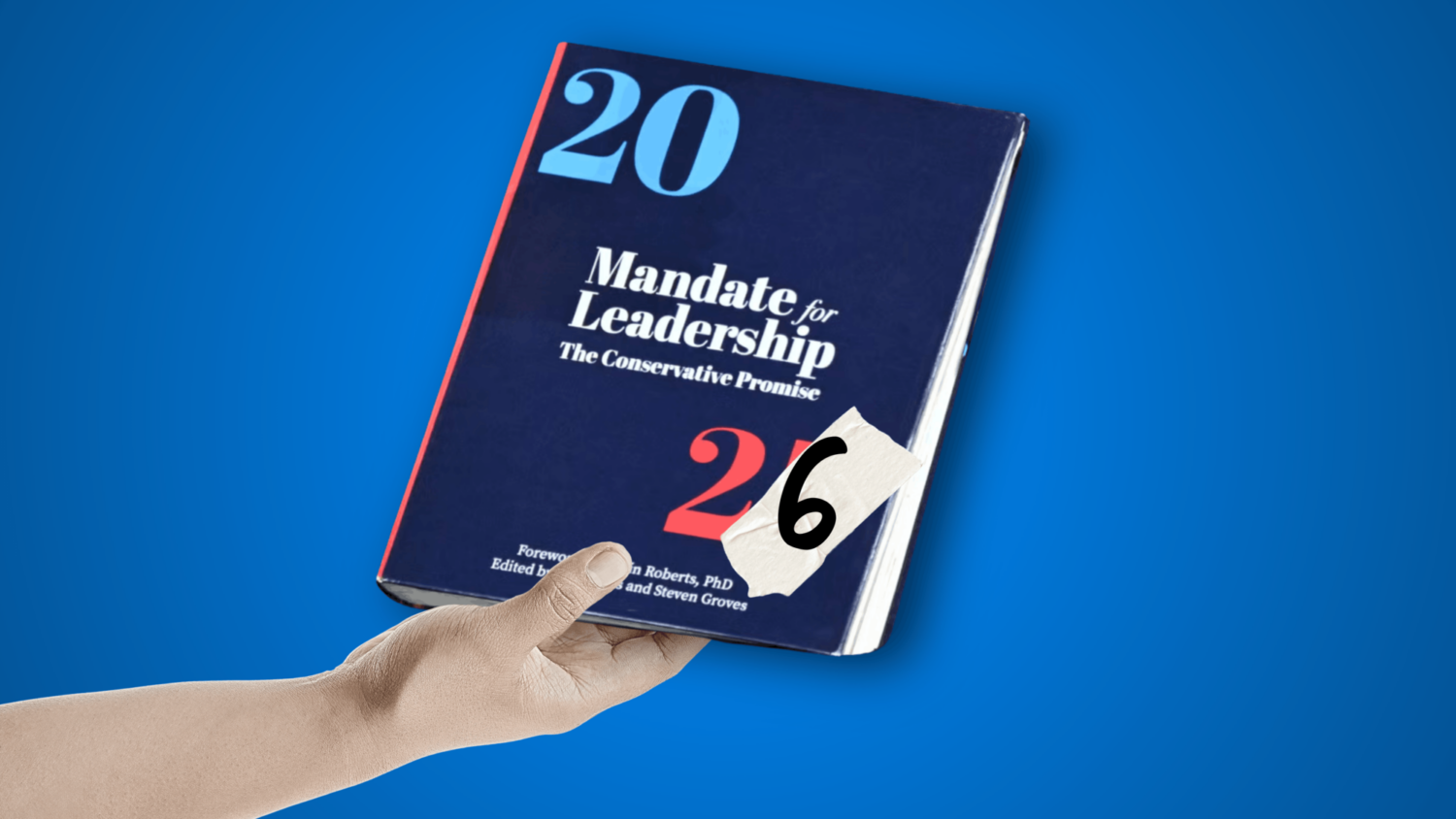
The Heritage Foundation’s newly released “Project 2026” makes this agenda explicit. Building on Project 2025, this roadmap calls for eliminating protections against sex discrimination in schools, banning abortion pills nationwide, and shrinking supports that enable women to participate in the workforce. When women can’t control when they have children, they can’t control their careers. Combined with the decimation of workplace protections, the intention is clear: push women out of the workforce and keep them out.
But this is not inevitable. Public polls show that Americans across the political spectrum reject this agenda. Candidates running on affordability and economic fairness, not culture war attacks, are winning races up and down the ballot. States are stepping into the void, codifying federal protections into law before they disappear entirely. And worker advocates and state attorneys general are defending civil rights in courtrooms across the country.
California is proof that state action works. After passing the nation’s strongest pay equity laws, many with business support, California’s gender wage gap dropped to 13%, significantly outperforming the national average of 18%. Twenty-five states have followed its lead to reduce pay discrimination. That amounts to millions more dollars in the pockets of women workers because lawmakers committed to taking decisive action.
The federal government may have abandoned enforcement, but we have not abandoned the fight. Discrimination can be named, fought, and defeated. That was the promise of the Civil Rights Act of 1964, and it’s a promise we intend to keep.
Noreen Farrell is the executive director of Equal Rights Advocates, which fights for gender justice in workplaces and schools across the country.
Rabia Amin: Families are being torn apart, while Congress looks away
By Rabia Amin
As Congress negotiates funding to avoid a shutdown, lawmakers are once again debating immigration enforcement behind closed doors. While officials promise reform and accountability, families like mine continue to pay the price for unchecked detention and deportation policies.
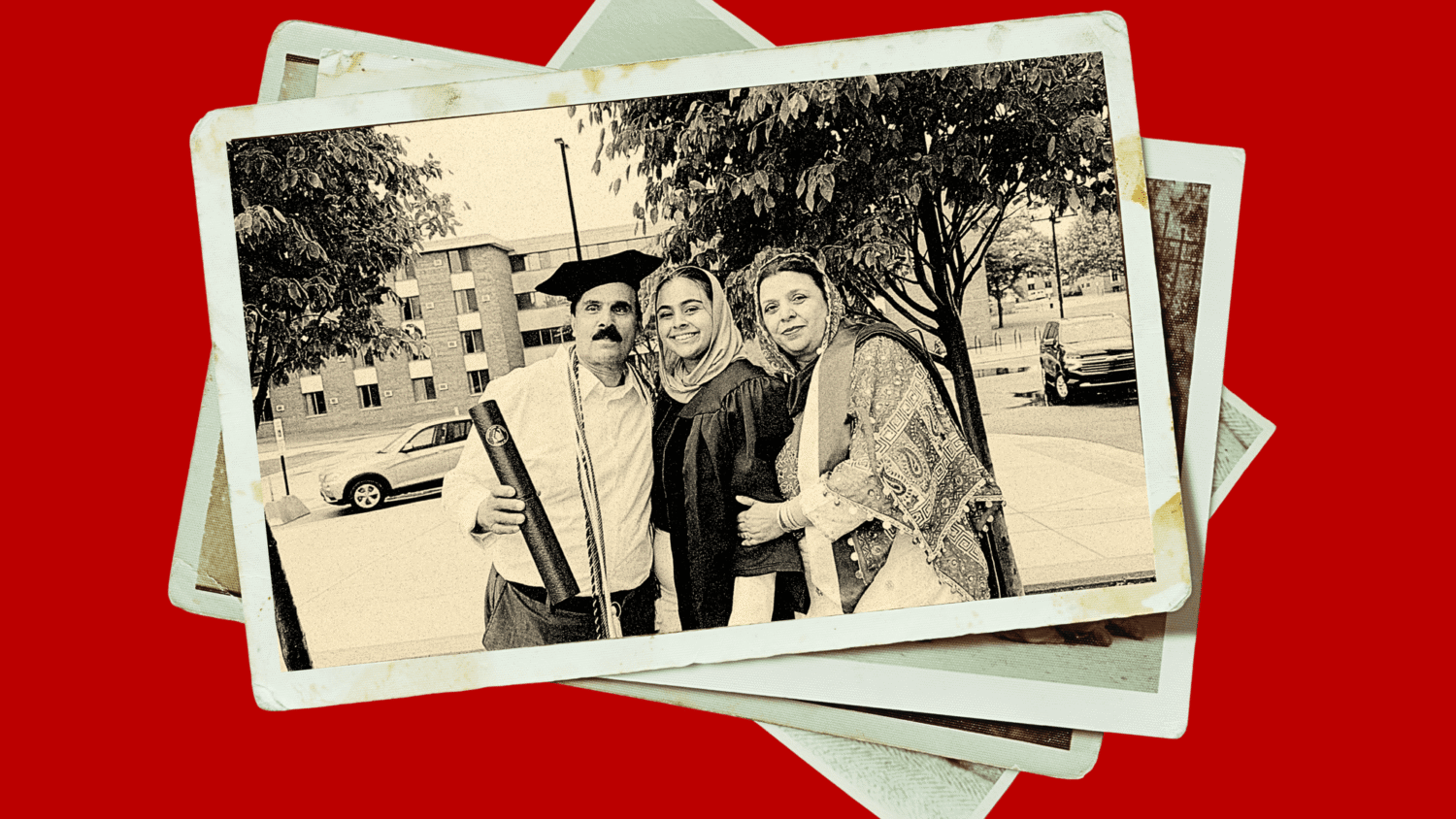
The morning my father was taken by Customs and Border Protection, there was no warning, no explanation, and no chance to say goodbye. One moment, our family was coordinating doctor’s appointments and work schedules. The next, we were scrambling to keep his small business running, support one another emotionally, and fight a federal immigration case while he was detained out of state. In the days that followed, questions went unanswered. Medical records were ignored. Transfers happened without notice.
Elected officials issued statements of concern and appeared at protests, but nothing changed. Public leaders insisted they stood with families like mine, yet when we asked for real intervention or accountability, we were met with silence. People are rightly outraged by the brutality they see in the streets, but what often goes unseen is the brutality inside the system itself. My father’s experience exposes that reality: a system that detains people with no criminal record, without transparency, transfers them without notice, and treats their lives as expendable once they are in custody. Family separation is not an accident of enforcement; it is the predictable result of policy choices that Congress has the power to change.
In our case, my father was transferred between multiple states without warning or explanation. Often, he learned of these moves only hours beforehand. He repeatedly asked for permission to call his family to tell us where he was being taken. Sometimes those requests were denied. We were left scrambling for information while critical legal and medical decisions were being made by DHS on his behalf.
These transfers matter. When people are moved in the middle of the night and without notice, they can effectively disappear into the system. Families have no way to locate them, attorneys struggle to intervene, and public scrutiny is avoided. Without scrutiny, there is no accountability.
The harm does not stop at separation. The Department of Homeland Security (DHS) has repeatedly failed to provide adequate medical care in immigration detention, even when serious conditions are well documented. During my father’s repeated transfers, his prescribed medications were disrupted. Eventually, he required emergency hospitalization. Neither DHS nor ICE notified our family. The hospital lacked access to his full medical history, delaying appropriate treatment. We did not know where he was, what condition he was in, or whether he would survive.
When detention disrupts medical care and results in emergency hospitalization without family notification, continued confinement is not enforcement; it is harm sanctioned by policy. We are currently hearing of a growing number of people dying and suffering from medical neglect in DHS detention. If families are kept in the dark, these deaths happen quietly.
Today, my father has been removed to Pakistan, a country he had not lived in for more than 30 years. Deportation is often framed as a bureaucratic outcome, but for families it means permanent rupture. It means elderly parents losing caregivers, businesses collapsing, and families forced to choose between separation or exile. This is not theoretical harm, it is a lived one. My American-born siblings now take turns visiting him in a country we barely know while we attempt to maintain a family across borders.
As a Juris Doctor, I know that DHS is not without options. Immigration law allows for alternatives to detention, including release on recognizance, supervision, and monitoring. These alternatives protect public safety while keeping families together. We made repeated requests. Each one was denied, often without a written explanation or individualized reasoning, despite no public safety concern. When lawful alternatives exist, and detention is chosen anyway, family separation is not inevitable, it is a decision.
Members of Congress have the authority to intervene on behalf of constituents facing detention and deportation. Oversight is not interference; it is their constitutional role. In our case, officials initially offered support, but when we asked for concrete action, formal inquiries, calls to DHS, or pressure on ICE, we were told they did not want to “overstep.” Silence in the face of harm is not neutrality, it is complicity.
Polling consistently shows that most Americans support alternatives to detention and stronger oversight of immigration enforcement, yet Congress continues to fund the Department of Homeland Security with minimal conditions. As Congress negotiates funding to avoid a shutdown, lawmakers must not relent on DHS funding without enforceable conditions, including the use of alternatives to detention, medical standards, and meaningful oversight. While officials promise reform and accountability, families like mine continue to pay the price for unchecked detention and deportation policies. This is not what America stands for. End Family Separation.
Rabia Amin is a Chicago-based lawyer whose father was detained by federal immigration authorities, bringing national attention to her family’s experience in custody. She works in criminal defense and family law and writes about the human cost of immigration enforcement.
Vanessa Cárdenas: A New Vision for Immigration and Our Country

By Vanessa Cárdenas
As an American who deeply believes in our nation’s fundamental ethos and aspirations, it is hard to process the realization that the country we love is turning into a dystopian nightmare where paramilitary troops swarm our neighborhoods hunting for people who look like me and killing our fellow citizens. The abject cruelty and disregard for our collective humanity, the rule of law, and our rights, as demonstrated by the murders of Renee Nicole Good and Alex Pretti, is atrocious and morally jarring.
Last year, in an opinion piece for COURIER, I took stock of the first months of the Trump administration’s anti-immigration cruelty and chaos and asked a simple question: “Isn’t there a better way?”
Now, after a nightmare year for immigrants in America – and for the very notion of America as a nation of immigrants – my earlier impressions have become even sharper. Think of the sheer un-American sight of troops and masked ICE and CBP agents deployed in our communities as if they were an invading military force. Beyond the recent killings, consider the trauma on children, and the way kids and schools are being forced to bear the heavy burden of mass deportation. The hundreds of U.S. citizens swept up in deportation dragnets, citizens’ spouses detained at green card interviews, and canceled naturalization and citizenship ceremonies for those ready and willing to swear an oath to this country. Add to that mounting evidence that mass deportation is spiking inflation and inflicting economic damage on industries like construction, agriculture, and leisure and hospitality. Or the harm to public safety caused by this administration diverting money and manpower away from child exploitation and gun trafficking investigations and toward mass deportation efforts.
The mass deportation agenda makes all of America poorer, weaker, and less safe. Immigration has become the tip of the spear for this administration’s broader assault on core constitutional pillars. And it’s essential that all of us who have been horrified by this past year work to define – and fight for – an alternative vision in 2026.
Though it’s of course being directed by President Trump and Stephen Miller in Washington, DC, the true costs and harms of mass deportation and the anti-immigrant agenda are felt most acutely in states and communities across America – in Minnesota and elsewhere.
It is little wonder that the American public is recoiling. Poll after poll shows that this administration’s immigration agenda is unpopular and “has gone too far,” a verdict overwhelmingly echoed in media exit polls from the 2025 elections. In the aftermath of Ms. Good’s killing, multiple polls showed that Americans have moved sharply against ICE and recognize that the agency is making us “less safe” rather than “more safe.” And that was before this weekend’s killing of Mr. Pretti.
So what can we expect for the rest of 2026? For one, we can be confident that Trump and Stephen Miller aren’t going to suddenly listen to the American people and rein in their anti-immigration tirades. In fact, they will do the opposite – as their Orwellian response to Ms. Good and Mr. Pretti’s murders reminds us – and lash out with even more demonization against immigrants, as they always do when they feel besieged. Unfortunately, in light of the unprecedented funding for immigration enforcement that Republicans in Congress appropriated for mass deportation, we can expect the immigration harms and ugliness to escalate.
This makes our collective response all the more essential. A strong majority of Americans are rightly shocked by Trump’s abuses of power and want real solutions to fix our broken immigration system. Yet a majority remains skeptical about Democrats on the issue of immigration. This means those opposed to the Trump mass deportation crusade still have work to do to define an alternative vision and a better way forward than what Trump and the GOP are implementing.
On the heels of Mr. Pretti’s murder, there is a growing clamor for policy reforms to rein in the unchecked abuse and impunity we are witnessing in Minneapolis and beyond by adding essential accountability measures for ICE and CBP operations and ensuring we don’t give them even one penny more. But we cannot stop at enforcement alone; we must also pursue a broader, humane vision for our immigration system. That means charting a course aligned with the views of a strong majority of Americans: a balanced, common-sense approach that provides legal status for long-residing undocumented immigrants, such as Dreamers, addresses concerns about border security, creates an orderly and accessible legal immigration process, and focuses enforcement resources on genuine public safety threats.
But the policy blueprint is only part of it. The public also is hungry for real leadership and a well-communicated alternative vision to Trump’s chaos and cruelty – one that calls out the administration’s cruelty and lies, fights for a vision of America strengthened by immigrants, and doesn’t cede the debate to violent and xenophobic loudmouths by staying silent.
Amidst all the cruelty we are witnessing, what gives me hope is the tremendous solidarity and organizing to counter the militarization of our communities. 2026 can be a turning point in our immigration crisis and the way it’s weaponized to tear our communities apart. We must stand up to Trump, Miller, and this administration who allows these horrors to continue unchecked. We must then change course by defining and fighting for a new direction that is consistent with our values and commits to advancing common-sense solutions.
Vanessa Cárdenas is the Executive Director of America’s Voice.
Danielle Atkinson: Ashli Babbitt vs. Renee Nicole Good — Whiteness, Compliance, and Who Gets Valued

By Danielle Atkinson
January has brought anything but calm in its first two weeks. From escalating global authoritarianism and forced regime change in Venezuela by the Trump Administration to ICE ramping up operations with deadly consequences across the country, the opening of the year has made one thing clear: state violence is not only expanding under this president, it is being justified. That this reckoning arrives alongside the anniversary of January 6th, a moment that demonstrated how far the right was willing to go to maintain power, only sharpens the urgency of what we are witnessing now.
Sojourner Truth famously asked, “Ain’t I a woman?” In that question, she exposed a society that denied the humanity, strength, and rights of women of color while elevating white women as the default symbol of womanhood: delicate, virtuous, and deserving of protection. More than a century later, her question remains. Especially when we examine how women are treated by the state and by right-wing media, depending on their proximity to power, white supremacy, and their willingness to uphold it. On the anniversary of an insurrection fueled by white grievance and entitlement, Sojourner’s words feel particularly haunting. They force us to confront how womanhood continues to be weaponized, protected, or discarded depending on how well it serves power.
Ashli Babbitt, the white woman shot while rioting in the January 6th attack on the U.S. Capitol, has been glorified by Donald Trump and the right-wing media ecosystem as a patriot and a martyr. Her actions, which were undoubtedly violent, anti-democratic, and aimed at overturning a free and fair election, have been reframed as a noble sacrifice. Her death is mourned across MAGA, her image sanitized, and her whiteness protected with a patriotic diligence. In the right’s narrative, she is not an aggressor; she is a hero.
Contrast that with Renee Nicole Good, a white woman shot and killed by ICE agents last week. Her story has been distorted and stripped of humanity almost immediately. Despite mountains of evidence indicating she posed no imminent threat, she has been framed as dangerous, reckless, and disposable. AI videos have spread lies and misinformation to fool the public into thinking ICE’s actions were those of the heroes, not the villains.
What makes this juxtaposition so damning is that even whiteness did not ultimately protect Renee Nicole Good. Unlike Babbitt, Good did not die in service of far-right ideology or state power. She did not align herself with white supremacy’s political project. And because of that, her death is treated not as a tragedy but as a footnote. Her womanhood, unlike Babbitt’s, is not worth defending.
In fact, this contrast demonstrates the impact of white supremacy with unmistakable clarity. White women are elevated when they reinforce the existing power structure, especially when they lend legitimacy to violence committed in the name of the status quo. They are celebrated when they embody obedience to nationalist, patriarchal, or authoritarian ideals. But the moment a woman, regardless of race, falls outside those expectations, the protections disappear, and the tiki torches come out.
For women of color, particularly for Black women, this erasure is constant and unsurprising. We are routinely criminalized, murdered, and denied empathy regardless of circumstance. But cases like Renee Nicole Good’s reveal something important: that whiteness is conditional, as is its protection. It is not merely about race, but about compliance. It is about whether one’s life can be used to justify the violence of the state or whether it sits counter to the state’s narrative.
Right-wing rhetoric about law and order, policing, and women’s safety has never been consistent. It is circumstantial, and it bends to serve power. It decides whose death can be weaponized and whose can be ignored. It determines which women are framed as victims and which are framed as threats before the facts are even known.
Sojourner Truth’s question was never just about gender. It was about recognizing who is allowed to be seen as human. Today, that question demands an expansion: Whose womanhood is recognized, and under what conditions? Whose death is mourned, and whose death is justified? Until those answers stop being dictated by white supremacy, political loyalty, and state violence, the question remains as urgent now as it was then.
Danielle Atkinson is the founder and executive director of Mothering Justice Action Fund, a 501(c)(4) nationwide project dedicated to returning decision-making power to those most impacted, mothers of color. Atkinson has led organizing efforts to raise the minimum wage in both Florida and Michigan. She lives in Royal Oak, Michigan, with her husband and their six children.
Abre’ Conner: Trump’s Energy Policies Have Failed Black America

By Abre’ Conner
Donald Trump has failed Black Americans in almost every way possible. He promised to improve our economic standing, lower costs for working families, and reduce “energy and electricity prices by half.” Instead, the cost of living has skyrocketed and utility bills have gone up with no end in sight.
Since Trump took office, electricity prices have risen 13%. For Black households who already spend 43% more of our income on energy than white households, that is a major blow. Families are having to grapple with the decision to either feed their children or warm their houses.
You know who isn’t struggling to keep the lights on? Trump’s big oil executive buddies. They’ve cashed in while families have paid the price.
Trump ran on making America great again. Is this what greatness looks like?
Trump cut nearly $8 billion in grants for clean energy projects that would have made electricity more reliable and affordable, and gutted programs like LIHEAP, which helps low-income families keep cool in the summer and warm in the winter. Worse still, his administration has moved to repeal nearly five decades of protections under the National Environmental Policy Act (NEPA)—the “Magna Carta” of environmental laws—shattering a foundational statute and clearing the way for unchecked pollution in Black neighborhoods.
Environmental racism’s next act? Sprawling, dirty AI data centers being built in Black communities like Memphis, Tennessee, and Bessemer, Alabama. To fully unleash these polluting data centers, Trump even signed an executive order overriding state-level AI laws, aiming to preempt the local regulations that could otherwise protect communities from this unchecked development.
We’ve been here before. Black America has always had to play the hand we were dealt, stretching a dollar, keeping the heat on, and making ends meet. We’ve built resilience in a game that was never fair. But every move the president has made to transfer wealth to his mega-rich donors at the expense of the American people has only made things worse.
By eliminating clean energy incentives, he slowed progress on climate change and drove up bills in our neighborhoods. By rolling back more than 100 environmental rules, he shattered protections and put our communities’ health in danger. All while AI data centers are expected to double U.S. electricity demand by 2030, surging to an estimated 35 gigawatts, raising prices for everyone and especially for low-income and majority-Black neighborhoods where these facilities are being built.
Not only are these data centers financially expensive, but they also often rely on infrastructure such as gas turbines, which release harmful pollutants and hazardous chemicals like formaldehyde. Once again, we’re paying the bill while billionaires collect the winnings.
The truth is simple: America needs cleaner, more affordable energy, as our Frontline Framework principles highlight. New renewable projects are often cheaper than fossil fuels and create good-paying jobs.
Investing in clean energy means our families can spend less on utilities and more on our futures. It means more stability, more savings, and more power, literally and figuratively.
It’s a win-win scenario. As recent elections in Virginia and New Jersey demonstrated, concerns about affordability – including rising energy costs – are increasingly salient at the ballot box, a dynamic that will also undoubtedly shape the 2026 midterm elections.
Trump’s shown his hand, and it’s clear he’s not betting on us.
The midterm elections—including those less high-profile, such as the recent Georgia Public Service Commission election—and other local elections are our chance to course correct, elect leaders who will fight for us, and hold Trump accountable. We have to vote every year, in every election, because when the stakes are our lives and livelihoods, we have to make our voices heard.
Abre’ Conner is the Director of the Center for Environmental and Climate Justice and oversees the strategy and collaboration across the NAACP to dismantle environmental racism. She has taught Education Law and was faculty in the Environmental Policy and Management Program at the University of California-Davis.
Defend the Press: Brendan Carr Has Gone Too Far with Attacks on Media
By Brenda Victoria Castillo, President & CEO, National Hispanic Media Coalition, Marc H. Morial, President and CEO, National Urban League, Rev. Al Sharpton, Founder and President, National Action Network, Seth Stern, Director of Advocacy, Freedom of the Press Foundation Amy Hinojosa, President and CEO, MANA, A National Latina Organization; Thu Nguyen, Executive Director, OCA-Asian Pacific American Advocates; Chris Lewis, Public Knowledge, Toni Kirkpatrick, Chair, Latinx in Publishing, Nadxieli Nieto, Latinx in Publishing
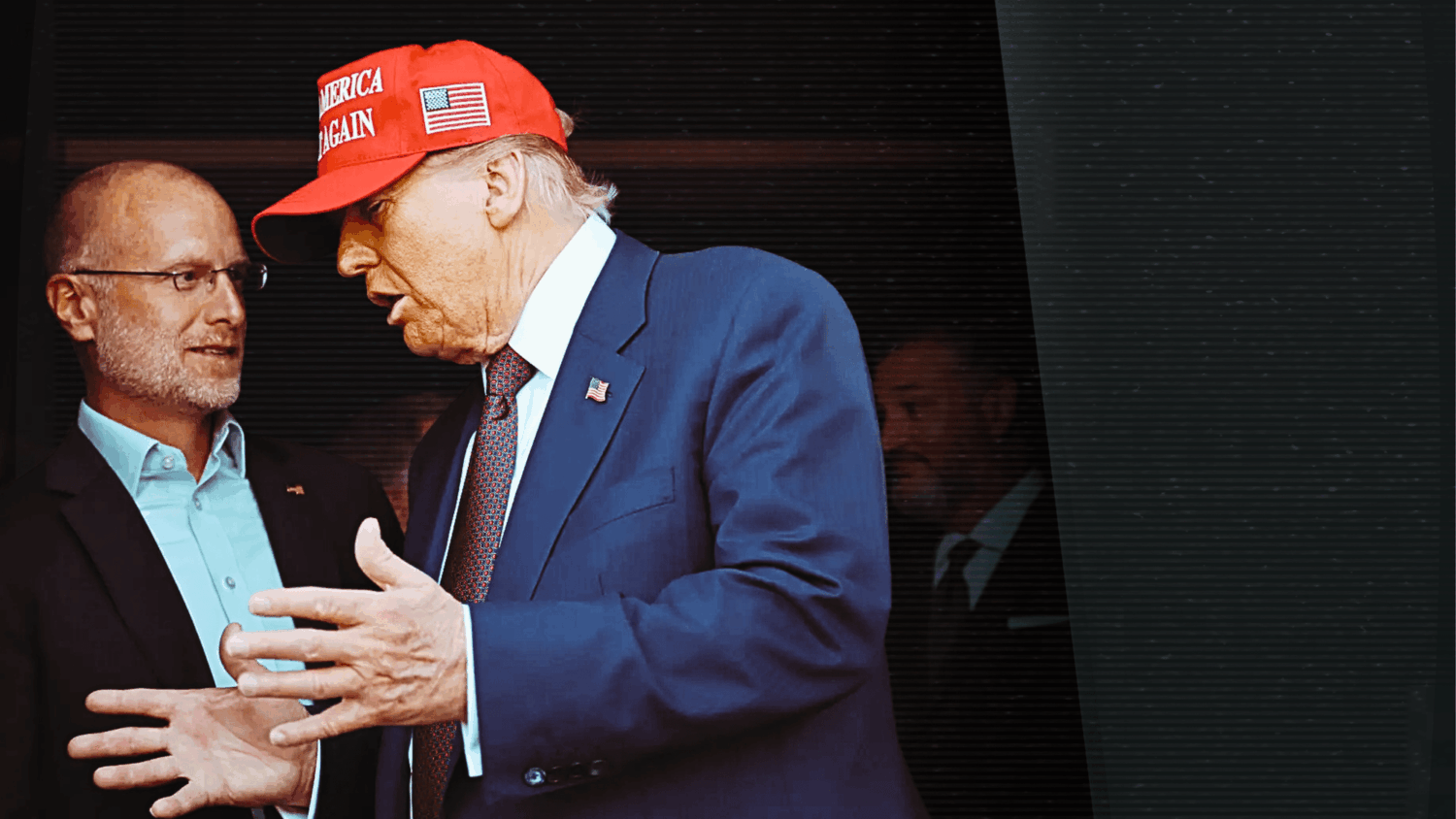
In our democracy, freedom of the press is so fundamental that it is granted in the first amendment of the Constitution. Yet under Chairman Brendan Carr, the Federal Communications Commission (FCC), one of our nation’s most critical independent agencies, has veered dangerously into blurring the lines between regulation and retaliation, using the FCC to intimidate media companies rather than protecting free expression.
In recent months, Carr has threatened regulatory action against broadcasters and media companies whose reporting or satirical comedy have displeased President Donald Trump. He sent menacing letters to major networks like ABC and NBC, questioned the legitimacy of critical journalism, and not-so-subtly hinted that broadcasters’ licenses could be at risk. These are not the actions of a public servant safeguarding the First Amendment; they are the actions of a political enforcer actively trying to circumvent it to silence the American people.
That’s why our organizations, along with two dozen civil rights, civic, and media advocacy groups, have joined together to demand that the FCC and Chairman Carr reaffirm their commitment to the First Amendment and to the rule of law. We cannot stand by while one of the most powerful communications regulators in the world uses his position to chill speech and curry political favor with an administration hellbent on violating our rights.
This is bigger than politics. It’s about power, truth, and who has the power to manipulate the public’s access to accurate information.
Communities of color have long understood the cost when those in power attempt to stifle dissent. From the civil rights movement to today’s struggles for justice, it’s often our stories – Black, Latino, Asian American, Native, and immigrant – that are the first to be suppressed and the last to be heard. When government intimidation stifles the press, it silences us all.
The FCC’s mandate is clear: to serve the public interest and our communities, not political interests. But these protections of the public interest must be structural: for example, ensuring licensees are equipped to air emergency alerts, enforcing ownership caps, or restricting obscenity on public airways. The agency cannot use the “public interest” to censor viewpoints its leadership dislikes.
Chairman Carr knows better. Before he became Chairman, as a commissioner, he repeatedly warned that, under its statutory mandate and the Constitution, the agency cannot engage in censorship and viewpoint discrimination. But he has changed his tune now that the censored voices are ones Trump – whose face he wears as a lapel pin – dislikes. Carr’s oath was to protect the Constitution, including the First Amendment. When the Commission betrays that mission – led by its chairman – it endangers not only our democracy, but also the very communities it was meant to protect.
History offers a warning. Every time government power has been turned against the press – from the Nixon administration’s “enemies list” targeting journalists, to the McCarthy-era blacklists that ruined reporters’ careers – the result has been fewer facts, less accountability, and a weaker democracy. When President Nixon tried to block publication of the Pentagon Papers, it took a Supreme Court ruling to remind the nation that, even when the government claims national security is at stake, government secrecy cannot outweigh the public’s right to know.
Today, we rightfully fear losing that historical memory and moral compass amidst the Trump administration’s blatant attacks on the press, claiming authority to seize reporters’ phone records and threatening to revoke broadcast licenses over critical coverage of the truth. We must ring the alarm bell that democracy cannot survive under a policy of journalistic intimidation. When journalists are targeted, the public loses its eyes and ears. And when silence becomes the safe choice, it comes at the cost of truth.
Chairman Carr and the FCC still can stop this slide away from an independent press toward propaganda, and reaffirm the FCC’s independence. He can reject political pressure, denounce retaliation, and rebuild public trust in the agency he leads. But time is short. Every day he continues his reckless and destructive rhetoric, the chill spreads further across American newsrooms and the entire media landscape.
Free speech without a free press is an illusion. Civic leaders, donors, educators, and advocates must speak out now. Silence in moments like these only protects power and bullies, not people. The FCC should stand where every American leader must stand: firmly on the side of the Constitution, the rule of law, and a free and fearless press.
The authors are members of the Defend the Press campaign, an effort to fight back against government overreach and ensure the media remains independent and dedicated to serving the public interest.
Tiffany Muller: Trump’s Gilded Swamp
By Tiffany Muller
When Donald Trump announced plans to build a new private ballroom at the White House, he promised it would stand as a “symbol of American success.” The list of 37 initial donors tells a different story. That story is not of patriotism or pride, but of power, profit, and pay-to-play politics. Each check comes with a motive. Each name comes with an ask. Together, they reveal a presidency for sale.
The corporations and billionaires funding Trump’s ballroom aren’t donating to beautify the People’s House. They’re not paying for chandeliers or marble floors; they’re paying for access. It’s a familiar cast of corporate players with business before the government: tobacco giant Altria, pressing to weaken oversight of e-cigarettes; Caterpillar, whose criminal tax probe disappeared under Trump before it landed nearly a billion dollars in new federal contracts; and Lockheed Martin, now holding more than $40 billion in defense deals. Each knows the formula: give Trump what he wants, and he’ll give you what you need.
The tech and crypto worlds have joined the dance. Coinbase, the cryptocurrency exchange, saw the Trump-led Securities and Exchange Commission drop its lawsuit shortly after a $1 million inauguration donation. Now it’s contributed an undisclosed sum for the new ballroom as it seeks approval to expand into blockchain-based stock trading. Also on the donor list are chipmaker Nvidia, hoping to benefit from the U.S-China trade negotiations, and Palantir, which collected over $800 million in federal contracts this year.
Apple’s Tim Cook secured tariff exemptions after presenting Trump with a 24-karat gold plaque in the Oval Office — a gesture that was a masterclass in flattery and influence. Google, freshly cleared by the Justice Department to acquire the cybersecurity company Wiz, donated too. Amazon Web Services, Microsoft, and Meta, long accustomed to Trump’s light regulatory touch, are once again making sure the music keeps playing.
Even OpenAI has joined the crowd. President Greg Brockman attended a White House fundraising dinner for the ballroom, and now the company is seeking federal financial support for its expansion. Like so many others, it’s learned that in Trump’s Washington, a well-timed donation opens not just doors but also the government pocketbook.
The next wave of crypto ventures is buying its way into the room, too. Tether, in which Commerce Secretary Howard Lutnick holds a five-percent stake, and Ripple, the company behind the XRP token that Trump wants included in a proposed U.S. “crypto strategic reserve,” have joined the donor list. For these firms, the real innovation isn’t technological — it’s transactional.
Trump’s inner circle is also in on the action. Kelly Loeffler, the billionaire head of the Small Business Administration and longtime Trump loyalist, stands to benefit through her husband’s company, Intercontinental Exchange. Casino mogul Miriam Adelson, another major backer, is using her influence to push for favorable gambling legislation. Around Trump, proximity has always meant profit.
This isn’t the swamp being drained. It’s the swamp being gilded. Trump is remaking it in the image of Mar-a-Lago with marble floors, gold trim, and striped umbrellas, where loyalty trumps law and everything has a price. The method is simple: skip the lobbyists. If you want a contract, a regulation rolled back, or an investigation to vanish, just shower Trump with praise, gifts, or cash. It’s a playbook foreign leaders learned years ago.
A few courageous members of Congress are mounting a defense against Trump’s blatant corruption. Led by Senator Elizabeth Warren and Representative Robert Garcia, the Stop Ballroom Bribery Act would impose restrictions on donations and require transparency around meetings between donors and the federal government. Even JPMorgan Chase CEO Jamie Dimon refused to contribute, citing “the risks we bear by doing anything that looks like buying favors.” With criticism coming from the leader of America’s biggest bank, Trump’s barefaced strategy is clear.
Every contribution to Trump’s ballroom is more than a donation. It’s an investment in power and a pay-off for deregulation, tax cuts, and government contracts. And when those bills come due, it won’t be the billionaires footing them. It will be ordinary Americans, paying through higher prices, weaker protections, and a government that answers to wealth before citizens.
The list of donors funding Trump’s ballroom will grow. But what they’re really building is a monument to corruption: a pay-to-play palace at the heart of our democracy. This isn’t just about one man’s vanity project. It’s about a presidency for sale, where money buys access, access buys power, and the public is left outside the velvet rope.
Because when money buys power, democracy itself is on the auction block. And in Trump’s ballroom, the bidding has already begun.
Tiffany Muller is the President of End Citizens United, Let America Vote, and the End Citizens United/Let America Vote Action Fund.
Anabel Mendoza: Trump’s War Is Already on Our Streets — We’re Building Power to Stop It.

By Anabel Mendoza
Across the country, from New York to Chicago’s South and West Sides to Los Angeles, young people are asking: What kind of country are we becoming? Will we stand up for one another, or look away as our neighbors are targeted and our democracy erodes?
Zohran Mamdani’s historic victory as the next mayor of New York City is proof that everyday people are fed up with the status quo and are hungry for a new generation of courageous leadership. His campaign didn’t just defeat big money, it showed, unmistakably, that working people united can win. And his victory wasn’t isolated; it’s a signal that the tides are turning. Young people, tenants, immigrants, students, and workers are stepping into positions of power — and we’re not waiting to be handed permission to lead.
Chicago is next.
On Chicago’s South and West Sides where I grew up, our federal government has deliberately starved Black and brown communities of the investment we deserve, often relying on a strategy to pit us against one another to fight for the bare minimum — living wages, decent schools, affordable housing, and liberation for all people, including our Palestinian communities abroad.
On this side of my city, your zip code determines your life expectancy. In Streeterville, residents make around $130,000 a year and live to 90. Ten miles south in West Englewood, the median income is $34,000 and life expectancy drops dramatically to 60 years old, the largest gap in America. That’s not coincidence; it’s policy.
For generations, Black Chicagoans segregated predominantly to Chicago’s South side have been denied economic opportunities through redlining policies, job and housing discrimination, and the legacies of Jim Crow and slavery. Immigrant and working-class families, too, have been scapegoated and excluded from the prosperity and wealth they help create in this country. And now, in the very streets of Chicago, my community is being hunted.
ICE raids have shuttered storefronts and left entire blocks in panic. In Little Village and Pilsen, the beating heart of Chicago’s Latino and immigrant community, high schoolers have been tackled and detained outside of their schools. Most recently, federal agents violently detained a preschool teacher in front of staff and terrified children.
When the tools of war show up on our streets, no one is safe — not undocumented people, not families, not children, nor U.S. citizens. That’s the point. Trump’s war has never just been a threat; it’s a strategy to quell the rising power of working people. Little does he know, Chicago fights back.
Being the daughter and granddaughter of immigrants has taught me that courage and community are not optional; they’re a way of life. Every day, I see parents organizing corner watches so their kids can walk to school safely. I see neighbors raising money so detained street vendors can get legal help. I see tenants refusing to let militarized raids destroy their homes.
Each of them is proof that unity can’t just be a hashtag. It must be our survival strategy. Closing the racial wealth and opportunity gap won’t come from charity, it’ll come from justice: reparations, a real pathway to citizenship, universal health care, affordable housing, and stronger labor rights.
None of this is winnable unless we recognize unity as our most strategic tool.
Beyond our voting and electoral power — something the Trump administration and its cronies are actively eroding through gerrymandering and attempts to end the Voting Rights Act — lies our labor power. Something that has kept this country running. Unity, in its most direct and effective application, must be the coalescing of Black, brown, immigrant, and working-class labor power. And it must be disciplined. Because in a country built on capitalism, labor is our most effective lever of power.
Imagine if workers across the nation, from Amazon warehouses to local restaurants to construction sites, went on strike until ICE left our cities. Then imagine channeling that same labor power toward every fight that matters: a living wage, access to food, clean air and water, Medicare for All, reproductive freedom, reparations, and liberation for Palestine.
Even our mayor has called for a general strike, urging workers and communities across Chicago to refuse business as usual until justice rolls through our streets. Unity isn’t optional. It’s the tool Trump and big money is most afraid of.
And here’s the truth: we are not starting from scratch. The movement that delivered Zohran’s win is the same one alive in our neighborhoods right now—tenant unions, mutual aid networks, student organizers, street medics, mothers watching each other’s kids so someone can attend a city council meeting. It is already happening. And when we show up for each other materially, we can build the infrastructure that insulates our communities from the consequences of going on strike.
Because in a climate where millions are earning poverty wages, barely making it to another day, a strike — and the sacrifice of withholding their labor and not getting paid — better be worth it. There must be community-led infrastructure ready to carry and support each other and a win worth fighting for.
Winning is contagious. And if you’re like me, you’re done with politicians who’ve grown far too comfortable with losing. We don’t have the luxury to lose right now, and it is my generation that is ready to lead.
As a lifelong Chicagoan and an immigrant rights organizer, I know our future depends on leaders who can turn that readiness into lasting power — leaders committed to building genuine solidarity between Black, brown, immigrant, and working-class communities and to strengthening our collective labor and political power. That’s why I’m running for Congress. This is the fight of our lifetime, and Chicago is ready to win it.
Anabel Mendoza is a lifelong Chicagoan and the youngest candidate for Illinois’ 7th Congressional District.
Andrea Joy Campbell: In the Wealthiest Nation on Earth, No One Should Go Hungry

By Attorney General Andrea Joy Campbell
When my father came home from prison, my family temporarily relied on food assistance as he worked to get back on his feet. We were grateful for that help, not because we were looking for a handout, but because it meant my brothers and I could eat breakfast before school and not go to bed hungry. It meant my grandmother didn’t have to choose between paying the light bill and putting groceries in the cart. That assistance wasn’t charity; it was stability—a promise that we would not be left out and left behind.
That promise is now being broken. Just a week before families were to receive their November benefits, the Trump administration made an unprecedented decision to suspend food assistance for millions of Americans during a federal government shutdown. That meant more than 42 million people across the country—including more than one million here in Massachusetts—faced the prospect of empty refrigerators and grocery lists they can’t afford to fill. That decision was a betrayal of the promise that our government should stand with people in their hardest moments, not turn its back on them.
That’s why I co-led 26 states in taking the Trump administration to court—and the court rightly ruled that USDA must use its contingency fund to pay for benefits during the shutdown. The judge also made clear that if that fund falls short, the federal government can use other sources to fill the gaps. But instead of doing the right thing, the Trump administration decided to do the bare minimum. It would only partially fund the program, leaving millions of Americans hungry and waiting even longer for relief. We went back to court; and every step of the way the Trump Administration used every legal tool available to deprive people of the money they need to pay for food. Just this week, this meant trying to claw back benefits that a court ordered the federal government to provide.
Let’s be clear about what this would mean. Parents who work full-time jobs but still can’t make ends meet will go to the store and find their benefits card declined. Seniors on fixed incomes will have to choose between buying food or filling their prescriptions. Children will go to school hungry. Veterans and people with disabilities—many of whom rely on this help to survive—will be forced to turn to food banks already stretched to their breaking points.
This is not just a moral failure; it’s an economic one too. When families lose food assistance, grocery stores, local farms, and small businesses lose revenue. Every dollar in SNAP benefits generates about a dollar and a half in economic activity. In Massachusetts, one-fifth of grocery sales come from these purchases, meaning cashiers, truck drivers, and store clerks all feel the hit. Hunger weakens not just families, but entire communities and our economy.
During my recent visit to the Worcester County Food Bank, I saw pallets of canned goods stacked to the ceiling and volunteers doing their best to prepare for a wave of need that should never have existed in the first place. One volunteer told me, “We’ll do what we can, but we can’t replace the federal government.” She’s right. No food pantry in America can fill the gap created when Washington decides to walk away from its most basic responsibility.
We are the wealthiest nation on earth. We have enough resources to send rockets into space, to fund endless tax cuts for the ultra-rich, and to bail out corporations that make record profits. The Trump administration found $40 billion to bail out Argentina’s central bank and more than $300 million to renovate a ballroom at the White House, but somehow, we’re being told that feeding our children, our seniors, and our veterans is just too expensive? There’s always money for the powerful, for the connected, for the one percent. But when it comes to feeding our most vulnerable, suddenly the cupboard is bare.
Never in the history of our country—not during previous shutdowns, not even in times of war—has a president refused to fully fund this program. Not once. Until now.
This is what happens when a government is run by people who see compassion as weakness and cruelty as policy. When those in power cater to billionaires and corporate interests, leaving working families to fight for scraps. When tax breaks for the wealthy are treated as necessities, but putting food in a child’s lunchbox is seen as optional. So it’s up to us to use every tool at our disposal to fight back.
This lawsuit is about whether we believe that every person, no matter their income, their zip code, or the twists and turns of their life, deserves the dignity of a meal. My family once needed that help. Millions of others do, too. And we’re making sure they get it. Because in America—in the wealthiest nation on earth—no one should ever go hungry.
Andrea Joy Campbell is the Attorney General of Massachusetts. Raised in Roxbury and the South End, she is a proud Boston Public Schools graduate and the first Black woman to serve as Attorney General.