Inside the legislative logjam waiting after Election Day
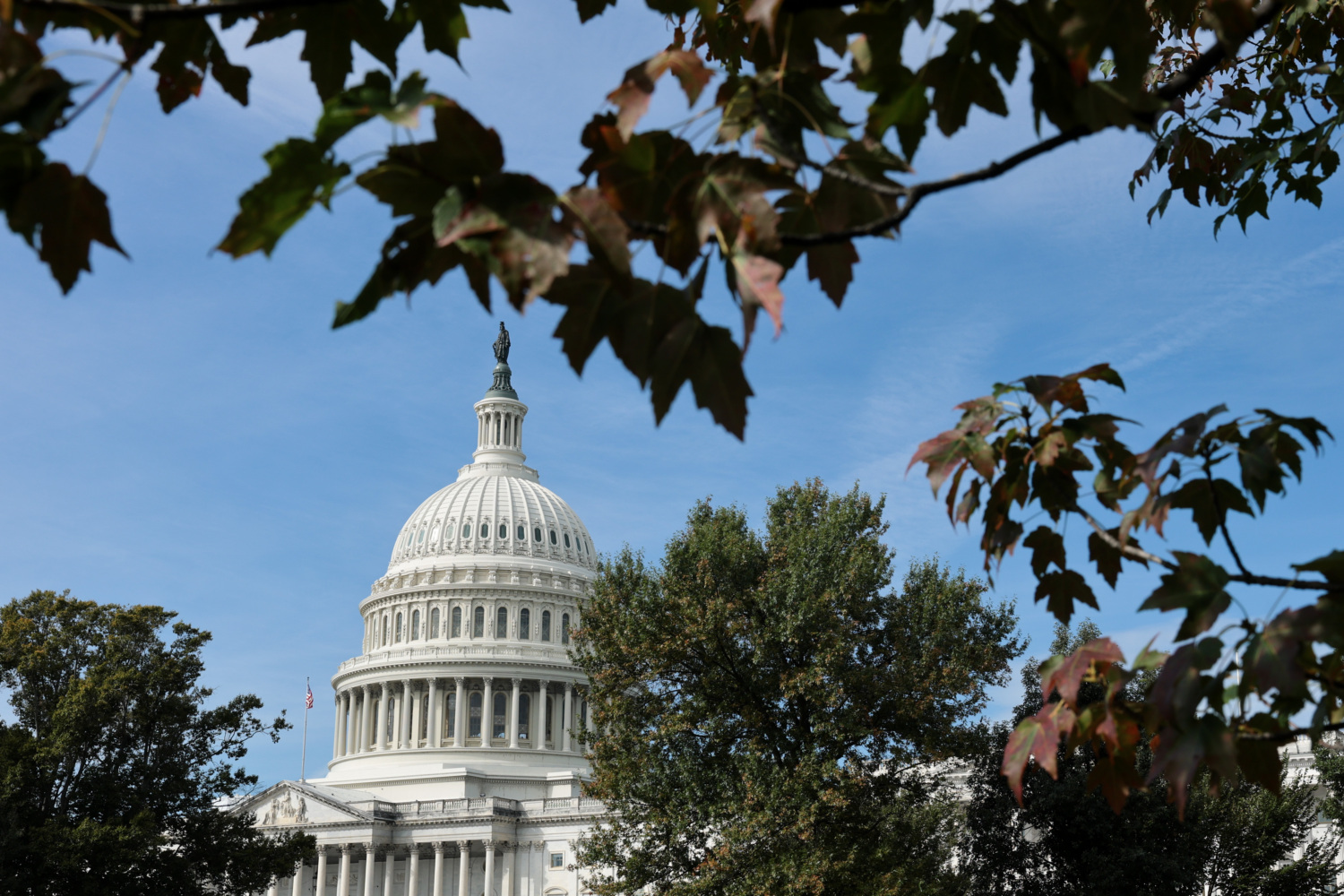
(Photo by Anna Moneymaker/Getty Images)
By Michael Jones
Congress is heading toward a year-end legislative pileup that could become considerably more complicated after voters have their say in November.
Government funding expires December 11. A bipartisan permitting deal is awaiting action. The Senate has passed legislation to reshape college sports, but the House has yet to follow suit. Lawmakers still face unfinished business on national defense, surveillance authorities and agricultural policy, with another Republican reconciliation package and a debt-limit increase potentially joining the mix.
The problem extends beyond how much Congress has left to do. Midterm results could also change the political calculations behind nearly every item on the agenda.
But lawmakers aren’t particularly interested in discussing what comes next right now.
Multiple members approached for this column declined to discuss the lame duck, even when granted anonymity, saying their focus remains on Election Day. A senior House Democratic leadership aide said discussions about the post-election agenda haven’t begun.
The reluctance is understandable. Republicans are defending their congressional majorities while Democrats are trying to win them back. Neither party has much incentive to publicly contemplate the legislative consequences of an election that hasn’t happened yet.
But the uncertainty creates an unusual predicament for congressional leaders. They’ll return to Washington with a narrow window to resolve competing priorities, some of which have been stalled for months, while the results of the election could make compromise either more attractive or more difficult.
The mid-December funding deadline is the most immediate concern. Congress must approve another spending agreement or temporary extension to avoid a partial government shutdown before Christmas, which could disrupt federal services and delay paychecks for government workers.
The annual National Defense Authorization Act is another year-end priority. The farm bill also remains unfinished, despite its importance to agricultural producers, rural economies and federal nutrition assistance.
Section 702 of the Foreign Intelligence Surveillance Act presents a different challenge. The surveillance authority has already expired, leaving lawmakers to grapple with whether and how to restore powers that national security officials consider essential but privacy advocates argue need stronger safeguards.
And those are only the more familiar items on the agenda.
The Senate’s 77–22 passage of the Protect College Sports Act last month demonstrated that bipartisan legislation can still command substantial support in a deeply divided Congress. But the House has yet to act, leaving unresolved whether lawmakers can agree on a national framework for college athletics before the current Congress expires.
A more revealing test may be the Bipartisan American Affordability and Jobs Act, a sweeping permitting-reform agreement announced September 30 by the Republican chairs and Democratic ranking members of the Senate’s energy and environment committees.
The proposal would accelerate federal reviews for energy and infrastructure projects, expand electricity transmission and require data centers to cover associated transmission costs rather than pass them on to other electricity customers. Supporters see an opportunity to address rising energy demand and costs, while critics worry about weakened environmental protections and reduced community oversight.
Lawmakers who disagree on much of the nation’s energy policy spent months negotiating the agreement. Its sponsors have identified the lame duck as their opportunity to move it, but the legislation still needs broader support in both chambers and the president’s signature.
That makes the election particularly consequential. Democrats who gain additional leverage in November could question whether to accept the current compromise or pursue different terms in January. Meanwhile, Republicans could see the lame duck as their opportunity to secure an agreement before the balance of power changes.
The same calculation could extend to other unfinished business, although not every priority offers the same opportunity for compromise.
Republicans have discussed another budget reconciliation package, which could let them advance certain tax and spending policies without the 60 votes generally needed to overcome a Senate filibuster. But reconciliation comes with strict procedural limits, and Republicans would still need to maintain sufficient support within their own ranks.
A potential debt-limit increase and outstanding efforts to overturn federal regulations could further complicate the calendar. The former could require difficult negotiations over federal borrowing authority, while the latter could give Republicans a chance to lock in deregulatory priorities before the current Congress ends.
What makes this lame duck especially unpredictable is that the election could fundamentally alter the incentives of the lawmakers involved.
If Democrats win control of the House, Republicans would retain their majority until January, giving Speaker Mike Johnson (R-La.) and his conference a final opportunity to advance legislation under the current balance of power. Democrats would have to decide which agreements are worth making before they gain control of the chamber.
A change in Senate control would introduce another layer of uncertainty. Even with a Republican majority, most legislation still requires bipartisan cooperation to overcome the filibuster. A party preparing to take control of the chamber might be reluctant to help the outgoing majority complete its agenda when it could pursue its own priorities weeks later.
If Republicans maintain control of both chambers, leaders could postpone some priorities until the new Congress rather than force difficult negotiations in the final weeks of the year. But that approach carries risks, too. Unfinished legislation expires at the end of a Congress, forcing lawmakers to restart the legislative process.
The election also introduces an accountability question that tends to receive less attention than the struggle for control of Congress.
Lawmakers defeated on November 3 will still have the authority to vote on major legislation through the end of their terms, as will retiring members. Their decisions could shape federal spending, health care, energy development and other policies long after they leave office.
And with limited time to negotiate, congressional leaders could face pressure to attach unrelated priorities to government funding legislation or other must-pass measures. Such agreements can move stalled proposals forward, but they can also leave little time for public scrutiny before consequential votes.
None of these dynamics guarantees that the lame duck will collapse into partisan gridlock. The Senate’s college sports vote and the bipartisan permitting agreement demonstrate that lawmakers can still find common ground. But agreements reached before an election aren’t necessarily immune to the political consequences of its results.
For now, the campaign has pushed those questions to the back burner. Members are focused on winning elections, but the legislative deadlines are already set. What remains uncertain is how the election results will reshape the final weeks of this Congress—and whether lawmakers can translate an ambitious year-end agenda into legislation before their time runs out.
Michael Jones is an independent Capitol Hill correspondent and contributor for COURIER. He is the author of Once Upon a Hill, a newsletter about Congressional politics.