What Democrats’ historic majority demands of Hakeem Jeffries
Tom Williams/CQ-Roll Call, Inc via Getty Images
By Michael Jones
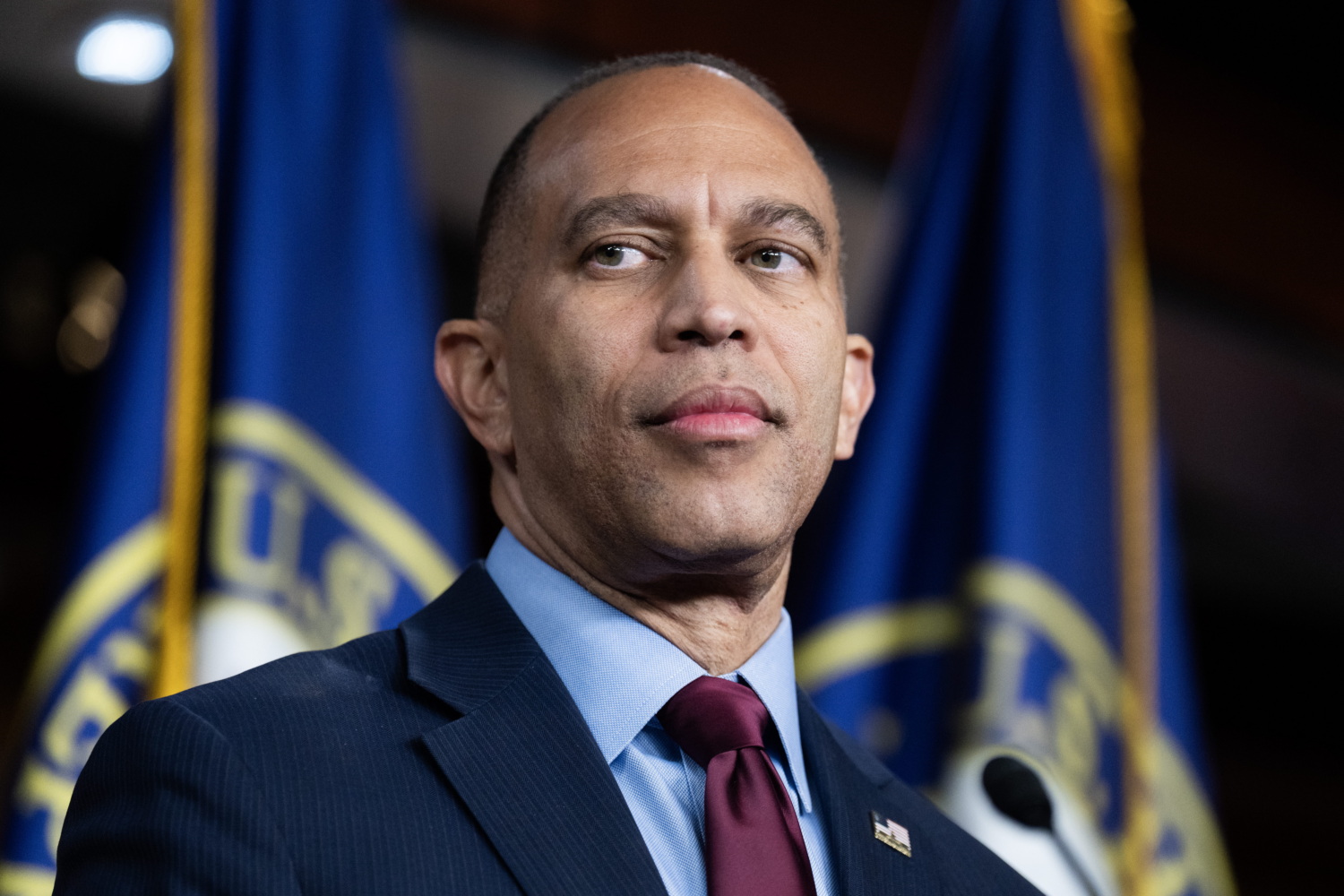
Hakeem Jeffries hadn’t even finished celebrating Democrats’ historic midterm victory before some of the party’s most vocal progressive critics began questioning whether he was prepared to use his newfound power.
The backlash followed an appearance last Wednesday on MS NOW’s Morning Joe, where the incoming House speaker said voters wanted Democrats to deliver on affordability rather than seek revenge against President Donald Trump and his administration.
For critics eager to see Democrats aggressively investigate Trump, the remarks raised concerns that accountability would take a back seat to a more cautious governing agenda.
But Jeffries has repeatedly promised both. The more consequential question is how he intends to deliver on those commitments while managing a Democratic majority that includes everyone from democratic socialists to lawmakers elected in conservative districts.
When asked on Monday whether progressives, center-left New Dems or the moderate Blue Dog Coalition had a particular mandate following the election, Jeffries rejected the premise that any one faction could claim the victory.
“When every single vote is counted across the country, House Democrats are going to have the largest majority of any party this century,” Jeffries said. He called the results a mandate “to make life more affordable for the American people, to hold the crooks accountable, and to make sure that this country can return to being the best version of herself.”
His response echoed a message he had delivered throughout the campaign, tying government corruption to the cost-of-living crisis. Jeffries has long argued that public officials who prioritize enriching themselves and their donors aren’t focused on improving Americans’ lives.
He also served as an impeachment manager during Trump’s first presidency and has identified House Judiciary Committee Ranking Member Jamie Raskin (D-Md.) and House Oversight Committee Ranking Member Robert Garcia (D-Calif.) as central figures in the aggressive oversight agenda Democrats intend to pursue.
None of that guarantees Jeffries will deliver the accountability his critics demand. But his record offers little evidence that he views affordability and accountability as competing priorities.
The challenge will be reconciling the competing interests within his caucus.
Democrats’ incoming majority includes lawmakers who campaigned on ambitious progressive policies alongside others who won in traditionally Republican territory. Their constituents may agree that health care is too expensive, corporate power needs greater scrutiny and government corruption should have consequences, but they won’t necessarily agree on how Congress should address those problems.
Jeffries’ responsibility is to bridge those differences and advance legislation that can command enough support to pass. Senior aides and people familiar with his thinking tell me that won’t always mean embracing the most ambitious proposal on the table. But it shouldn’t mean automatically abandoning progressive priorities to accommodate the caucus’s more conservative members, either.
Progressives, for their part, believe the size of the majority creates an opportunity to pass legislation that narrower Democratic majorities couldn’t.
Congressional Progressive Caucus Chair Greg Casar (D-Texas) made that case at an event on Sunday introducing the group’s incoming members, arguing that Democrats across the ideological spectrum had campaigned on ending the Iran war, confronting corruption and bringing down prices.
“The American people handed us a big majority to get big things done,” Casar said. “With a big majority, we can finally get big things done.”
The Progressive Caucus, which expects to have more than 105 members in the next Congress, wants to expand Social Security, raise the minimum wage, reverse Republican health care cuts and pursue aggressive oversight of both the Trump administration and major corporations.
But in a memo I obtained outlining its strategy, Casar made clear that progressives don’t view their growing numbers as a mandate to wage an internal ideological battle.
“Our goal is not to win a battle against other Democratic caucuses,” he wrote. “It is to pass longstanding progressive priorities that bring down costs, root out corruption, and boost wages.”
That agenda overlaps considerably with the priorities Jeffries has outlined.
The disagreements will emerge when Democrats have to decide which proposals receive floor votes, how far to push legislation Trump is likely to veto and whether to pursue opportunities for bipartisan cooperation.
Still, even the Progressive Caucus acknowledges those competing considerations. Its strategy calls for advancing ambitious legislation regardless of Trump’s likely opposition while also pursuing measures on prescription drug prices, credit card interest rates and housing that could attract his support.
That approach reflects a reality Democrats will have to confront as they transition from opposition to governing: Passing legislation through the House is only the first step toward delivering the changes voters were promised.
The Senate presents another challenge. Democrats’ newly elected members from traditionally Republican states will face pressure to advance the party’s agenda while maintaining the independence that helped them win their races.
Those competing interests are part of the responsibility Jeffries is preparing to assume.
The Brooklyn Democrat has spent years building relationships across the Democratic caucus and protecting members whose political circumstances differ considerably from his own. His leadership style has generally emphasized consensus and deliberate decision-making, qualities that have sometimes frustrated critics who want a more confrontational approach. It deserves scrutiny, particularly when consensus-building risks becoming an excuse for inaction.
So do Jeffries’ decisions on oversight. His handling of the public reporting on his summer meeting with Trump’s son-in-law Jared Kushner raised legitimate concerns about transparency and his record on Israel remains a source of disagreement within the party.
But his allies argue that Democrats’ accountability agenda should ultimately be judged by what the new majority does with its investigative authority, including whether committee chairs receive the resources and independence to pursue credible allegations of wrongdoing.
Jeffries was asked Monday to identify his first affordability bill and accountability investigation. He declined to announce either unilaterally, saying House Democrats would begin discussing their priorities as a caucus.
He did, however, point to reversing the One Big Beautiful Bill Act’s Medicaid cuts, extending Affordable Care Act tax credits, ending Trump’s tariffs and addressing the economic consequences of the Iran war as immediate legislative priorities. Whether Democrats can translate those commitments into law will depend on the choices their leaders and members make in the months ahead.
The progressive movement has every reason to demand ambitious action from a party that campaigned on dramatic change. Jeffries, in turn, has an obligation to take those demands seriously while representing the interests of the entire Democratic caucus.
Voters have every right to expect both accountability for corruption and meaningful improvements in their daily lives. Democrats now have the majority to pursue both. Jeffries’ speakership will be measured by what he does with it.
Michael Jones is an independent Capitol Hill correspondent and contributor for COURIER. He is the author of Once Upon a Hill, a newsletter about Congressional politics.
Just How Historic Is the 2026 Election, Really?
By Lisa Graves
On Tuesday, the American people delivered the strongest possible rebuke of Donald Trump’s second term in what headlines called “historic,” “shellacking,” and a “rout.”
Voters swept a new generation of Democrats into power in the U.S. Senate and House of Representatives, governors’ offices, state attorney general posts, state supreme court chambers, and more. They rejected not just Trump, but his loyalists and lackeys, treating the races like he was on the ballot–as he demanded.
Before the ink was dry on the headlines, however, the apologists and cynics were already trying to spin the news. Axios declared that this extraordinary blue wave was not a mandate. Ridiculous! A New York Times columnist claimed this was exactly what Trump wanted. Absurd! Republicans like Nikki Haley tried to cast the election as a matter of “candidate quality” rather than a repudiation of Trump’s destructive policies or an endorsement of Democrats’ inspiring campaigns. Try harder! In other words, the spinners want you not to believe what your eyes are seeing.
As the great populist Jim Hightower once said: “The water won’t clear up until we get the hogs out of the creek.” In effect, the voters told Trump and his minions: “Quiet piggy!”
The midterm election results really are a stinging rebuke. Even Ron DeSantis called it “an extinction-level event” for Republicans.
What happened is an enormous grassroots feat, a massive determined effort by millions of people to impose a real check on Trump’s abuses of power and the havoc he has wreaked on American families and the world. More Americans turned out for this midterm election than any other since 1914, with the exception of the 2018 midterms–the only other time voters delivered a midway-point condemnation of Trump.
Almost every state trended bluer, many by double digits. Almost every demographic voted Democratic, except white men. Even a majority of baby boomers went blue. Republicans still won a majority of white voters without college degrees, but they lost about 14% of that contingent, too. This shift is seismic, a nationwide earthquake.
Let’s look at some of the results whose magnitude has not yet been fully appreciated.
I know part of this story because, two years ago this week, staggered by Trump’s win over Kamala Harris, I took a deep dive into whether there was any chance Democrats could get power in either house of Congress to impose checks on his coming abuses of power. In 2024, Republicans won a trifecta: the presidency, the Senate, and the House. But they really had a “superfecta,” or quadfecta, because they had also captured the U.S. Supreme Court, and John Roberts had delivered by helping to sweep Trump back into power through inventing immunity from criminal prosecution for him and his so-called “official acts.”
As a former Senate staffer, I looked at the Senate first. Every two years, about one-third of the U.S. Senate is up for re-election. As of January 2025, Democrats held only 45 seats, with two Independents (Bernie Sanders of Vermont and Angus King of Maine) caucusing with them.
Republicans held 53 seats, meaning they could lose three Republicans on any vote and still break a tie with the help of Vice President JD Vance. He had cast the deciding vote that installed the incompetent Pete Hegseth at DOD, despite the allegations of boozing and rape.
The prospect of Democrats retaking the Senate majority back then looked bleak.
For example, they would have to hold a Senate seat in a state Trump won in 2024: Jon Ossoff’s in Georgia, which was rated R+1 in the Cook Partisan Voting Index. They would also have to retain three seats where the Democrat was retiring, meaning no incumbent with a name recognition advantage: New Hampshire (D+2), Minnesota (D+3), and Michigan (R+0). They needed to hold all four of those seats just to maintain the status quo of being the minority party in the Senate.
To get to a bare majority, they would then need to pick up four additional seats. In reality, they needed five to build a working majority and avoid another Joe Manchin or Kyrsten Sinema style of policy betrayals (a role John Fetterman would soon appear poised to play).
The list of potential seat gains seemed almost entirely impossible, but, as we know now, that was not so:
- It had been 30 years since Maine elected a Democrat to the Senate, but Troy Jackson just won. The race was rated D+4, hardly a sure thing, and Leonard Leo–who hand-picked Kavanaugh for Trump’s SCOTUS nomination–fundraised for the incumbent Republican senator, Susan Collins, at his mansion in 2019 after she voted for Kavanaugh; Leo directed millions toward helping her this year.
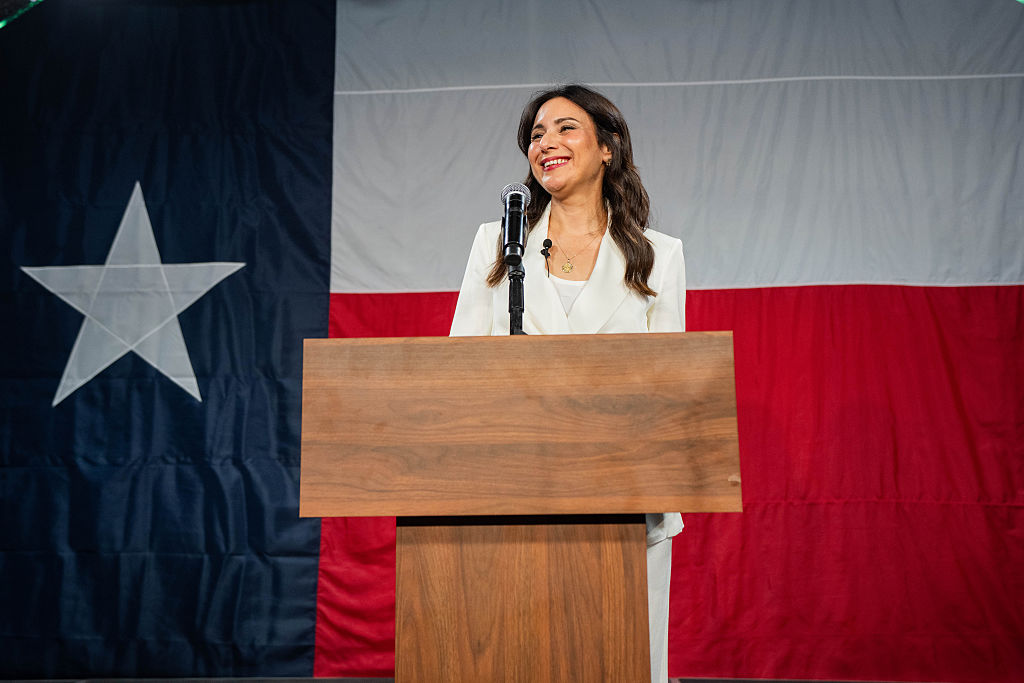
- In Texas, after Trump knocked out incumbent John Cornyn, schoolteacher James Talarico won big. The seat was rated R+6, and no Democrat had won a U.S. Senate race there since 1988. Voters also ousted Greg Abbott as governor in favor of Gina Hinojosa and Democrats swept every other statewide office. Ted Cruz is up for reelection in 2028 and will face an electorate that has shown its willingness to blunt Republican control in the wake of Trump’s ICE brutality and draconian state abortion restrictions. Plus, Texas turning blue really changes the Electoral College strategy for the 2028 presidential election and beyond.
- In North Carolina (R+1) Trump pushed Thom Tillis out of running again after Tillis opposed his “Big, Beautiful Bill” due to the coming Medicaid cuts designed to enrich billionaires even further. The seat had been held for decades by the bigoted Jesse Helms, followed by other Republicans. Populist Democrat Roy Cooper won handily.
- In Ohio (R+5), Sherrod Brown kicked John Husted’s now-infamous ass, ousting JD Vance’s replacement. Ohio also elected Dr. Amy Acton governor. Her opponent spent millions siding with a child molester–embraced by Trump and Vance, too. Democrats also retained and gained a seat on the Ohio Supreme Court.
- Iowa (R+6) turned blue and elected a Democrat–Special Olympics gold medalist Josh Turek–to the Senate for the first time since Tom Harkin in 2008. Ds swept other state offices, too. Sen. Chuck Grassley, now 93, is still planning to run for re-election in 2028.
- Dr. Annie Andrews flipped South Carolina (R+8) after Trump backed the late Sen. Lindsey Graham’s sister “Darline!” Before Trump loyalist Lindsey, the seat had been held for nearly 50 years by Dixiecrat Strom Thurmond, who once ran for president under the motto “Segregation Forever.” Andrews is the first woman elected to the U.S. Senate in South Carolina history.
- Kansas (R+8) elected their first Democrat to the U.S. Senate in 93 years, shifting more than 21 points compared to the last race toward Democrat Adam Hamilton. Voters also threw out vote-suppressor Kris Kobach as Kansas Attorney General, replacing him with Democrat Chris Mann.
Alaska (R+6) is still too close to call, though Democrat Mary Peltola leads despite Trump’s efforts to stop the election from happening. In Mississippi (R+11), Democrat Scott Colom currently leads Cindy Hyde-Smith (who I call Confederate Barbie). If Colom prevails, he will be the first Black Senator elected there since the Reconstruction-era state legislature chose Hiram Revels in 1870 to serve a one-year term replacing Jefferson Davis, the president of the confederacy. Revels was the first Black U.S. senator in American history. Mississippi was on no politico’s bingo card for a win in 2026, but Colom and the voters did not give up and are still fighting to have all the votes counted.
The House of Representatives looked barely more promising as a potential firewall against Trump’s agenda and extremism. Of the 435 House seats, only about 30 were considered competitive and Democrats would have to keep half of them to just hold steady at 214. Then, they would need to pick-up at least four more to get to a majority.
So Trump began pressuring Republican-controlled states to redraw their congressional maps to cheat by helping him make it harder for Democrats to get the seats needed to counter him and conduct investigations.
He wasn’t acting alone. The Roberts Court jumped in to help him and fellow Republicans.
Earlier this spring, the Republican appointees on the nation’s highest court gutted the Voting Rights Act and long-standing precedents to allow extreme partisan gerrymandering, even when doing so dilutes minority representation and bleaches out Black and Latino representation.
Republicans used mathematical precision to gerrymander more Democrats into fewer districts in order to maximize their own seat totals. In this cycle, Republican-controlled state legislatures or redistricting entities changed 12 maps to give Republicans an advantage, including Texas (+5 seats), Florida (+4), North Carolina (+1), and Ohio (+2).
The Roberts Court then ratified Texas’s steal (over objections by the lower court) and gave Republicans a shot at three more in Louisiana, Alabama, and Tennessee–for a total of 15–through its Louisiana v. Callais ruling, which neutered section 2 of the VRA. California countered with its own effort to flip 5 seats, while other states’ efforts–like those in Missouri, Virginia, Indiana, and Illinois–to change their maps were stalled.
If the scheme had prevailed and Republicans won the targets of the maps they rewrote while holding the rest, they would have controlled 234 seats in Congress. They could have easily weathered defections from more than a couple of members, like Thomas Massie, over major issues such as the Epstein Transparency Act, which mandates the disclosure of investigative files implicating Trump and others in sex crimes.
The American people resoundingly, resiliently, and even joyously rejected this scheme.
Right now, Democrats are on track to hit a near-super majority, with 260 members.
Republicans picked up only a few of the seats they re-mapped to steal. This wipeout is as significant as the New Deal wave, without the presidency… at least not yet.
Democrats will be able to pass legislation to help the American people, which Trump will probably veto and drag his party to further ruin. They will also have the power to investigate the financial and moral costs of the vast corruption and destruction his administration has unleashed. They can block his nominees and make the case for bold reforms of the Roberts Court.
It’s a brand new day and, as Nina Simone so beautifully sang, I’m “Feeling Good.”
Key Epstein Player Decides to ‘Lawyer Up’ in Wake of Midterm Results

PHOTO BY KEVIN DIETSCH / GETTY IMAGES
By Jackie Appel, Investigative Reporter
In the wake of the blue tsunami of Democrat gains that was this year’s midterm elections, incoming House Oversight Committee Chair Rep. Robert Garcia (D-CA) issued a warning to those involved in corruption or criminal conduct: “Lawyer up.” Epstein-linked billionaire Leon Black seems to have heeded that warning, filing a defamation lawsuit on Wednesday against Garcia, who will lead an ongoing investigation into the deceased sex trafficker when the new Congress is seated in January.
Black alleges that, in his capacity as ranking member of the Oversight Committee, Garcia “went on national television and lied to the American people” about Black’s involvement with Epstein’s vast trafficking network. The lawsuit claims Garcia’s statements “caused real and significant ongoing harm to Mr. Black. His physical safety has been threatened, he has received a barrage of hateful calls, emails, and social media posts, and his business and philanthropic endeavors have suffered.”
Garcia has not yet publicly responded to the suit.
Black has become a central character in multiple congressional investigations into Epstein. The two had a relationship that spanned decades, and according to the New York Times, and Black paid Epstein $170 million over the course of that relationship that investigators believe was used for illicit purposes. Bank records have also revealed that Black paid millions of dollars to eight women, three of which were known associates or victims of Epstein. In 2023, Black paid the U.S. Virgin Islands $62.5 million to settle a case in which two women had accused Black of assaulting them after being introduced to them by Epstein.
But according to evidence found in the Epstein Files, Black and Epstein had more than a monetary connection. The two seem to have been friends, at least enough so that Black wrote Epstein a poem for his 50th birthday, which included the stanzas: ‘Blonde, Red or Brunette, spread out geographically / With this net of fish, Jeff’s now ‘The Old Man and the Sea.’” He signed the card containing that poem, “Love and Kisses, Leon.” Black also appears over 8,000 times in the files.
Researchers for COURIER’s Cover-Up investigation also uncovered photographs of Black at one of Epstein’s residences making milkshakes, and a series of personal texts between the pair.
The timing of this new lawsuit against Garcia has captured the attention of the national public, with many speculating as to why he chose to file the suit immediately following the blue tsunami of November 3. As the incoming chairman of the Oversight Committee and member of a newly-minted Democratic House majority, Garcia will soon have access to more investigative levers than he did as ranking member. He has already announced a series of priorities for the committee once the new congress is sworn in come January, one of which is to turbocharge Oversight’s investigation into Epstein, and what they believe to be an ongoing cover-up by the Trump administration to protect those implicated from consequences.
“We don’t care if you are a Republican, a Democrat, how much money you have, your wealth, your power… if you abused children, you will be held accountable by the Oversight Committee,” Garcia said.
This suit is not the first Black has filed during Oversight’s ongoing investigation into Epstein’s criminal enterprise. In September, Black sued the committee and outgoing chairman Rep. James Comer (R-KY), for overstepping their authority. This suit was filed the same day that Black had been scheduled to appear for a deposition after being subpoenaed by the committee. He also failed to produce several NDAs that had been subpoenaed by the committee. Black was held in contempt of court for failing to abide by the subpoenas.
“No one is above the law,” Comer said in a statement. “Leon Black defied two subpoenas, and the U.S. House of Representatives acted swiftly to find him in contempt of Congress. We will continue to seek transparency for the American people and justice for survivors in our investigation of the federal government’s handling of the Jeffrey Epstein and Ghislaine Maxwell criminal cases.”

COURIER’s newly-launched Epstein investigation project
For too long, the Epstein Class has dealt in wealth, power, and politics to avoid accountability and deny victims & survivors their due justice. The public deserves the truth, but the Trump Administration is failing its legal obligation to deliver it.
That’s why we’re expanding our coverage to follow the money and investigate the power players in and outside the government. With a new database by Thorian AI, we have unprecedented access and ability to navigate more than 1.2M files and we’re sharing access—and what we’re finding—with you.
Subscribe to The Cover-Up and get one concise, easy-to-read email a week that cuts through the noise with the headlines you need and the breakdowns you want.
By staying plugged in and leveraging our reporting to make your own calls-to-action louder, together, we can turn information into justice.
Blue Wave: Democrats Take the House and Senate as Red States Flip

By Deola Adeosun
Updated: Nov. 4, 9:26 A.M. ET. We’re adding calls as they come in.
National outlets will all show you the same map. We’ll show you what each result means where you live, with reporting from COURIER’s state newsrooms. Find your state below.
A note on timing: Close races, mail ballots, and recounts can take days to count, and that’s normal. We’ll only report a race as decided once it has been called, and we’ll tell you who called it.
Balance of power: Decision Desk HQ projects Democrats will win control of both the House and the Senate.
House: Democrats 241, Republicans 149, with 45 seats still uncalled. It takes 218 seats for a majority. That’s a net gain of 30 seats for Democrats so far.
Senate: Democrats 54, Republicans 44, with 2 seats still uncalled. It takes 51 seats for a majority. That’s a net gain of 7 seats for Democrats so far.
7 P.M. ET
GEORGIA
Full coverage: Courier Georgia
U.S. Senate: Sen. Jon Ossoff (D) vs. Rep. Mike Collins (R)
What it decides: Ossoff holds one of the seats Democrats can’t afford to lose if they want the Senate majority. Both candidates have made the Epstein files a campaign issue.
RESULT: Democratic Sen. Jon Ossoff is projected to win reelection in Georgia, according to Decision Desk HQ, which called the race for Ossoff at 7:18 p.m. ET. Ossoff currently leads Republican Mike Collins 59.9% to 40.1%, with about 78% of the vote counted.
Governor: Keisha Lance Bottoms (D) vs. Rick Jackson (R)
What it decides: An open seat, with Gov. Brian Kemp term-limited. The next governor signs or vetoes Georgia’s election laws and decides whether the state fully expands Medicaid.
RESULT: Democrat Keisha Lance Bottoms is projected to be the next governor of Georgia, according to Decision Desk HQ and the AP, which called the race for Bottoms at 9:13 p.m. ET and 9:24 p.m. ET, respectively. Bottoms currently leads Republican Rick Jackson 55.4% to 44.6%, with about 74% of the vote counted. Bottoms will be the first Black woman to serve as Georgia’s governor and the first Democrat to win the office since 1998, flipping the seat held by term-limited Republican Gov. Brian Kemp.
SOUTH CAROLINA
U.S. Senate: Annie Andrews (D) vs. Sen. Darline Graham (R)
What it decides: Whether Republicans hold a seat that was considered safe until late polls showed a tight race. Graham is running for a full term.
RESULT: Democrat Annie Andrews is projected to be the next U.S. senator from South Carolina, according to Decision Desk HQ, which called the race for Andrews at 9:54 p.m. ET. Andrews currently leads Republican Sen. Darline Graham 51.1% to 47.0%, with about 84% of the vote counted. Andrews will be the first Democrat elected to the U.S. Senate from South Carolina since 1998, flipping the seat Graham was appointed to after the death of her brother, Sen. Lindsey Graham.
7:30 P.M. ET
NORTH CAROLINA
Full coverage: Cardinal & Pine
U.S. Senate: Roy Cooper (D) vs. Michael Whatley (R)
What it decides: An open seat after Sen. Thom Tillis’ retirement, and one of the likeliest flips of the night. It also decides who represents North Carolina on votes over Medicaid and health care costs.
RESULT: Democrat Roy Cooper is projected to be the next U.S. senator from North Carolina, according to Decision Desk HQ, which called the race for Cooper at 8:23 p.m. ET. Cooper currently leads Republican Michael Whatley 66.8% to 31.6%, with about 51% of the vote counted. The win flips the seat held by retiring Republican Sen. Thom Tillis.
OHIO
Governor: Amy Acton (D) vs. Vivek Ramaswamy (R)
What it decides: An open seat, with Gov. Mike DeWine term-limited. It also sets who leads Ohio on public health, schools, and abortion rights for the next four years.
RESULT: Democrat Amy Acton is projected to be the next governor of Ohio, according to Decision Desk HQ, which called the race for Acton at 10:30 p.m. ET. Acton currently leads Republican Vivek Ramaswamy 50.6% to 46.1%, with about 76% of the vote counted. The win flips the governor’s office held by term-limited Republican Gov. Mike DeWine.
8 P.M. ET
PENNSYLVANIA
Full coverage: The Keystone
Governor: Gov. Josh Shapiro (D) vs. Stacy Garrity (R)
What it decides: Whether Shapiro wins a second term in the country’s biggest swing state, and who holds the veto pen over Pennsylvania’s divided Legislature.
RESULT: Democratic Gov. Josh Shapiro is projected to win reelection in Pennsylvania, according to Decision Desk HQ, which called the race for Shapiro at 8:17 p.m. ET. Shapiro currently leads Republican Stacy Garrity 60.1% to 38.6%, with about 83% of the vote counted.
NEW HAMPSHIRE
Full coverage: Granite Post
U.S. Senate: Chris Pappas (D) vs. John E. Sununu (R)
What it decides: An open seat after Sen. Jeanne Shaheen’s retirement that Democrats need to hold to have a path to the majority.
RESULT: Democrat Chris Pappas is projected to be the next U.S. senator from New Hampshire, according to the AP, which called the race for Pappas at 8:20 p.m. ET. Pappas currently leads Republican John E. Sununu 60.2% to 38.1% in early returns, with about 21% of the vote counted. The win keeps a seat Democrats needed to hold in their push for the Senate majority.
MICHIGAN
Full coverage: The ‘Gander
U.S. Senate: Abdul El-Sayed (D) vs. Mike Rogers (R)
What it decides: An open seat after Sen. Gary Peters’ retirement, in a state that has swung back and forth in recent elections.
RESULT: Democrat Abdul El-Sayed is projected to be the next U.S. senator from Michigan, according to Decision Desk HQ, which called the race for El-Sayed at 1:15 a.m. ET. El-Sayed currently leads Republican Mike Rogers 50.7% to 47.3%, with about 75% of the vote counted. The win keeps the seat held by retiring Democratic Sen. Gary Peters.
Governor: Jocelyn Benson (D) vs. John James (R)
What it decides: An open seat, with Gov. Gretchen Whitmer term-limited. The next governor will shape Michigan’s response to tariffs and auto jobs, and who runs the state’s elections.
RESULT: Democrat Jocelyn Benson is projected to be the next governor of Michigan, according to Decision Desk HQ, which called the race for Benson at 10:45 p.m. ET. Benson currently leads Republican John James 54.0% to 44.4% in early returns, with about 37% of the vote counted.
TEXAS
Full coverage: Courier Texas
U.S. Senate: James Talarico (D) vs. Ken Paxton (R)
What it decides: Whether Democrats win a Senate race in Texas for the first time since 1988.
RESULT: Democrat James Talarico is projected to be the next U.S. senator from Texas, according to Decision Desk HQ, which called the race for Talarico at 10:14 p.m. ET. Talarico currently leads Republican Ken Paxton 55.3% to 43.1%, with about 68% of the vote counted. Talarico will be the first Democrat to win a U.S. Senate race in Texas since 1988, flipping a Republican-held seat.
Governor: Gina Hinojosa (D) vs. Gov. Greg Abbott (R)
What it decides: Whether Abbott wins a fourth term. The governor drives Texas’ border enforcement and immigration policy and decides how the state draws its voting maps.
RESULT: Democrat Gina Hinojosa is projected to be the next governor of Texas, according to Decision Desk HQ, which called the race for Hinojosa at 12:00 a.m. ET. Hinojosa currently leads Republican Gov. Greg Abbott 52.9% to 45.7%, with about 85% of the vote counted, according to Decision Desk HQ. Hinojosa will be Texas’ first Latina governor and the first Democrat to hold the office since Ann Richards in the 1990s, ousting Abbott as he sought a fourth term.
9 P.M. ET
ARIZONA
Full coverage: The Copper Courier
Governor: Gov. Katie Hobbs (D) vs. Andy Biggs (R)
What it decides: Who holds the veto over Arizona’s laws on abortion, immigration and elections.
RESULT: Democratic Gov. Katie Hobbs is projected to win reelection in Arizona, according to Decision Desk HQ, which called the race for Hobbs at 10:11 p.m. ET. Hobbs currently leads Republican Andy Biggs 56.8% to 41.8% in early returns, with about 46% of the vote counted.
IOWA
Full coverage: Iowa Starting Line
U.S. Senate: Josh Turek (D) vs. Rep. Ashley Hinson (R)
What it decides: An open seat after Sen. Joni Ernst’s retirement, and a test of how tariffs and farm prices are landing with rural voters.
RESULT: Democrat Josh Turek is projected to be the next U.S. senator from Iowa, according to Decision Desk HQ, which called the race for Turek at 11:16 p.m. ET. Turek currently leads Republican Ashley Hinson 50.8% to 46.0%, with about 81% of the vote counted. The win flips the seat held by retiring Republican Sen. Joni Ernst.
Governor: Rob Sand (D) vs. Zach Lahn (R)
What it decides: An open seat, with Gov. Kim Reynolds not running. The winner sets Iowa’s direction on schools, abortion, and property taxes.
RESULT: Democrat Rob Sand is projected to be the next governor of Iowa, according to the AP, which called the race for Sand at 11:12 p.m. ET. Sand currently leads Republican Zach Lahn 57.4% to 42.6%, with about 82% of the vote counted. Sand will be the first Democrat elected Iowa governor since 2006, flipping the office in a state President Donald Trump won by 13 points in 2024.
MINNESOTA
Full coverage: Courier Minnesota
U.S. Senate: Peggy Flanagan (D) vs. Michele Tafoya (R)
What it decides: An open seat after Sen. Tina Smith’s retirement that Democrats need to keep.
RESULT: Democrat Peggy Flanagan is projected to be the next U.S. senator from Minnesota, according to Decision Desk HQ, which called the race for Flanagan at 12:03 a.m. ET. Flanagan currently leads Republican Michele Tafoya 54.6% to 42.8%, with about 73% of the vote counted. The win keeps the seat held by retiring Democratic Sen. Tina Smith.
Governor: Amy Klobuchar (D) vs. Lisa Demuth (R)
What it decides: Who leads Minnesota, including its fights with the Trump administration over immigration enforcement.
RESULT: Democratic Sen. Amy Klobuchar is projected to be the next governor of Minnesota, according to Decision Desk HQ, which called the race for Klobuchar at 12:03 a.m. ET. Klobuchar currently leads Republican Lisa Demuth 55.9% to 42.3%, with about 77% of the vote counted.
NEBRASKA
Full coverage: Courier Nebraska
U.S. Senate: Dan Osborn (I) vs. Sen. Pete Ricketts (R)
What it decides: Whether an independent unseats a Republican incumbent, a result that would scramble the math for control of the Senate.
RESULT: Republican Sen. Pete Ricketts is projected to win reelection in Nebraska, according to Decision Desk HQ, which called the race for Ricketts at 1:34 a.m. ET. Ricketts currently leads independent Dan Osborn 50.4% to 43.7%, with more than 95% of the vote counted.
NEW MEXICO
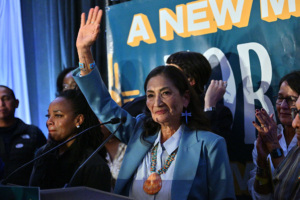
Full coverage: Courier New Mexico
Governor: Deb Haaland (D) vs. Gregg Hull (R)
What it decides: An open seat, with Gov. Michelle Lujan Grisham term-limited. The winner steers a state budget built on oil and gas revenue, plus health care and schools.
RESULT: Democrat Deb Haaland is projected to be the next governor of New Mexico, according to Decision Desk HQ, which called the race for Haaland at 10:33 p.m. ET. Haaland currently leads Republican Gregg Hull 56.0% to 44.0% in early returns, with about 48% of the vote counted. Haaland will be the first Native American woman elected governor in U.S. history.
NEW YORK
Full coverage: Courier New York
Governor: Gov. Kathy Hochul (D) vs. Bruce Blakeman (R)
What it decides: Whether Hochul wins a second full term, and who leads the state on housing costs and the cost of living.
RESULT: Democratic Gov. Kathy Hochul is projected to win reelection in New York, according to Decision Desk HQ, which called the race for Hochul at 9:50 p.m. ET. Hochul currently leads Republican Bruce Blakeman 67.1% to 32.9%, with about 54% of the vote counted.
WISCONSIN
Full coverage: UpNorthNews
Governor: David Crowley (D) vs. Tom Tiffany (R)
What it decides: An open seat, with Gov. Tony Evers not running. The governor has been the main check on Wisconsin’s Republican-led Legislature.
RESULT: Democrat David Crowley is projected to be the next governor of Wisconsin, according to Decision Desk HQ, which called the race for Crowley at 10:20 p.m. ET. Crowley currently leads Republican Tom Tiffany 54.3% to 45.7%, with about 64% of the vote counted.
11 P.M. ET
CALIFORNIA
Full coverage: Courier California
Governor: Xavier Becerra (D) vs. Steve Hilton (R)
What it decides: An open seat, with Gov. Gavin Newsom term-limited. The winner leads the nation’s largest state in its fights with the Trump administration over immigration, disaster aid, and climate.
RESULT: Democrat Xavier Becerra is projected to be the next governor of California, according to Decision Desk HQ, which called the race for Becerra at 11:13 p.m. ET. Becerra currently leads Republican Steve Hilton 65.4% to 34.7%, with about 52% of the vote counted.
1 A.M. ET
ALASKA
Full coverage: The Alaska Current
U.S. Senate: Mary Peltola (D) vs. Sen. Dan Sullivan (R)
What it decides: One of Democrats’ longer-shot paths to the Senate majority. Results may take days because Alaska counts many ballots after Election Day and uses ranked-choice voting.
RESULT: Too close to call. Republican Sen. Dan Sullivan leads Democrat Mary Peltola 48.5% to 47.7%, with about 68% of the vote counted, according to Decision Desk HQ as of 4:12 a.m. ET. Alaska counts many ballots after Election Day, so a result could take days.
More from COURIER
The Epstein Files Were on the Ballot. Here’s Where the Winners Stand.
What the Stars Say About Trump, the Midterms and a Rare Double Retrograde
Will the Midterms Lower Gas Prices? An Economist Explains What Congress Can (and Can’t) Fix
The Epstein Files Were on the Ballot. Here’s Where the Winners Stand.

By Jackie Appel
Updated 6:06 pm ET, Nov. 11.
Jeffrey Epstein’s name still carries real political weight years after his death. In races across the country today, candidates have made the Epstein files a centerpiece of their campaigns, either by pushing for the files’ release or by attacking opponents who voted to block or delay it. In some of tonight’s closest contests, it could help decide who wins.
The stakes don’t end tonight. House Republican leaders pushed the next vote on releasing more files, the Epstein Files Transparency Act II (EFTA), until after the midterms. Lawmakers return for a lame-duck session first, and if the fight isn’t settled by January, it falls to the Congress that voters choose tonight.
Here’s how we decide where each candidate stands:
✅ Backed release
Candidates who have held office must have voted for release on every applicable vote.
Candidates who haven’t held a federal office must have publicly said they support releasing the files.
⚠️ Opposed, then switched
Candidates who have held office must have first voted against release, then taken a recorded action for it: a vote to release the files, a signature on the discharge petition, or cosponsoring the Epstein Files Transparency Act II. A statement of support, or the Senate’s passage of the bill by unanimous consent with no recorded vote, doesn’t count as a switch.
Candidates who haven’t held a federal office must have publicly opposed release, then publicly changed their position.
❌ Voted to block
Candidates who have held office must have voted against release with no later recorded action in favor to it.
Candidates who haven’t held a federal office must have publicly opposed release.
❔ Position unknown or unclear
Georgia Senate
Sen. Jon Ossoff (D) – ✅ Backed release · WON per Decision Desk
Ossoff voted on Sept. 10, 2025, against tabling a Senate amendment that would have forced the release of the files. He has since made his opponent’s vote against releasing the files a centerpiece of his campaign.
Rep. Mike Collins (R) – ⚠️ Opposed, then switched
Collins voted against releasing the files on July 15, 2025. He voted for the Epstein Files Transparency Act on Nov. 18, 2025, after President Donald Trump reversed course and urged House Republicans to support it. At their Oct. 13 debate, he told Ossoff, “I voted to release those files.”
Florida Senate
Sen. Ashley Moody (R) – ❌ Voted to block · WON per Decision Desk
On Sept. 10, 2025, Moody voted to table an amendment that would have forced the Justice Department to release its Epstein records. The motion passed 51-49; one more Republican “no” would have forced a tie. The Epstein Files Transparency Act later passed the Senate by unanimous consent on Nov. 19, 2025, with no recorded vote. Epstein survivor Marina Lacerda, identified as “Minor Victim 1” in Epstein’s 2019 indictment, targeted Moody over the Sept. 10 vote in a recent ad.
State Rep. Angie Nixon (D) – ✅ Backed release
Nixon has not held a federal office, so she has not voted on the files. In a recent series of social media posts, Nixon signed a mock version of the Epstein Files Transparency Act II and implored voters: “Send me to the U.S. Senate so that we can hold these folks [in the Epstein Files] accountable.” She has also criticized Moody for taking campaign money from donors named in the files, though her campaign has focused most of its attacks on Moody’s role in the Hope Florida scandal.
Maine Senate
Sen. Susan Collins (R) – ❌ Voted to block
Collins voted on Sept. 10, 2025, to table the amendment that would have forced the release of the files, saying it did not belong on the defense bill. One more Republican “no” would have forced a tie. After the Epstein Files Transparency Act passed the Senate by unanimous consent on Nov. 19, 2025, with no recorded vote, she said, “I support the release of the Epstein files.”
Troy Jackson (D) – ✅ Backed release · WON per VoteHub
Jackson, a former Maine Senate president, has not held a federal office. A campaign spokesperson said, “Unlike Susan Collins, who always puts billionaires and Trump first, Troy would immediately vote to release the Epstein files.”
Iowa Senate
Rep. Ashley Hinson (R) – ⚠️ Opposed, then switched
On July 15, 2025, Hinson voted with the majority to defeat a Democratic move to force a vote on releasing the files, and she did not sign the discharge petition. She voted for the Epstein Files Transparency Act on Nov. 18, 2025, after Trump reversed course. She has since said, “I did not block the release of the Epstein files. I voted to release them.”
State Rep. Josh Turek (D) – ✅ Backed release · WON per Decision Desk
Turek has not held a federal office. He has called on Hinson to support releasing the files and has attacked her Epstein voting record on the campaign trail.
Kansas Senate
Sen. Roger Marshall (R) – ❌ Voted to block
Marshall voted on Sept. 10, 2025, to table the amendment that would have forced the release of the files, calling it a “political stunt.” One more Republican “no” would have forced a tie. Epstein survivor Marina Lacerda targeted Marshall over the vote in a recent ad.
Adam Hamilton (D) – ✅ Backed release · WON per Decision Desk
Hamilton, a Methodist pastor, has not held a federal office. His campaign has made Marshall’s vote a central attack, with a spokesperson telling Fox News Digital, “Roger Marshall wants to talk about anything other than his history of suing and jailing mothers and protecting predators by voting against releasing the Epstein Files.”
Mississippi Senate
This race is too close to call.
Sen. Cindy Hyde-Smith (R) – ❌ Voted to block
Hyde-Smith voted on Sept. 10, 2025, to table the amendment that would have forced the release of the files. One more Republican “no” would have forced a tie. Epstein survivor Jena-Lisa Jones targeted Hyde-Smith over the vote in a recent ad.
Scott Colom (D) – ✅ Backed release · WON per Associated Press
Colom, a district attorney, has not held a federal office. He has said “we do need to release the Epstein files” on the campaign trail, and his campaign has attacked Hyde-Smith for voting to delay their release.
Kentucky’s 4th District (open seat)
Melissa Strange (D) – ✅ Backed release
Strange has not held a federal office. Her campaign website lists releasing the files as a priority, and she has said she would do “exactly” what Rep. Thomas Massie did regarding Epstein. Massie, who represents the district until January, helped lead the push for the Epstein Files Transparency Act and is the lead sponsor of the Epstein Files Transparency Act II.
Ed Gallrein (R) – ❔ Position unknown or unclear · WON per Decision Desk
Gallrein has not held a federal office and has said little publicly about the files. With Trump’s endorsement, he defeated Massie in the May 2026 primary after Trump turned on Massie for breaking with his party on issues including the Epstein files.
New Mexico Attorney General
Attorney General Raúl Torrez (D) – ✅ Backed release · WON per NBC
Attorneys general don’t vote on legislation, but they can use the courts to make progress on certain issues. In August, Torrez sued the Justice Department and Acting Attorney General Todd Blanche, accusing them of blocking New Mexico’s investigation into Epstein’s Zorro Ranch by withholding unredacted files. On Oct. 21, he sued Epstein’s longtime lawyer, Darren Indyke, and accountant, Richard Kahn, accusing them of helping conceal Epstein’s trafficking operation and seeking to block them from collecting payments from his estate.
Sam Kane (R) – ❔ Position unknown or unclear
Kane has never held an office with a vote on the files. He has said the Epstein investigation shouldn’t be partisan, telling the Santa Fe New Mexican, “We’re not going to go after somebody that’s [on] a jet or that has any type of unrelated association to the abuse, including Trump… Let’s hold the perpetrators accountable, but let’s not make this a partisan issue.”
Tonight’s scoreboard
✅ Winners who backed release: 6
⚠️ Winners who opposed it, then switched: 0
❌ Winners who voted to block it: 1
❔ Winners with unknown/unclear positions: 1
Will the Midterms Lower Gas Prices? An Economist Explains What Congress Can (and Can’t) Fix

By Deola Adeosun
Prices are on the ballot this year. Gas, groceries, insurance, and rent are the issues voters say they feel most, and candidates in both parties have spent the final weeks of the campaign promising relief.
But how much can the next Congress actually do about what you pay? We asked Josh Bivens, chief economist at the Economic Policy Institute in Washington, D.C., to walk through the costs families are watching most closely.
His short answer: Congress has limited power to make prices fall, but right now, some of the biggest pressures are policy choices that lawmakers could reverse.
Gas and groceries
Gas averages $4.16 a gallon nationally, up $1.18 since the war with Iran began in February, according to AAA data reported by ABC News. Bivens said the war is the main reason.
“The main driver of high gas prices today is obviously the war in Iran,” he said. “If Congress could regain control of war powers and force the end to this conflict, gas prices would go down significantly.”
Groceries are feeling it too. Higher energy costs from the war are “infecting” food prices a little, Bivens said, and the Trump administration’s immigration crackdown is “almost certainly pushing up prices along some parts of the grocery supply chain,” particularly farms and meat processing plants, which depend heavily on immigrant labor. If Congress scaled back funding for that enforcement, he said, families could see some relief over time.
“Generally, Congress and the president have little scope to make prices go down,” Bivens said. “But in the current moment — especially with gas prices — the policy errors are so egregious that just stopping the destructive stuff would actually provide some relief.”
Other economists agree that relief would not be instant. Kara Reynolds of American University told ABC News that energy prices would take time to fall even if the war ended, because production capacity has been damaged.
Tariffs
The Budget Lab at Yale estimates current tariffs cost the typical household $1,077 a year. Bivens said most of that cost is likely already in the prices you pay.
“I’d bet the tariff effect has probably fully passed through to prices by now — assuming we don’t get another huge tariff increase based on the president’s whim,” he said.
That doesn’t mean Congress is powerless. Bivens said a new Congress could take back control of tariff policy and lower them, “or at least rationalize them to stop the arbitrary and chaotic nature of them from harming the economy through uncertainty.”
Health insurance
For many families, health care is the biggest bill on the horizon. Marketplace premiums jumped this year after the enhanced Affordable Care Act subsidies expired. Bivens said premiums have roughly doubled for many of the 20 million people who get subsidized coverage through the ACA exchanges. KFF (or the Kaiser Family Foundation) found that out-of-pocket premiums rose 58% on average in 2026, and insurers have proposed another median increase of 14% for 2027.
Bivens blamed the 2025 One Big Beautiful Bill Act and Congress’ failure to extend the more generous subsidies that were in place during the Biden administration. “Congress could stop that overnight,” he said, “if the president would sign on.”
Premiums are climbing for people with job-based coverage too. Bivens said that part is more complicated, driven partly by hospital and provider consolidation and by the cost of new drugs like Ozempic. Fixing it would be “ambitious,” he said, but Congress has options: letting more Americans buy into public plans like Medicare or Medicaid, adding a public option to the ACA marketplace, and then using the government’s buying power to push down health care prices.
He also pointed to the law’s Medicaid cuts. As hospitals lose money and expect to care for more uninsured patients, they may pass those costs on to everyone else. “Undoing those cuts could relieve pressure,” he said.
Rent and buying a home
If you rent or hope to buy, your state and local races matter a lot. Those officials control land-use rules and rent regulations, Bivens said. But Washington still shapes the biggest number in a home purchase: the interest rate.
“Mortgage rates are high today in large part because our deficits are too high given a still mostly healthy economy,” Bivens said. Higher rates raise monthly payments for homeowners, he added, and they also slow down home construction, “which affects prices and rents in the longer run.”
The national debt now tops $40.5 trillion, according to ABC News, and economists have warned that adding to it could push borrowing costs higher still.
The bottom line
No single vote will lower your grocery bill overnight, and economists across the board say lasting relief takes time. But several of the biggest costs families face right now, from gas to health insurance, are tied to decisions Congress can revisit.
Seven Lessons From the 2026 Midterm Campaign

By Michael Jones
I’ve been asking Democratic lawmakers, strategists and campaign officials some version of the same question for months: What has the party learned since voters returned Donald Trump to the White House in 2024?
Unsurprisingly, the answers have varied, but one theme has been remarkably consistent: Democrats believe the path back to power runs through the everyday financial pressures Americans face, not simply their frustrations with the president.
Meanwhile, Republicans have spent the campaign defending their governing record while asking voters to give them more time to deliver on Trump’s promises.
With Election Day on Tuesday, here are seven lessons I’ve taken from covering Congress and the campaign—and what they could mean beyond who wins or loses next week.
1. Affordability is about more than inflation.
Democrats have built their campaign around lowering costs, an approach House Democratic leaders began developing after their 2024 defeat.
But affordability means different things to different people. For someone buying groceries, it’s the checkout total. For a parent, it’s the cost of child care. For a family worried about health insurance, it’s whether another premium increase will force an impossible choice.
Republicans can point to economic growth as evidence that their policies are working. But strong economic indicators don’t necessarily translate into financial security for individual households.
That’s the tension at the center of this election: whether voters judge the economy by national metrics or by how much money they have left after paying their bills.
2. Trump is on the ballot, even though his name isn’t.
Trump won’t appear on Tuesday’s ballot, but his administration’s policies have shaped much of the campaign.
Democrats have tried to tie Republican candidates to the president’s decisions on health care, immigration, federal spending and the economy. Republicans, for their part, have emphasized Trump’s priorities while defending his record and contrasting it with what Democrats are offering.
What interested me most was how Democratic lawmakers responded to the controversy surrounding Barack Obama’s recent Cheesecake Factory joke. Republicans seized on the remarks, but the Democrats I spoke with weren’t keen to prolong the argument.
They wanted to talk about their opponents and the economy.
They’re betting voters will care more about whether the people representing them in Congress have delivered on their promises than about which party wins the latest culture war battle.
3. Immigration is no longer just a conversation about the border.
Republicans have spent years emphasizing border security and immigration enforcement. Trump made mass deportations a centerpiece of his return to the White House.
But this campaign has raised questions about whom the administration is deporting and whether its enforcement practices match voters’ expectations.
An analysis by the Migration Policy Institute estimated that only one in five immigrants deported between last January and this July had a criminal conviction. That finding complicates the administration’s emphasis on removing dangerous criminals (“the worst of the worst,” they called them), although deportation totals include people apprehended at the border as well as those arrested inside the country.
Democrats have increasingly challenged the administration’s methods while debating what a workable alternative should look like. They believe voters are savvy enough to support immigration enforcement while disagreeing about its priorities, tactics and humanitarian consequences.
4. Reproductive health remains an economic issue.
Abortion rights have remained part of the political conversation since the Supreme Court overturned Roe v. Wade in 2022. But the 2026 campaign has also highlighted how reproductive health intersects with families’ financial security.
Access to contraception, fertility treatment, maternal care and abortion services can affect whether someone can work, pursue an education or afford to raise a family.
Democrats have argued that government restrictions threaten personal freedom and access to medical care. Republicans have taken different positions on abortion restrictions, exceptions and the appropriate role of federal and state governments.
Those differences can determine which medical services are available, how far patients must travel and how much care costs. The campaign has made clear that reproductive freedom is not just a question of personal autonomy, but also whether people can afford to make their own decisions about their health and families.
5. The fight for Congress extends beyond the familiar battlegrounds.
Democrats have explored opportunities in Republican-held districts that would ordinarily receive little national attention.
The expanded map reflects their belief that dissatisfaction with Washington could reach beyond the usual competitive districts. Republicans, meanwhile, have invested in protecting their incumbents and defending their congressional majorities.
But national momentum doesn’t erase local differences.
A voter in a competitive suburban district may be weighing very different concerns than someone in a rural community. Candidate records, local economic conditions and constituent services can all shape how voters approach a congressional race.
That’s worth remembering when national coverage reduces hundreds of individual contests to a single referendum on Trump.
6. Winning the House would change Washington—but not overnight.
During the campaign, Democrats have promised to lower costs and hold the Trump administration accountable if voters return them to power.
A Democratic House could conduct investigations, compel testimony through its committees, scrutinize federal spending and advance legislation reflecting its priorities.
But there are limits.
Controlling the House wouldn’t give Democrats unilateral authority to rewrite federal law. Most legislation would still require Senate approval and the president’s signature, or enough support to override a veto.
And investigations, however consequential, wouldn’t automatically lower grocery prices or health insurance premiums.
That’s why the governing agenda matters as much as the campaign promises. Voters deserve to know which changes could happen through congressional oversight, which would require bipartisan cooperation and which may remain out of reach.
7. Election night may not tell us everything.
Democrats have been preparing for potential legal and procedural disputes over the election, including challenges to results in closely contested races.
But there’s an important distinction between an election dispute and the ordinary process of counting votes.
Election officials routinely continue tabulating eligible absentee, provisional, military and overseas ballots after polls close. Each state has its own deadlines and procedures. A lead changing as additional ballots are counted is not, by itself, evidence of wrongdoing.
The first results announced Tuesday night will be unofficial. Certification comes later, after election officials complete the required canvassing and verification processes.
Pay close attention to information from state and local election officials, especially when a race remains too close to call. Be skeptical of anyone declaring an election illegitimate simply because the final count takes time.
After months of stump speeches, attack ads, contentious debates and campaign stops, voters will finally have their say on Tuesday.
But the story won’t end when the polls close.
The next chapter will reveal whether campaign promises survive contact with the realities of governing, whether Congress can address the issues voters have spent months raising and whether the country’s political institutions can manage another contentious transfer—or retention—of power.
And just as I’ve been all campaign season, I’ll be here covering it for you every step of the way.
Michael Jones is an independent Capitol Hill correspondent and contributor for COURIER. He is the author of Once Upon a Hill, a newsletter about Congressional politics.
25 Things Trump Said Were Rigged (and We Could Have Listed More)

By Mark Jacob
According to recent polling, only 28% of Americans are confident that Donald Trump will accept the results of the midterms if his party loses. Which means we could be hearing one of Trump’s favorite words – “rigged” – a lot in the coming weeks and months.
If he attempts to overturn a fair election, as he tried six years ago, it will be up to the news media to remind the public that false claims of unfairness are on-brand for him.
Here are 25 things Trump says were rigged, faked, or stolen:
1. The Emmy Awards
After Trump’s “The Apprentice” repeatedly lost to “The Amazing Race,” he called it “a con game” and claimed, “I would have won the Emmy many times except for my politics.”
2. Climate Change Warnings
Trump tweeted in 2012 that climate change concerns were rigged: “The concept of global warming was created by and for the Chinese in order to make U.S. manufacturing non-competitive.”
3. The 2016 Iowa Primary
“Ted Cruz didn’t win Iowa, he stole it.“
4. The Legal Case Against Trump University
When victims of Trump’s university scam sued, he declared, “I am getting railroaded by … a rigged system.” He claimed the “Mexican” judge (who was born in Indiana) was biased against him and ultimately settled by paying $25 million.
5. The 2016 Democratic Primaries
“President Obama should ask the DNC about how they rigged the election against Bernie.”
6. The Investigation of Hillary Clinton’s Emails
“Rigged,” according to a Trump tweet.
7. Trump’s First Debate with Clinton
He called it a “rigged deal,” claiming he was intentionally given a faulty microphone and that moderator Lester Holt was out to get him.
8. The 2016 General Election (before he won)
9. The 2016 General Election (even after he won)
Trump lost the popular vote to Hillary Clinton by nearly 3 million votes, but he claimed he would’ve won it if 3-5 million undocumented immigrants hadn’t cast ballots. (A total lie.)
10. The Mueller Probe
Trump said he was persecuted by an investigation run by Robert Mueller, a special counsel named by Trump’s own Justice Department to look into ties between Russia and his 2016 campaign. “Mueller and his gang … make Joseph McCarthy look like a baby! Rigged Witch Hunt!”
11. The Nobel Peace Prize
Trump said in 2018 that “everyone” thought he deserved a Nobel Prize. A year later, he said he “would get a Nobel Prize for a lot of things if they give it out fairly, which they don’t.” After missing out again this year, he said the snub left “an indelible stain on the country of Norway.”
12. Google’sSsearch Results
Trump said they were “rigged” to showcase liberal media outlets.
13. The Media (of course)
“It’s the Rigged Media … and it is what I’m up against.”
14. The 2020 Election
“The 2020 Presidential Election was MANIPULATED and RIGGED by the DOJ,” Trump claimed, citing a fake statistic that 20% of mail-in ballots were “rigged or defective.” He’s been repeating his lie about 2020 ever since.
15. His Own Followers’ Riot at the Capitol
Trump said the FBI “secretly placed” agents in the crowd to foment the disorder. He also said, “Nancy Pelosi is responsible, because she refused to take the 10,000 soldiers or National Guardsmen that I offered.” (Both are ridiculous lies.)
16. The Civil Business Fraud Case Against Trump
New York Attorney General Letitia James sued Trump and other Trump Organization figures for claiming widely different property values, depending on whether they were talking to potential lenders or tax officials. Trump posted about “racist A.G. James’ CORRUPT & RIGGED case against me.” He and his co-defendants were ordered to pay $364 million, but that penalty was canceled on appeal.
17. The Criminal Business Fraud Case Against Trump
Trump was convicted of 34 felonies for falsifying business records to cover up hush-money payments to a porn star in order to protect his chances of winning the 2016 election. When the case went to the jury, he said: “Mother Teresa could not beat these charges. These charges are rigged.”
18. Polls
Trump hates unfavorable survey results, even from his usually fawning friends at Fox News. Therefore, “Fox Polls are Rigged and Worthless!”
19. The Second 2024 Presidential Debate
Trump denounced “the rigged and highly partisan ABC Debate.”
20. The 2024 Election (even after he won)
“I probably would’ve won all 50 [states] if we had an honest count,” he claimed. He lost California by 20 points but insisted that if it wasn’t rigged, “I would have won it by a lot.”
21. The Epstein Scandal
Trump said the outrage over his sex-trafficking ex-friend Jeffrey Epstein was a “Democrat hoax” and his birthday message to Epstein was “fake.”
22. Unemployment Numbers
Trump fired the Biden-appointed head of the Bureau of Labor Statistics, saying “the numbers were rigged.”
23. World Cup Referees
After a U.S. soccer star was disqualified from a match, Trump threatened to claim the match was “rigged, just like the election was rigged in 2020,” if the player wasn’t reinstated. Trump got his way with FIFA’s ethically dodgy World Cup leadership.
24. The 2026 Brazil Election
“It looked like another rigged election, frankly.”
25. Counter-Protests at Rallies
Trump keeps claiming that hecklers at his rallies are “paid protesters” despite no evidence of that whatsoever.
I’ll bet Trump thinks this whole list is rigged.
Trump’s DOJ Claimed 250,000 Noncitizen Voters — Its Own Probe Found About Two Dozen

Photo by Kevin Dietsch/Getty Images
By Camaron Stevenson
Since day one of Donald Trump’s political career, people have desperately attempted to normalize his absurd abuses of power and blatant corruption – and 10 years later, much of corporate media remains a victim of their own attempts to return to a sense of normalcy.
It’s time to stop sane-washing the insanity.
What Happened
A widespread Department of Justice probe into noncitizen voters has, in effect, undermined the administration’s claims and disproven the notion altogether. Of the 250,000 suspects it identified, the list was culled down to only a handful of arrests, based on debunked evidence.
After failing to seize state voter rolls by way of executive order, the Trump administration this year issued over 100 subpoenas for voter data across 13 states under the guise of tracking down noncitizen voters. Department of Homeland Security Secretary Markwayne Mullin first made the unsubstantiated claim that 250,000 illegal voters were on the rolls in July, and followed up with letters to election officials in four states, each containing lists of alleged suspects.
“The Department of Homeland Security and our federal partners reviewed publicly available California voter-registration files and compared relevant records with federal immigration data to identify alien registrants,” Mullin said. “Even one noncitizen vote cancels out the ballot of an American citizen and undermines our elections.”
But DHS didn’t have official voter rolls from those states, and instead relied on outdated public data cross-referenced with voter profiles from private companies. When election officials in California, Nevada, New Jersey, and Pennsylvania checked the list of alleged noncitizens against their own voter registration records, they found that the Trump administration’s slapdash voter database was wholly inaccurate. Without definitive identifiers — such as Social Security numbers — DHS linked names and addresses to unrelated voter profiles, effectively conflating nonvoting legal residents with voting citizens simply because they shared the same names.
The administration ignored the states’ assessments, sued California to prevent 20,000 ballots from being counted, and conducted a raid that resulted in roughly two dozen arrests. The DOJ then began the same process in Washington state, demanding that election officials disqualify 400 ballots based on the same faulty data.
Similar raids in Washington and elsewhere before the midterms appear unlikely, however, as federal judges have already ruled against the DOJ’s actions in California, criticizing the agency’s public displays during an ongoing election as a brazen attempt to undermine its results.
“Never before in American history has the federal government, on the eve of an election, sought to coerce a state and local government to abandon their own Constitutional elections procedures and bend to the will of the Executive Branch,” US District Judge David Carter said in the ruling. “If the Executive can discount votes and threaten an ongoing election due to unproven allegations, then our democracy is in danger.”
Election officials have also pointed out that the DOJ’s attempt to disqualify ballots during an election is against federal law. The 90 days leading up to an election constitute what is known as a “quiet period,” during which attempts to remove or disenfranchise voters are in violation of the National Voter Registration Act of 1993.
Attempts to Sanewash
- Inside the Trump administration’s controversial lists of alleged noncitizen voters
- Trump expands hunt for noncitizen voters with broad subpoena campaign before midterms
- DOJ alleges non-citizen voting in Washington, Secretary of State denies claims
Far-Right Spin
- Biden-Appointed Judge Blocks Key Trump Noncitizen-Voter Operations Before Midterms
- Mexico-Born Biden Judge Restricts Trump’s Noncitizen Voting Investigation in Nine States
- Federal officials identify 400 noncitizens registered to vote in Washington state: ‘Tip of the iceberg’
Trump’s women’s health promises run into his own budget
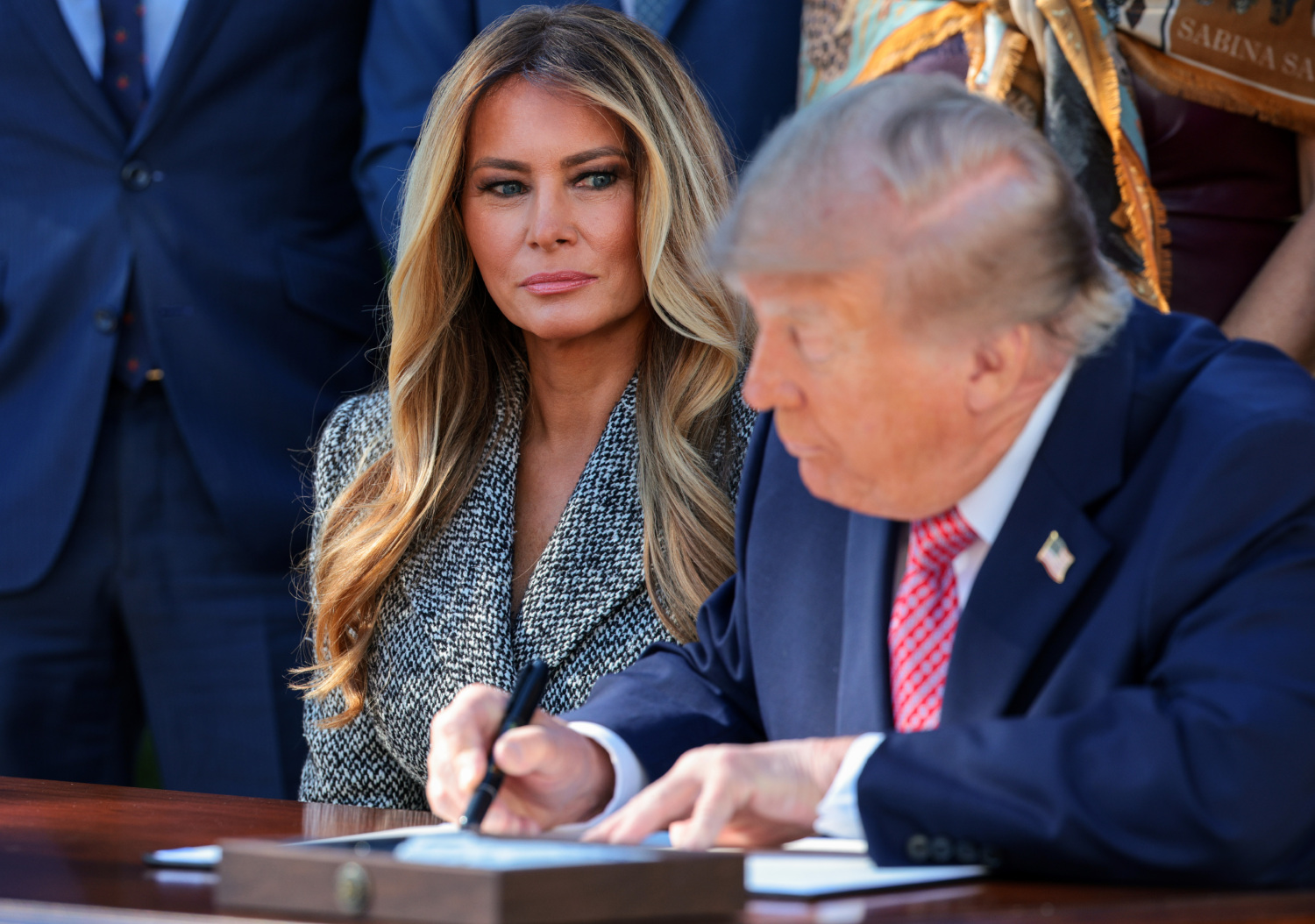
Photo by Chip Somodevilla/Getty Images
By Michael Jones
First Lady Melania Trump stood beside her husband in the White House Rose Garden on Monday and promised a new chapter in women’s health.
“This is a transformative moment for women in America,” she said. “Beginning today, we will change the reality of women’s health.”
President Donald Trump had just signed an executive order establishing a White House Women’s Health Task Force and a new Women’s Health Division at the National Institutes of Health (NIH). The initiative promises to accelerate research into conditions that disproportionately affect women, develop new treatments and make medical breakthroughs more accessible.
There’s just one problem: The president’s own budget tells a very different story.
Trump’s fiscal year 2027 budget request proposes cutting roughly $5 billion, or 12%, from NIH, while eliminating federal funding for several programs supporting maternal health and reproductive care. The executive order establishes new priorities but does not specify additional research funding.
Rep. Rosa DeLauro (Conn.), the top Democrat on the House Appropriations Committee, quickly noticed the contradiction.
“Can someone tell OMB and the rest of the Republicans this is what the First Lady wants because their budgets are the complete opposite,” she wrote on X.
Her criticism carries particular weight with the midterm elections less than two weeks away. If Democrats regain the House majority, DeLauro could become chair of the committee responsible for writing the spending bills that fund NIH and other federal health programs.
That would give Democrats an opportunity to challenge the administration’s priorities through appropriations and oversight, although Republicans could still control the Senate and Trump will remain in the White House.
The question facing voters isn’t simply whether the administration wants better health outcomes for women. It’s whether the federal government will provide the resources to deliver them.
What the budget would actually cut
The funding debate begins at NIH, where researchers investigate diseases and conditions that affect millions of American women.
A 2025 National Academies report found that women’s health research accounted for just 8.8% of NIH funding between 2013 and 2023, even as the agency’s overall budget increased.
The administration’s new initiative identifies conditions including menopause, endometriosis and autoimmune diseases as research priorities. But its FY27 budget proposes cutting NIH funding to about $41 billion while reorganizing or eliminating several research institutes.
The White House has defended those changes as an effort to focus federal spending on more effective science and eliminate programs it considers wasteful. But a new organizational structure does not replace the research dollars Congress is being asked to cut.
And the proposed reductions extend well beyond laboratory research.
The administration’s budget also calls for eliminating funding for Healthy Start, a federal program intended to improve maternal and infant health outcomes, and Title X, which supports family planning and preventive health services, including contraception and screenings for certain cancers and sexually transmitted infections.
Other proposals would affect federal programs that help states investigate pregnancy-related deaths and improve maternity care.
For women already struggling to find affordable care, these aren’t abstract budget lines. Whether they can access a nearby clinic, health insurance, or maternal health services can determine whether they receive treatment at all.
A House Democratic aide told me that members of the Democratic Women’s Caucus are particularly concerned that the proposed federal reductions would compound existing barriers to care, especially in rural communities where maternity services are already limited.
The aide also pointed to Medicaid reductions, rising insurance costs and restrictions on reproductive health services as interconnected pressures on women and families.
The administration’s approach departs from the Biden White House, which pursued additional investments in women’s health research and initiatives to address maternal mortality. Biden also established a federal women’s health research initiative that Trump’s new order revokes.
Neither administration’s executive actions alone determine federal spending. Congress ultimately decides how much money agencies receive.
Still, the difference between announcing research priorities and proposing the resources to pursue them is central to assessing the new initiative.
The administration’s broader budget also proposes eliminating funding for the Small Business Administration’s Women’s Business Centers, which provide training, counseling and other assistance to women entrepreneurs. The centers received $27 million in the previous fiscal cycle.
Those centers aren’t part of Trump’s women’s health executive order, a point the Office of Management and Budget emphasized. But their proposed elimination adds another dimension to the administration’s approach to federal programs supporting women.
The White House points to next year
I asked the White House how the president’s new initiative aligns with the proposed reductions, what resources would support the NIH division and when Americans should expect measurable results.
The White House referred my questions to OMB.
“This administration is prioritizing supporting gold standard science, which is critical to improving health outcomes envisioned in the President’s executive order,” an OMB spokesperson said. “The FY28 budget is currently under development, and all of the President’s priorities, including on women’s health, will be reflected.”
The executive order was signed this week. Congress is considering funding for fiscal year 2027. Yet the administration pointed to a fiscal year 2028 budget that has not been released.
OMB did not identify dedicated funding for the new NIH division or explain how its proposed FY27 reductions would advance the executive order’s objectives.
Democrats aren’t convinced that the promise of future funding resolves the contradiction.
The House Democratic aide questioned why the administration would wait until its next budget to demonstrate its commitment. They said members would welcome meaningful investments in women’s health research, including cooperation with the administration, but remain skeptical given its existing funding proposals.
What changes if Democrats win the House?
The answer depends partly on what voters decide in November.
A Democratic House majority could pursue greater funding for NIH, maternal health programs and reproductive care through the appropriations process. It could also use committee hearings, investigations and other oversight tools to examine how the administration implements its initiative and distributes research funding.
The DWC is looking beyond the executive order itself.
According to the aide, members want to address Medicaid and Medicare protections, Affordable Care Act premium tax credits and prescription drug costs. They also intend to prioritize legislation protecting abortion access, contraception and fertility treatments, while seeking to restore funding for women’s health research.
The agenda reflects a broader argument that women’s health isn’t confined to reproductive care or medical research. It extends to whether families can afford insurance, whether a pregnant woman can reach a hospital and whether women have the financial security to obtain the care they need.
But winning the House wouldn’t give Democrats unilateral control over federal spending. Appropriations legislation would still require agreement with Senate Republicans due to the filibuster and, ultimately, Trump’s signature, or sufficient congressional support to overcome a veto.
The administration has announced ambitious goals for improving women’s health. Its own budget, however, proposes fewer resources for several of the federal programs already doing that work.
Nonetheless, the White House is asking Americans to judge its commitment by what it promises to do next. Congress will have to decide what it’s willing to pay for.
Michael Jones is an independent Capitol Hill correspondent and contributor for COURIER. He is the author of Once Upon a Hill, a newsletter about Congressional politics.
New Mexico Sues Epstein’s Lawyer and Accountant to Stop Them From Cashing In on His Estate
By Jackie Appel, Investigative Reporter
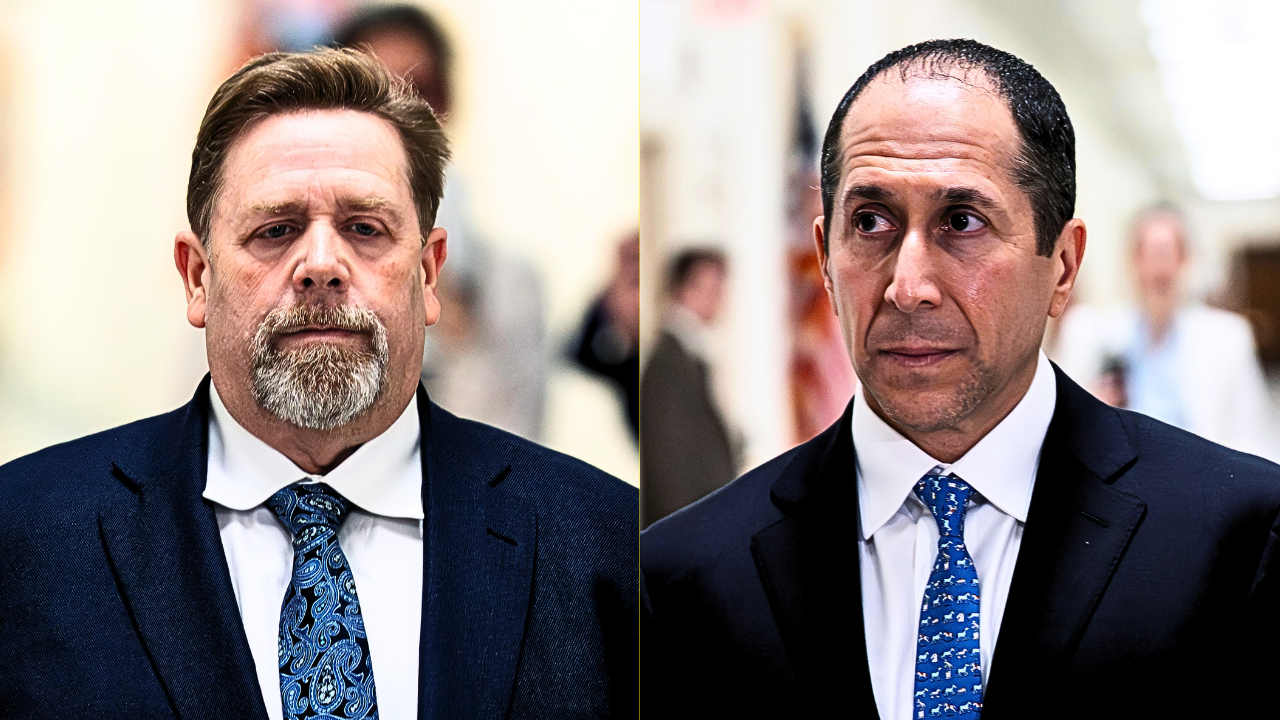
New Mexico Attorney General Raúl Torrez sued Jeffrey Epstein’s longtime attorney, Darren Indyke, and his accountant, Richard Kahn, on Wednesday, accusing the two men of helping finance and conceal Epstein’s sex trafficking operation, including abuse at his Zorro Ranch south of Santa Fe. The civil lawsuit, filed in the U.S. District Court in New Mexico, seeks to block Indyke and Kahn — who serve as co-executors of Epstein’s estate — from collecting payments from it while the case proceeds. It is the first law enforcement action against either man, according to Torrez’s office.
“Under the Trafficking Victims Protection Act and the New Mexico Racketeering Act, we have in short made a complaint that alleges that Mr. Indyke and Mr. Kahn, through patterns of conduct including participating in the organization of various corporate entities and structuring payments and concealing the operations of that enterprise facilitated the criminal conduct and the trafficking behavior of Jeffrey Epstein for a number of years,” Torrez said at a press conference. “And it is unconscionable in my mind that people who actively participated in the efforts of that trafficking enterprise should in any way benefit from what is left of his estate.”
Both men stand to gain from the estate, whose assets are held in an entity called the 1953 Trust. The estate is valued at more than $107 million, according to Torrez’s office. Under the trust’s terms, Indyke is eligible for a $50 million bequest and Kahn for $25 million, subject to the availability of funds. The complaint also alleges that between 2011 and 2019, Indyke received more than $16 million from Epstein and related entities, and Kahn received more than $10 million. Both men have testified before Congress that they did not know about Epstein’s abuse, The Associated Press reported.
Dan Weiner, an attorney for Indyke and Kahn, told the AP that the pair “emphatically reject” the allegations, and said New Mexico officials never sought to interview them before going to court. “Not a single woman has ever accused Mr. Indyke or Mr. Kahn of committing sexual abuse or witnessing sexual abuse,” Weiner said in an email.
Earlier this year, Indyke and Kahn, acting as executors, agreed to settle a class-action lawsuit brought by Epstein accusers for up to $35 million. They did not admit wrongdoing as part of the deal.
Two Epstein survivors, Julia Molchanova and Anouska De Georgiou, joined Torrez at the announcement. In a letter released alongside the lawsuit, a group of survivors also backed the state’s action. “Epstein’s trust names both men as primary beneficiaries, each standing to receive tens of millions of dollars. Now, as co-executors of his estate, they occupy a position of profound and deeply troubling conflict: helping determine what victims receive while standing to gain what is left over after the victims are paid for their damages.”
“That disparity is not a footnote,” the letter continues. “It captures the central moral failure of the estate: Darren Indyke and Richard Kahn, the two people who helped the most to sustain Epstein’s world of abuses and to gain far more from it than any one of the people he harmed. And, to be sure, it is Darren and Rich that made sure of it.”
The lawsuit follows another Torrez filed Aug. 5 against the U.S. Department of Justice, seeking unredacted Epstein investigative files that the state says could help identify victims, witnesses and additional criminal conduct in New Mexico. Specifically, Torrez sought files that name visitors, employees, and residents of Epstein’s Zorro Ranch, near the small community of Stanley, about 30 miles south of Santa Fe.
Epstein bought the ranch in 1993 and built a 26,700-square-foot mansion there, along with a private airstrip and helipad, the AP reported. The complaint describes the remote property as a place where Epstein and his associates recruited, transported, isolated and sexually abused girls and young women for more than two decades. The earliest documented abuse there dates to 1996. To investigate what happened at the ranch and who enabled it, the New Mexico House unanimously created the New Mexico Survivors’ Truth Commission, a bipartisan special committee, in February.
The commission’s interim report, the first of two it is required to issue this year, paints a disturbing picture of what went on at the ranch. It includes the confirmed accounts of five victims and acknowledges as many as 30 more whose accounts have not been confirmed. One survivor describes being flown to the ranch at the age of 15 and being molested by Epstein “for many hours.”
“What I remember most vividly was him explaining to me how beneficial the experience was for me and how much he was helping me to grow,” the account continues.
The report also lays out the commission’s lines of inquiry into Epstein’s conduct at the ranch, including his interest in eugenics and transhumanism, and into the people, organizations, power structures and loopholes that allowed his abuse to continue for decades. More is expected when the commission releases its final report, due Dec. 31.
Torrez cast the lawsuit as a way to steer what remains of Epstein’s fortune to the people he harmed. “Frankly,” he said, “if anyone is entitled to a recovery of Jeffrey Epstein’s estate, it’s the Epstein survivors who were targeted and trafficked here in New Mexico and beyond.”
The criminal investigation Torrez announced earlier this year remains ongoing, his office said.
COURIER’s newly-launched Epstein investigation project
For too long, the Epstein Class has dealt in wealth, power, and politics to avoid accountability and deny victims & survivors their due justice. The public deserves the truth, but the Trump Administration is failing its legal obligation to deliver it.
That’s why we’re expanding our coverage to follow the money and investigate the power players in and outside the government. With a new database by Thorian AI, we have unprecedented access and ability to navigate more than 1.2M files and we’re sharing access—and what we’re finding—with you.
Subscribe to The Cover-Up and get one concise, easy-to-read email a week that cuts through the noise with the headlines you need and the breakdowns you want.
By staying plugged in and leveraging our reporting to make your own calls-to-action louder, together, we can turn information into justice.
An Official Report Called a Close Epstein Associate a Neuroscientist. He Was Anything But.

PHOTO BY JOHANNES SIMON VIA GETTY IMAGES
By Jackie Appel, Investigative Reporter
A special commission tasked by the New Mexico Legislature to investigate Jeffrey Epstein’s conduct in the state will soon release its final findings, but its interim report has already raised questions surrounding what the committee’s final findings will entail.
One point of interest called out in this interstitial report was Epstein’s significant web of connections and financial contributions to a renowned think tank called the Santa Fe Institute, or SFI. According to video interview footage and transcripts of interviews with associates, Epstein was introduced to the institute through Ghislane Maxwell, and quickly became fascinated by its focus on studying complex systems. Epstein was fascinated by what discoveries he believed lay beyond the frontiers of science, and seemed to believe that SFI could make those discoveries.
The Santa Fe Institute has fully complied with the commission’s subpoena for documents, which could provide crucial insights into how Epstein sought to make use of some of the best and brightest minds the world had to offer. The commission has also highlighted several characters that seem integral to the story of SFI and Epstein’s relationship.
One of these characters is a man named Al Seckel, who the Truth Commission report incorrectly describes as a neuroscientist. The commission also neglected to call out Seckel’s familial ties to Epstein’s criminal network: Seckel was the long-time partner of Isabel Maxwell, sister of Ghislane Maxwell — the only individual in Epstein’s organization to be successfully tried and convicted for sex trafficking.
COURIER reached out to the Truth Commission for clarity on its findings, but none of the legislators or legal staff responded to requests for comment.
Despite its attention-grabbing nature, the report’s inaccurate designation of Seckel as a neuroscientist is likely less a sign of any failure on the part of the commission and more a sign of Seckel’s success in a lifelong effort to deceive the world regarding his credentials. Born in 1958, he went to Cornell University, but he never actually graduated from the institution. Nonetheless, Seckel surrounded himself with high-profile scientists for decades — to the dismay of many, according to an exposé Tablet Magazine published shortly after his death — and seemed to have convinced many of them and most of the rest of the world that he was a prominent scientist himself.
In Tablet’s exposé, writer Mark Oppenheimer notes that the TED organization, for which Seckel gave a talk, had him listed on their website as a “cognitive neuroscientist.” Though he spent a significant amount of time investigating optical illusions, authored several books on the subject, and spent some time in the rare book trade,a neuroscientist he was not.
In the early 2000s, Seckel became involved with Ghislaine Maxwell’s sister, Isabel, which seems to have been his original connection to Epstein — a familial link that was also notable absent from the interim report. By this point, Seckel had connections to many respected members of academia, including Murray Gell-Mann, a theoretical physicist at the Santa Fe Institute. Epstein and Seckel were collectively able to leverage these ties to the scientific community to organize what was known as the Mindshift Conference, which was hosted on Epstein’s private island in the Virgin Islands in 2011.
While Epstein’s personal feelings about the man are unclear, he clearly found Seckel useful enough to keep around, and In the early 2010s he famously leaned on Seckel for substantial image rebranding. Under Seckel’s guidance, “Jeffrey Epstein, Prominent Philanthropist” began to emerge from the ether, with Seckel and associates maintaining several sites in Epstein’s name, and even editing his Wikipedia page to remove mentions of his sex crimes.
Seckel eventually died in 2015, a few years before Epstein. His body was found partially decomposed at the bottom of a cliff.
Seckel was an odd, shady character who seemed to have been quite involved in Epstein’s dealings with the scientific community — including, to some extent, his dealings with the Santa Fe Institute in New Mexico. That said, his ties to the institute in particular seem to have been more tangential-science-community than direct-involvement-with-influence (perhaps with the exception of some level of personal relationship with Murray Gell-Mann), and as such, Seckel does not appear extensively in the Truth Commission’s interim report.
The interim report, however, is just that: a placeholder, intended to provide the public with an update on an investigation that will not be complete for another few months. And with a long list of relevant Epstein characters to dedicate research time to, the deceased Al Seckel, a man who was never accused of sex crimes and did not live in New Mexico, is likely a low priority for a legislative commission focused on state crimes, with the goal of bringing justice to the victims of Epstein’s international sex trafficking operation.
That said, with so many eagerly watching the commission to see what they find, these kinds of mistakes could potentially signal to the public that there could be other details missing. Portraying a con artist as a legitimate scientist — even in passing — could make some wonder if those in charge of compiling this report were as meticulous in their investigation as the subject matter deserves.
More will be seen when the commission releases their final report in December.
COURIER’s newly-launched Epstein investigation project
For too long, the Epstein Class has dealt in wealth, power, and politics to avoid accountability and deny victims & survivors their due justice. The public deserves the truth, but the Trump Administration is failing its legal obligation to deliver it.
That’s why we’re expanding our coverage to follow the money and investigate the power players in and outside the government. With a new database by Thorian AI, we have unprecedented access and ability to navigate more than 1.2M files and we’re sharing access—and what we’re finding—with you.
Subscribe to The Cover-Up and get one concise, easy-to-read email a week that cuts through the noise with the headlines you need and the breakdowns you want.
By staying plugged in and leveraging our reporting to make your own calls-to-action louder, together, we can turn information into justice.